Vale de Ílhavo Easter Folar
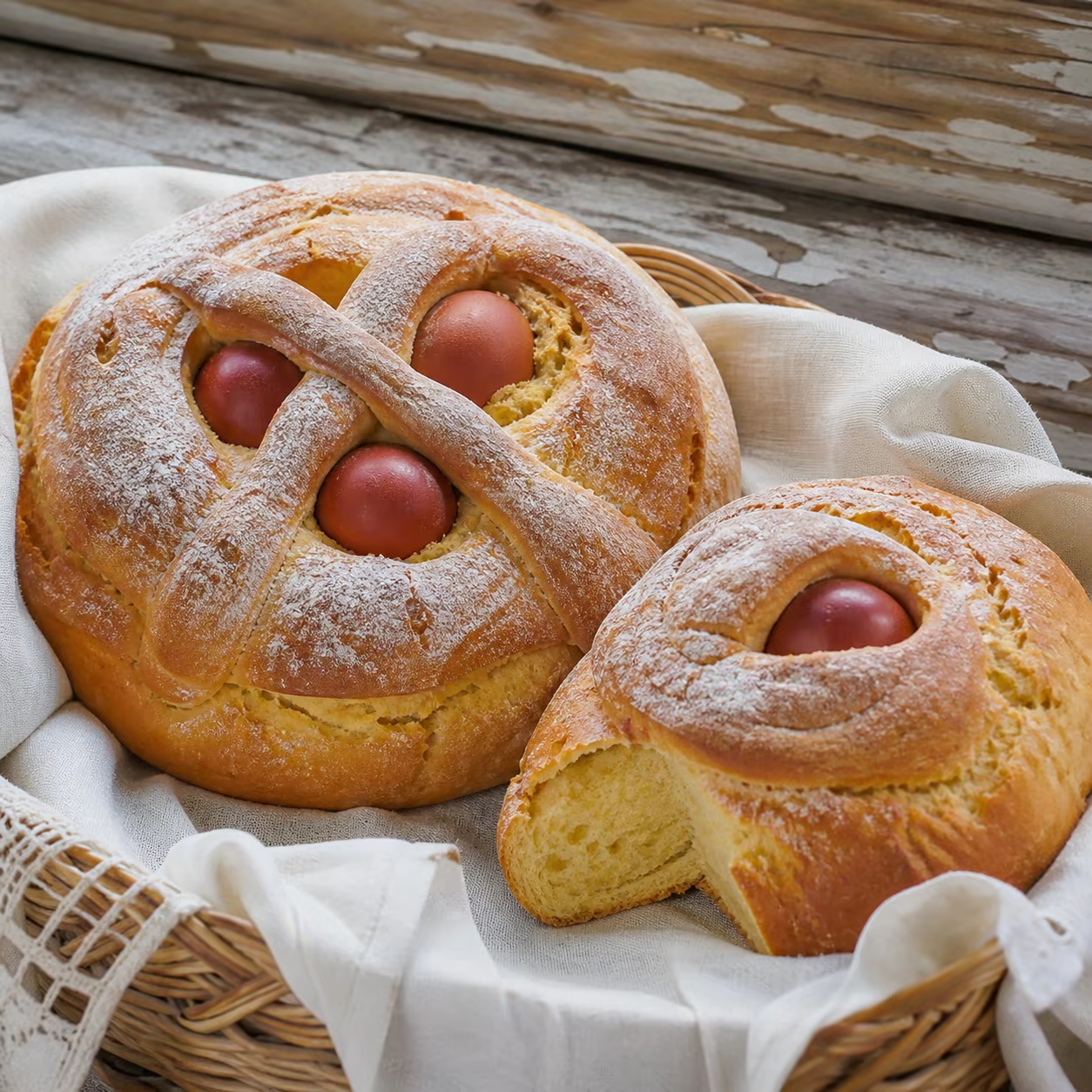
Wood-fired sweet folar with brown eggs secured by crossed dough straps.
- Origin
- Vale de Ílhavo · Aveiro Lagoon
- Place
- Vale de Ílhavo
- Region
- The Centre
- Category
- Festive & Seasonal
- Season
- Year-round; especially at weekends and Easter
- Evidence
- Well documented
Folar de Vale de Ílhavo is a round cake of sweet yeast dough. Whole eggs boiled with onion skins for a brown colour sit on top, held by crossed 'straps' made from the same dough. Its size grows with the number of eggs; an eggless version also exists.
Flour, salt and yeast dissolved in warm water form the first dough. Once doubled, sugar, eggs, butter and cinnamon are added, followed by the remaining flour. After a second rise, the folar is shaped by hand, decorated and baked in a wood-fired oven.
- wheat flour
- sugar
- eggs
- baker's yeast
- butter
- water
- salt
- cinnamon
- optional lemon zest
- onion skins
Fluffy, buttery and gently sweet, with cinnamon and sometimes a fresh note of lemon.
The municipal recipe uses 1 kg / 2 lb 3 oz flour, five yolks, 50 g / 1.8 oz butter and 200 ml / 6.8 fl oz water; it makes one medium folar with four eggs or three small ones with one egg each. Filomena Grave's family formula published by Primor uses 1.5 kg / 3 lb 4.9 oz flour, three whole eggs and three yolks, 80 g / 2.8 oz butter, up to six boiled eggs and longer quantified rises. It may also appear without eggs outside Easter. These are versions, not interchangeable quantities.
At artisan bakeries in Vale de Ílhavo and municipal events such as the Bread Festival. Ílhavo Tourism notes that artisanal supply is limited; locally, folar with eggs is distinguished from pão doce, the folar without boiled eggs.
As an editorial suggestion, serve it plain or with coffee or tea; Primor suggests butter, but the institutional sources establish no compulsory accompaniment.
Vale de Ílhavo, beside the Bôco River and Aveiro Lagoon, had numerous millstreams and watermills and strong cereal cultivation from the 17th to 19th centuries. That landscape sustained a renowned bread and folar tradition. The knowledge, developed chiefly by women, passed from mother to daughter together with the craft tools.
Well documented
Identity supported by institutional, specialist or corroborating sources.
- tradicional.dgadr.gov.pt/pt/cat/doces-e-produtos-de-pastelaria/1090-folar-de-vale-de-ilhavo (opens in a new tab)
- cm-ilhavo.pt/cmilhavo2020/uploads/document/file/8135/agenda_abr2021.pdf (opens in a new tab)
- visitilhavo.pt/o-que-te-faz-feliz/eventos/agenda-de-eventos/evento/festa-do-pao-de-vale-de-ilhavo-2025 (opens in a new tab)
- visitilhavo.pt/pages/3782 (opens in a new tab)
- cm-ilhavo.pt/viver/areas-de-intervencao/cultura/cultura-gastronomica/receitas (opens in a new tab)
- primor.com.pt/receita/folar-de-vale-de-ilhavo/ (opens in a new tab)
Pastries from here — The Centre
 Catalogue image
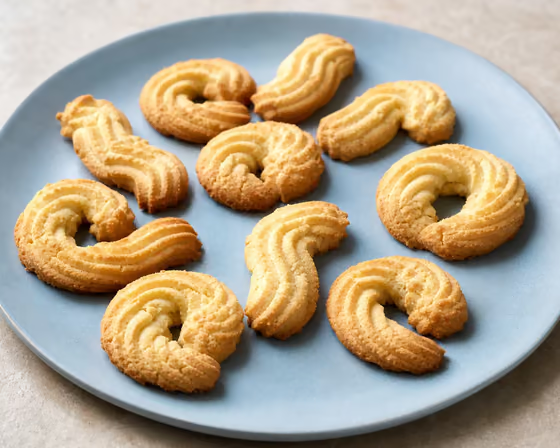
 Ílhavo Piped Butter Biscuits
Regional buttery biscuits piped into deeply ridged rings and curves.
The Centre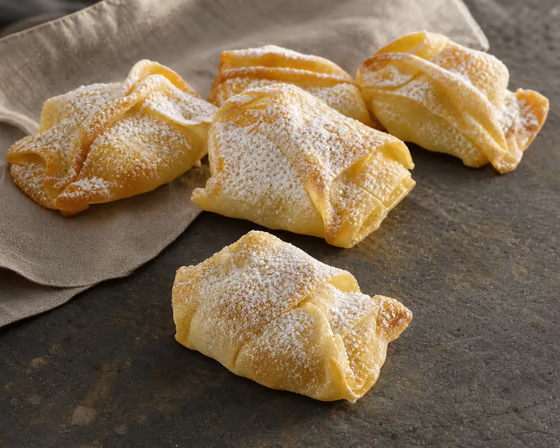 Catalogue image
 Saint Friar Gil’s Saddlebags
The small saddlebag-shaped pastry created at Vouzela’s vocational school and recognised as an innovative sweet.
The Centre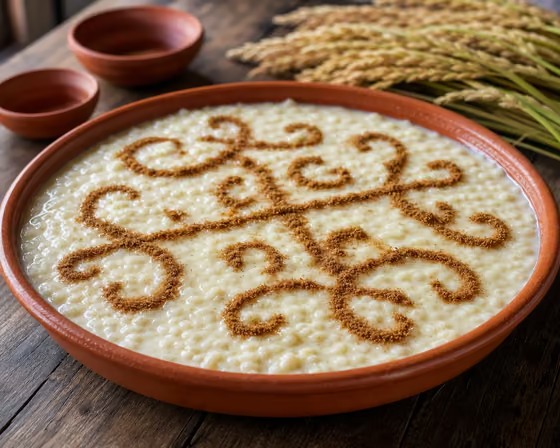 Catalogue image
 Baixo Mondego Rice Pudding
Mondego Carolino rice and Gândara milk, traced with cinnamon.
The Centre Catalogue image
 Arrufada de Coimbra
Coimbra's light, fragrant sweet bread, given by godparents at Easter.
The Centre