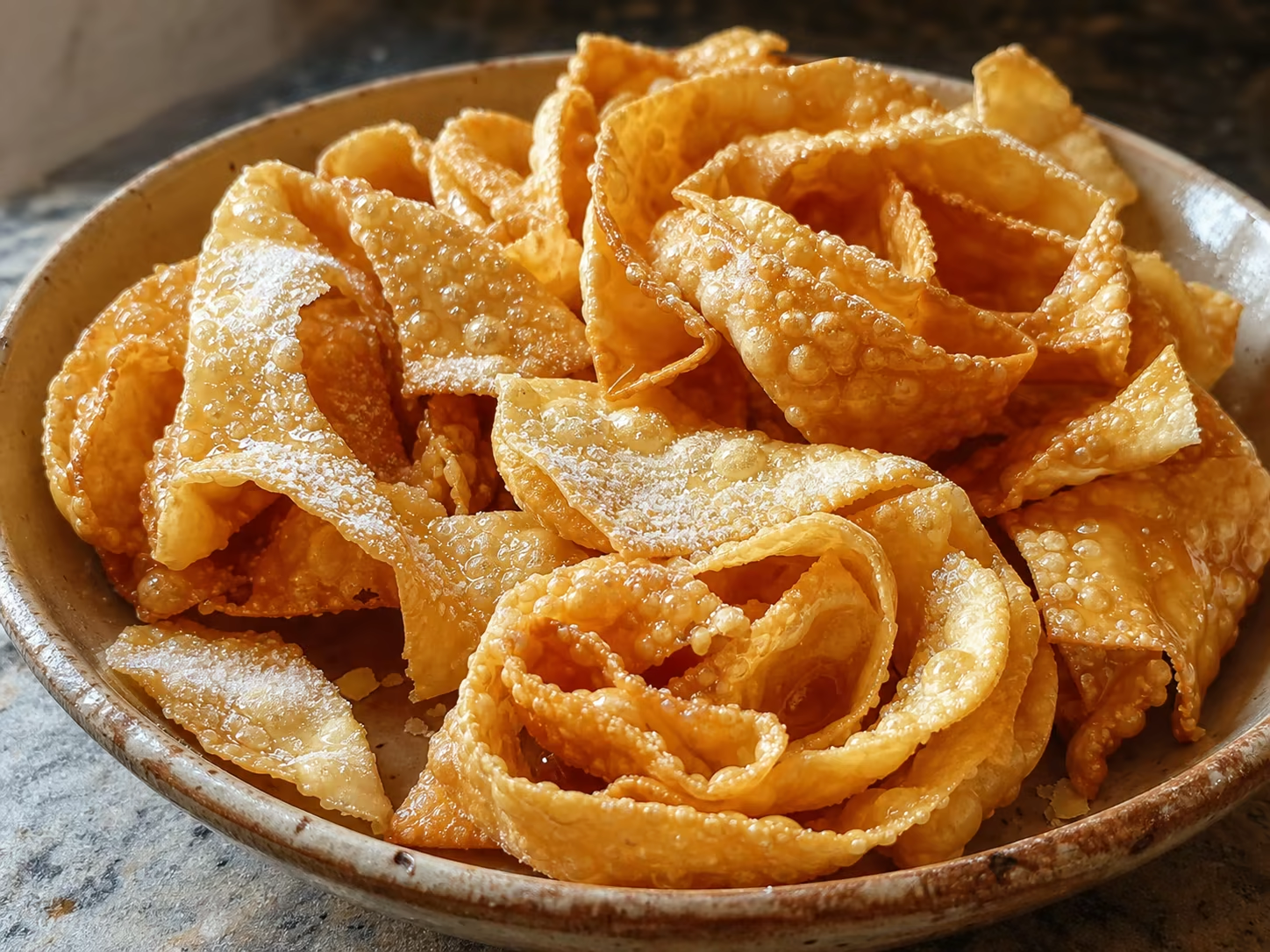
Cabrela Ribbon Fritters
Also known as: Cabrela Ribbon Fritters
An Alentejo fritter of thin cut dough coiled into crisp ribbons.
- Origin
- Cabrela · Montemor-o-Novo
- Place
- Cabrela · Montemor-o-Novo
- Region
- The Alentejo
- Category
- Fried Sweets
- Season
- Year-round; an Entrudo tradition with strong Christmas demand
- Evidence
- Well documented
Filhós de Cabrela is not a flat disc. Its dough is rolled very thin, cut with a traditional cartilha and folded or coiled into broad loose ribbons. In the fryer, those loops open into irregular rosettes full of hollow spaces, triangular flaps and blisters. The result is large but light, golden and extremely crisp.
Flour, eggs, fat, aguardente, orange and salt form the base; family formulas add olive oil, butter or lard and sometimes aniseed. Once fried, the filhó may be finished with sugar or honey. Production remains highly manual: kneading, rolling, cutting and shaping each piece are the gestures that determine its texture and silhouette.
- wheat flour
- eggs
- sugar
- lard or butter
- olive oil
- aguardente
- orange juice and zest
- salt
- honey or sugar to finish
Very crisp and light, scented with orange and aguardente, with clean fried notes and a sugar or honey finish.
Proportions and fats vary by family; cut and coiled ribbon shapes distinguish the Cabrela reference.
In Cabrela during Carnival and local food events; it is also sold in shops and supermarkets across southern Portugal year-round.
Tea, coffee, água-pé or orange liqueur.
The fritter belongs to Cabrela's family memory and was traditionally tied to Entrudo: families gathered to prepare batches that could last from Carnival until Easter. The community recovered and organised that know-how, registering the local name in 2015 and championing the clay mixing bowl, wooden or cane rolling pin and traditional cartilha cutter. In 2019, Filhós de Cabrela won the Évora district selection, advanced through the semi-final and reached the national grand final of the Seven Wonders of Portuguese Sweets, among just fourteen entries.
Well documented
Identity supported by institutional, specialist or corroborating sources.
- projetos.7maravilhas.pt/gala-final-doces/ (opens in a new tab)
- patega.blogs.sapo.pt/filhos-de-cabrela-patrimonio-cultural-4132 (opens in a new tab)
- jfcabrela.pt/concurso-de-ideias-para-logotipo-da-filhos-de-cabrela/ (opens in a new tab)
- auchan.pt/pt/produtos-frescos/pastelaria/pastelaria-regional/filhos-cabrela-125g-%28l%29/3532032.html (opens in a new tab)
- sicnoticias.pt/pais/2024-12-16-video-filhos-de-cabrela-um-dos-doces-de-natal-mais-procurados-no-alentejo--e-nao-so--f889735f (opens in a new tab)
- caruspinus.pt/wp-content/uploads/2019/05/LISTA_7MDOCESP_140_NOMEADOS_2ELIMINATORIA.pdf (opens in a new tab)
Pastries from here — The Alentejo
 Catalogue image
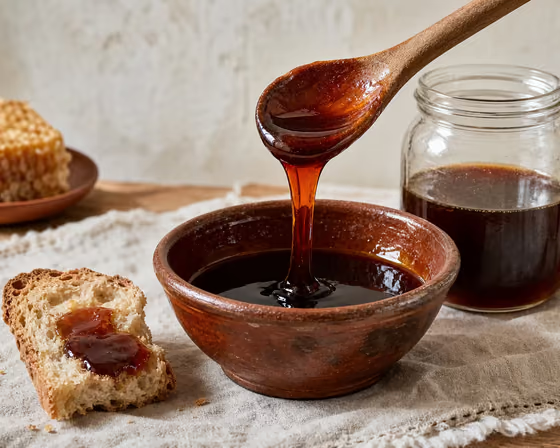
 Portuguese Água-mel Syrup
Water that recovers honey from combs after extraction, filtered and reduced for hours to 70–77° Brix.
The Alentejo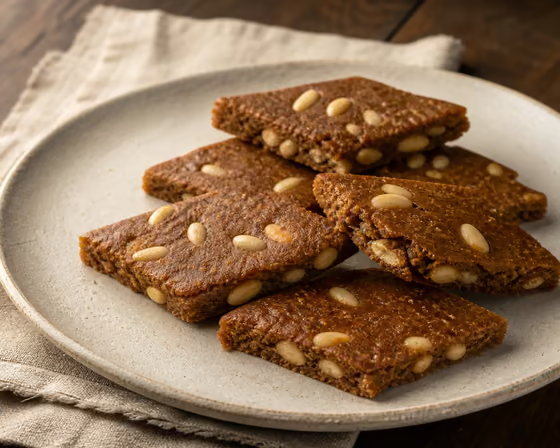 Catalogue image
 Alcomonias
Toasted coarse wheat flour, honey and pine nuts spread and cut into diamonds.
The Alentejo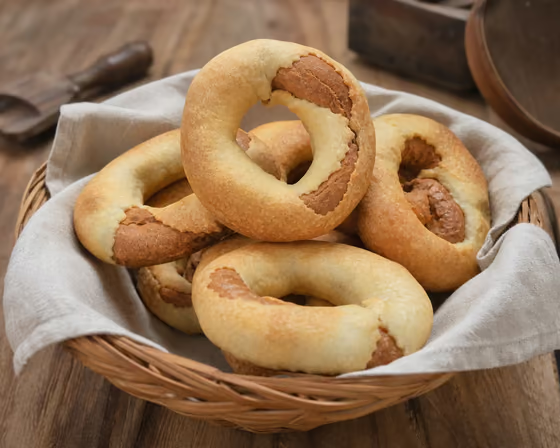 Catalogue image
 Amoreiras-Gare Alcôncoras
A large circular honey-and-olive-oil biscuit born from Amoreiras-Gare's promise-pole tradition.
The Alentejo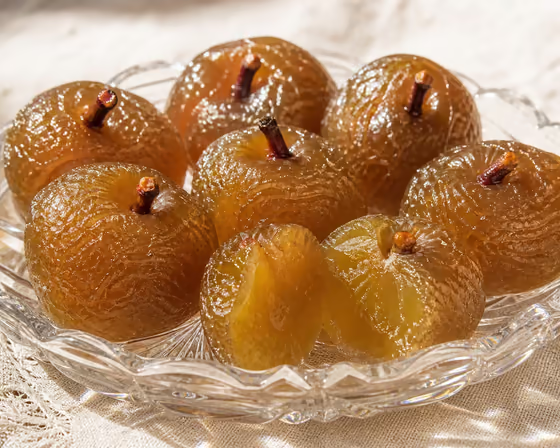 Catalogue image
 Elvas Plums
Protected Rainha Cláudia Verde greengages sold fresh, dried or candied—the sweet form requires at least seven days of slow candying.
The Alentejo