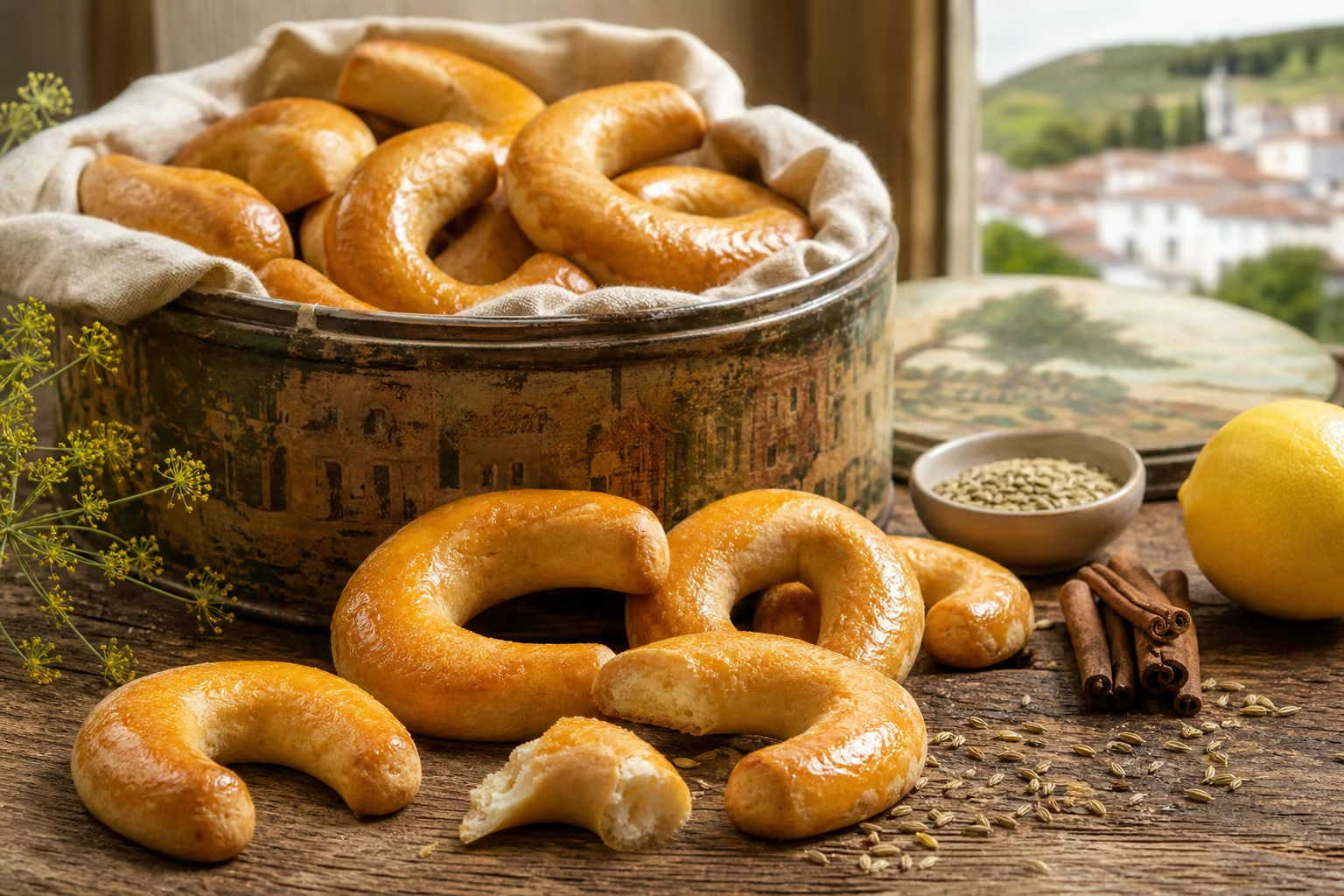
Póvoa Horseshoes
Also known as: Póvoa horseshoes
A traditional Póvoa speciality documented with flour, lemon, aniseed and cinnamon.
- Origin
- Póvoa · Union of the Parishes of Coz, Alpedriz and Montes · Alcobaça
- Place
- Póvoa
- Region
- The West
- Category
- Cakes & Sweet Breads
- Season
- Seasonality not documented
- Evidence
- Limited documentation
Ferraduras da Póvoa are a traditional speciality of Póvoa, a locality in the Union of the Parishes of Coz, Alpedriz and Montes, in the municipality of Alcobaça. A local report published in 2017 identifies four ingredients at the base of the recipe: wheat flour, lemon, aniseed and cinnamon.
The open source does not publish the complete formula, proportions, method or a tasting description. This entry therefore does not add eggs, sugar, fat, raising agent, glaze or texture without documentation. The name indicates a horseshoe form, but the original photograph linked from the report is no longer available in the newspaper archive.
- Wheat flour
- Lemon
- Aniseed
- Cinnamon
The source identifies lemon, aniseed and cinnamon as aromatic components, but does not describe the product's sweetness, richness or texture.
Other Portuguese sweets are called ferraduras, including Ribatejo wedding cakes and bakery horseshoes made with dough and cream. A shared name or outline does not establish that they use the Póvoa recipe or share its history.
The 2017 report documents home production by Fernanda de Almeida. No recent open source was found confirming a current producer, shop, fair or commercial availability; check locally before travelling.
Not documented in the sources consulted.
In O Alcoa's 2017 report, Fernanda de Almeida, then aged 74, is presented as having made Ferraduras da Póvoa since childhood. Her testimony documents domestic continuity across generations, but it does not date the recipe's origin.
No source was found connecting this speciality to the Monastery of Coz, weddings or a good-luck custom. Nor should the history of horseshoe-shaped wedding cakes from other regions be transferred to Póvoa merely because they share a name or form.
Limited documentation
The identity is documented, but its origin, composition or availability has limited sourcing.
How we assess sources and uncertainty →Pastries from here — The West
 Catalogue image
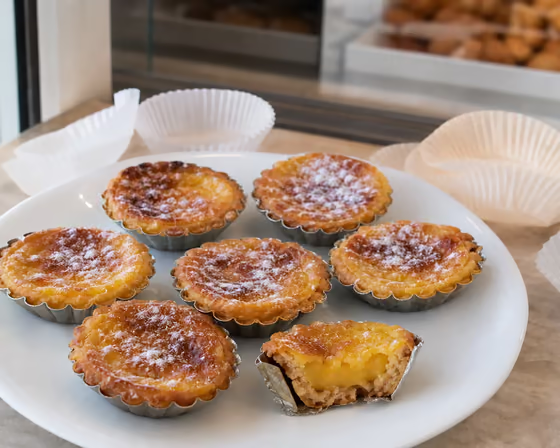
 Friends of Peniche
The sweet named after friends you should not trust.
The West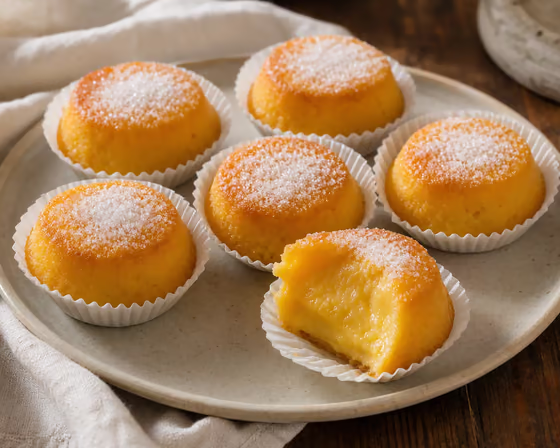 Catalogue image
 Areias Brancas
Small yolk-and-almond pudding cakes, named by the coast and covered with white sugar.
The West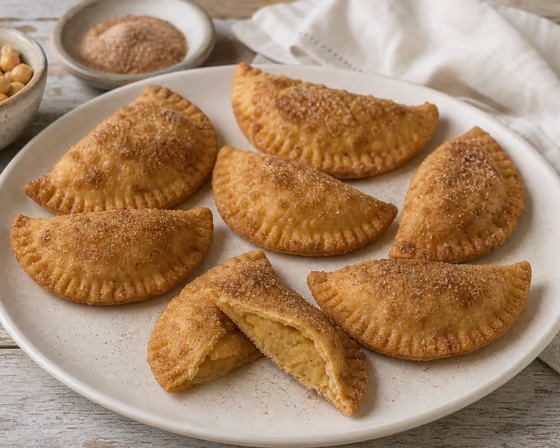 Catalogue image
 Peniche Chickpea Azevias
Thin fried half-moons with a sweet, creamy chickpea, almond and egg-yolk filling.
The West Catalogue image
 Lourinhã DOC Brandy Bonbon
A dark-chocolate bonbon with a Lourinhã DOC brandy heart.
The West