Económicos
Also known as: Bolos económicos · Biscoitos económicos · Biscoito / Bolo Económico · Azeiteiros · Sodos · Beira Alta-style biscuits
The festival biscuit made from whatever was at home — sugar the only thing you had to buy.
- Origin
- Beira Alta and the central interior, a rural festive sweet rooted in the thrifty home kitchens of the countryside
- Place
- Beira Alta
- Region
- The Centre
- Category
- Festive & Seasonal
- Season
- Festivals, pilgrimages and afternoon snacks; especially Easter
- Evidence
- Well documented
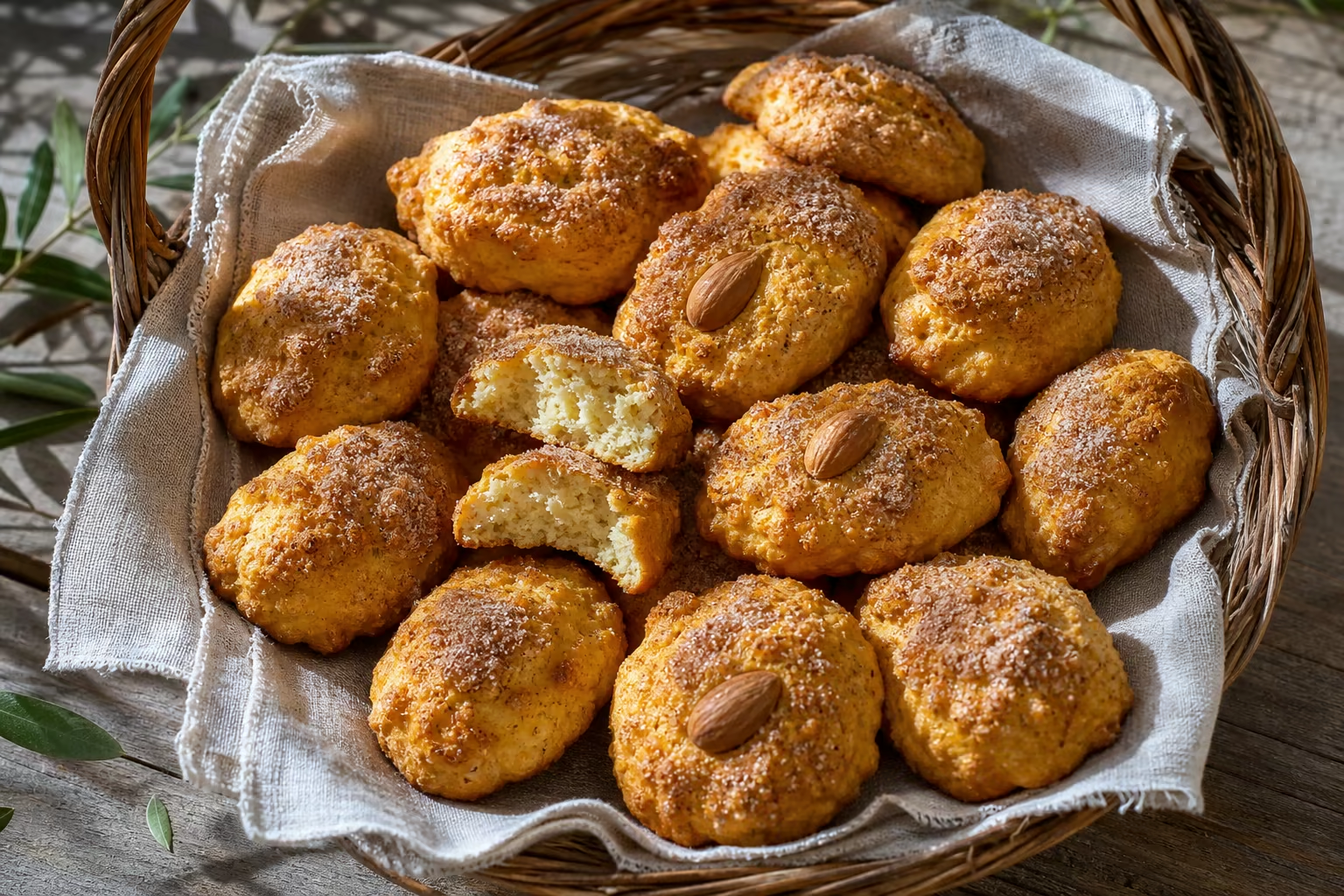
Económicos are golden biscuits from Beira Alta and Portugal's central interior, once baked by the trayful for Easter hampers, festivals and pilgrimages. Their name tells the story: this was affordable confectionery made largely from what a rural household could provide.
Flour, eggs, sugar, milk, olive oil and sometimes butter are perfumed with a little brandy and raised into small mounds. Brushed with yolk and scattered with cinnamon sugar—and on special occasions topped with an almond—they are slightly dry yet tender, keep well for days and embody generous village baking rather than convent refinement.
- Wheat flour
- Eggs
- Sugar
- Milk
- Olive oil
- Aguardente (grape spirit)
- Leavening
- Cinnamon and sugar (to dust)
- Butter (optional)
- Almond (optional)
Fluffy within but on the dry side — a biscuit made to keep — with a golden top where the egg yolk has gilded and the sugar caramelised. The sweetness is moderate and homely, threaded with the warm scent of aguardente and cinnamon, over the mellow body that olive oil and milk give the dough.
Every household has its own version: some use only olive oil, others add butter or vegetable oil; some add orange juice, lemon zest or aniseed, and some prefer to dust with sugar alone rather than cinnamon. The almond on top — once common because almond trees were plentiful in the fields — is now kept for the more special batches. Across the Beiras and Trás-os-Montes you find very close relatives under other names, such as the azeiteiros and the sodos.
These are a sweet of the home and the festa more than of the pastry shop, so the best place to try them is a romaria or country fair in the Beira Alta, or a regional family's table around Easter. In historic villages such as Almeida and Castelo Mendo, the recipe has been revived and shared as part of the local culinary heritage.
They call for a coffee or a cup of tea at the afternoon lanche; on a festa day they go well with a small glass of Port, a Moscatel, or the very aguardente that scents their dough. In the Beira Alta they are sometimes served with Serra da Estrela cheese, too.
Económicos belong to the rural tradition of the Beira Alta and the central interior, and sit within the same family of home-baked biscuits that runs across the Beiras and into Trás-os-Montes — where close cousins are called azeiteiros, after the olive oil in the dough, or sodos. The name "económicos" (the economical ones) comes from their very purpose: in a subsistence economy they were the way to have a festive sweet for almost nothing, since the ingredients were homemade and, as they tell it in the Historical Village of Almeida, "sugar was the only thing that had to be bought."
They were, and still are, a sweet for occasions and for the afternoon lanche: from the patron saint's festa to Easter, from pilgrimages to family evenings, a huge batch would be baked to keep and to give away. Because they were built from whatever each household had, they vary from village to village and family to family, and the "true" recipe is really the one kept in each kitchen notebook.
Well documented
Identity supported by institutional, specialist or corroborating sources.
- aldeiashistoricasdeportugalblog.pt/en/2018/10/08/the-recipe-for-biscoitos-economicos-at-the-historical-village-of-almeida/ (opens in a new tab)
- tradicional.dgadr.gov.pt/en/categories/desserts-and-pastry/960-sodos-economicos-ou-azeiteiros (opens in a new tab)
- aldeiashistoricasdeportugalblog.pt/2019/09/24/as-iguarias-da-aldeia-historica-de-castelo-mendo/ (opens in a new tab)
- docesesobremesas.com/5850/ (opens in a new tab)
Pastries from here — The Centre
 Catalogue image
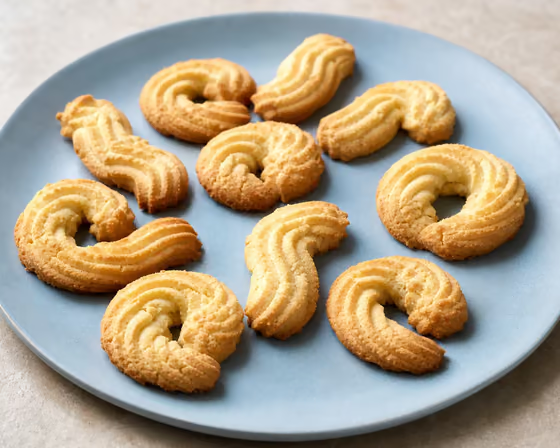
 Ílhavo Piped Butter Biscuits
Regional buttery biscuits piped into deeply ridged rings and curves.
The Centre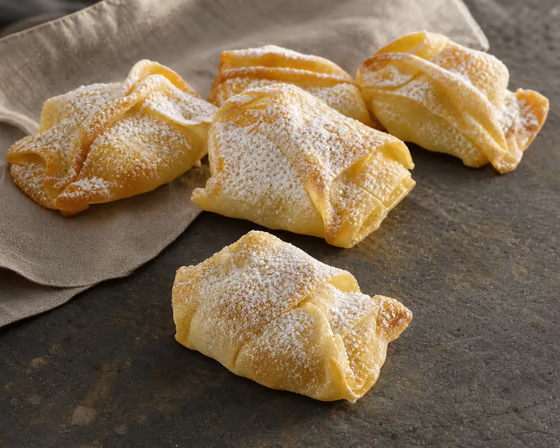 Catalogue image
 Saint Friar Gil’s Saddlebags
The small saddlebag-shaped pastry created at Vouzela’s vocational school and recognised as an innovative sweet.
The Centre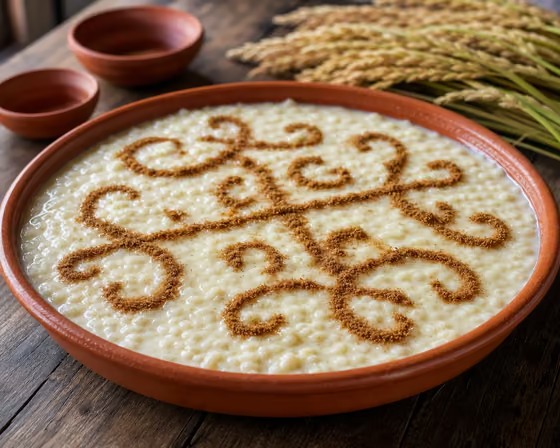 Catalogue image
 Baixo Mondego Rice Pudding
Mondego Carolino rice and Gândara milk, traced with cinnamon.
The Centre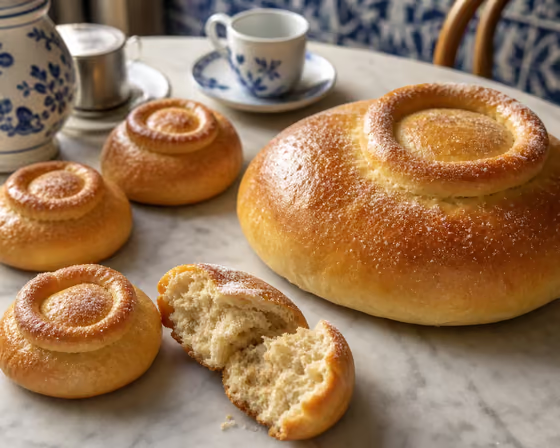 Catalogue image
 Arrufada de Coimbra
Coimbra's light, fragrant sweet bread, given by godparents at Easter.
The Centre