Friar João's Delights
Also known as: Friar João's Delight · Delight of Friar João
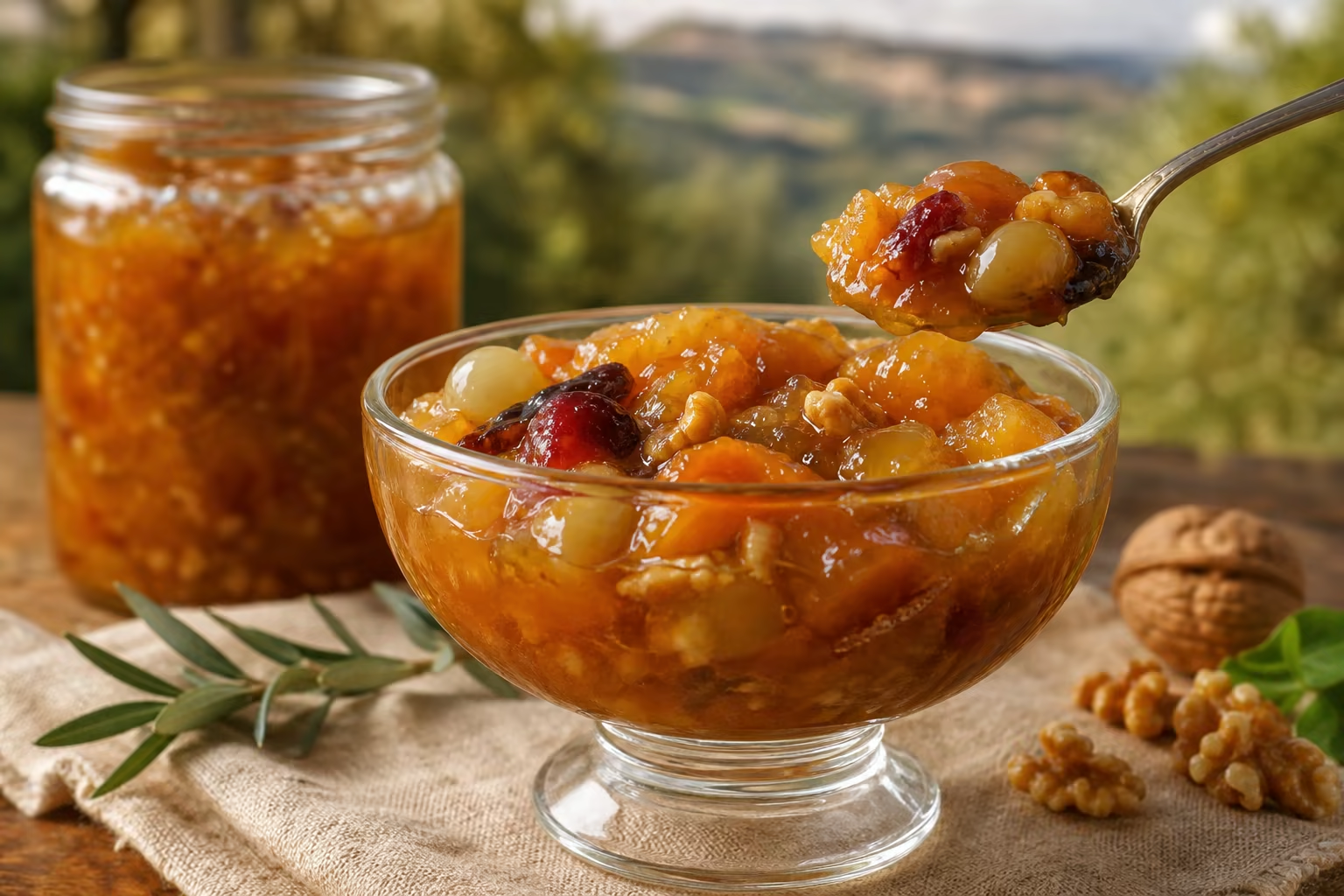
Ripe fruit, sugar and walnuts in a spoon sweet associated with Alcobaça.
- Origin
- Alcobaça · Oeste
- Place
- Alcobaça
- Region
- The West
- Category
- Convent Sweets
- Season
- Summer fruit; one culinary source lists year-round preparation
- Evidence
- Limited documentation
Delícias de Frei João are a fruit sweet associated with Alcobaça. The most concise tourism description calls it a preserve made with the region's best summer fruit, served in bowls or stored in jars. The open recipes reviewed agree on the core—ripe fruit cooked with sugar and chopped walnuts—but not on a single formula.
One published version uses peach, grapes, plums, melon and quince, further ripe fruit of choice, sugar, walnuts and optional cinnamon. Another cooks assorted fruit with sugar, cools the mixture, adds eight egg yolks and returns it to the heat before sprinkling it with walnuts. Egg yolks are therefore a documented variant, not an ingredient that can either be asserted or excluded across every version.
- Peach
- Grapes
- Plum
- Melon
- Quince
- Sugar
- Chopped walnuts
- Cinnamon stick (optional in one version)
- Egg yolks (in another published version)
A thick spoon sweet dominated by cooked fruit and sugar, with chopped walnuts; cinnamon and egg yolks depend on the version followed.
The reviewed sources contain at least two recipe families: an eggless preserve cooked to setting point with walnuts and optional cinnamon, and a fruit mixture to which eight egg yolks are added before the final cooking. The fruit selection also varies by recipe.
Alcobaça municipality presents it among local convent sweets and references the International Convent Sweets and Liqueurs Fair held in November. No municipal producer listing confirming regular availability of this specific sweet was found; check directly before making a special trip.
Not documented in the sources reviewed.
Alcobaça municipality includes Delícias de Frei João among the area's convent sweets and frames that tradition through the monasteries of Alcobaça and Coz. The same municipal page, however, distinguishes recipes preserved and adapted over time; it publishes no historical recipe and does not specifically attribute this sweet's creation to a friar, monastery or century.
Other sources connect the product with Alcobaça's abundance of ripe fruit. A secondary local account says the dish became known after the Second World War, but no contemporary document confirming that chronology was located. Its municipal classification as a convent sweet is solid; authorship and date of origin remain unproven.
Limited documentation
The identity is documented, but its origin, composition or availability has limited sourcing.
- allaboutportugal.pt/pt/alcobaca/saberes-e-sabores/delicias-de-frei-joao (opens in a new tab)
- cm-alcobaca.pt/50062/doces-conventuais (opens in a new tab)
- e-konomista.pt/doces-conventuais-de-alcobaca/ (opens in a new tab)
- lifecooler.com/artigo/atividades/delicias-de-frei-joao/329658 (opens in a new tab)
- acp.pt/Viagens-e-Lazer/Estrada-Fora/Sugestoes-de-passeios/Rede-de-Mosteiros-Patrimonio-da-Humanidade (opens in a new tab)
Pastries from here — The West
 Catalogue image
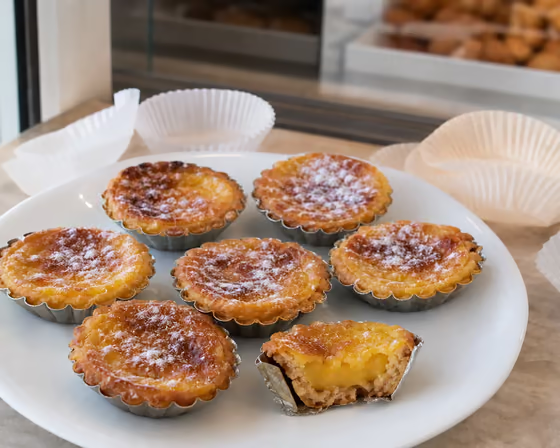
 Friends of Peniche
The sweet named after friends you should not trust.
The West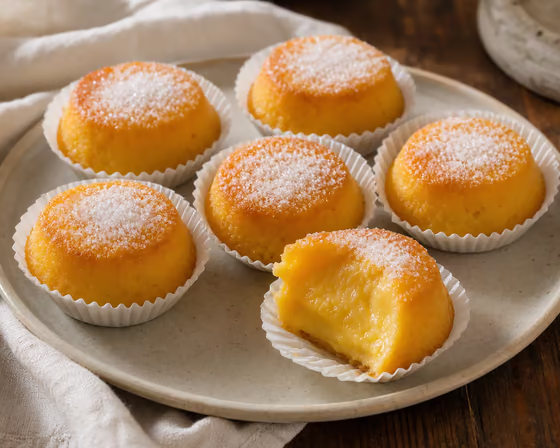 Catalogue image
 Areias Brancas
Small yolk-and-almond pudding cakes, named by the coast and covered with white sugar.
The West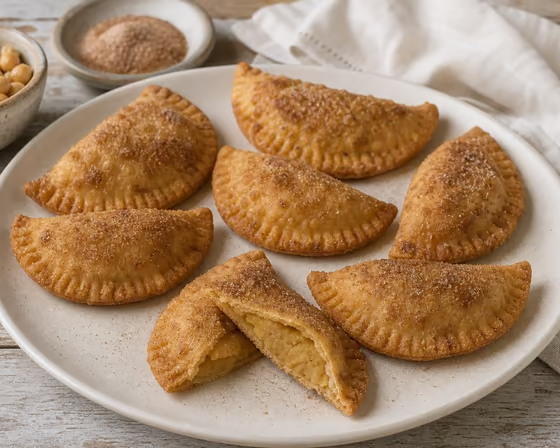 Catalogue image
 Peniche Chickpea Azevias
Thin fried half-moons with a sweet, creamy chickpea, almond and egg-yolk filling.
The West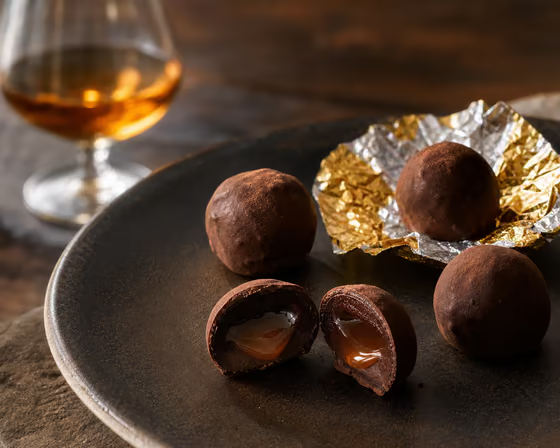 Catalogue image
 Lourinhã DOC Brandy Bonbon
A dark-chocolate bonbon with a Lourinhã DOC brandy heart.
The West