Costa da Caparica Claudino
Also known as: Claudino pastry · Costa da Caparica Claudino · Portuguese caramelised puff-pastry sandwich
Costa da Caparica’s long puff pastry, caramelised outside and joined with pastry cream.
- Origin
- Costa da Caparica, Almada · 1980s
- Place
- Costa da Caparica
- Region
- Lisbon
- Category
- Laminated & Fine Pastries
- Season
- Year-round
- Dough family
- Laminated puff pastry Layers created through repeated folds of dough and fat.
- Evidence
- Well documented
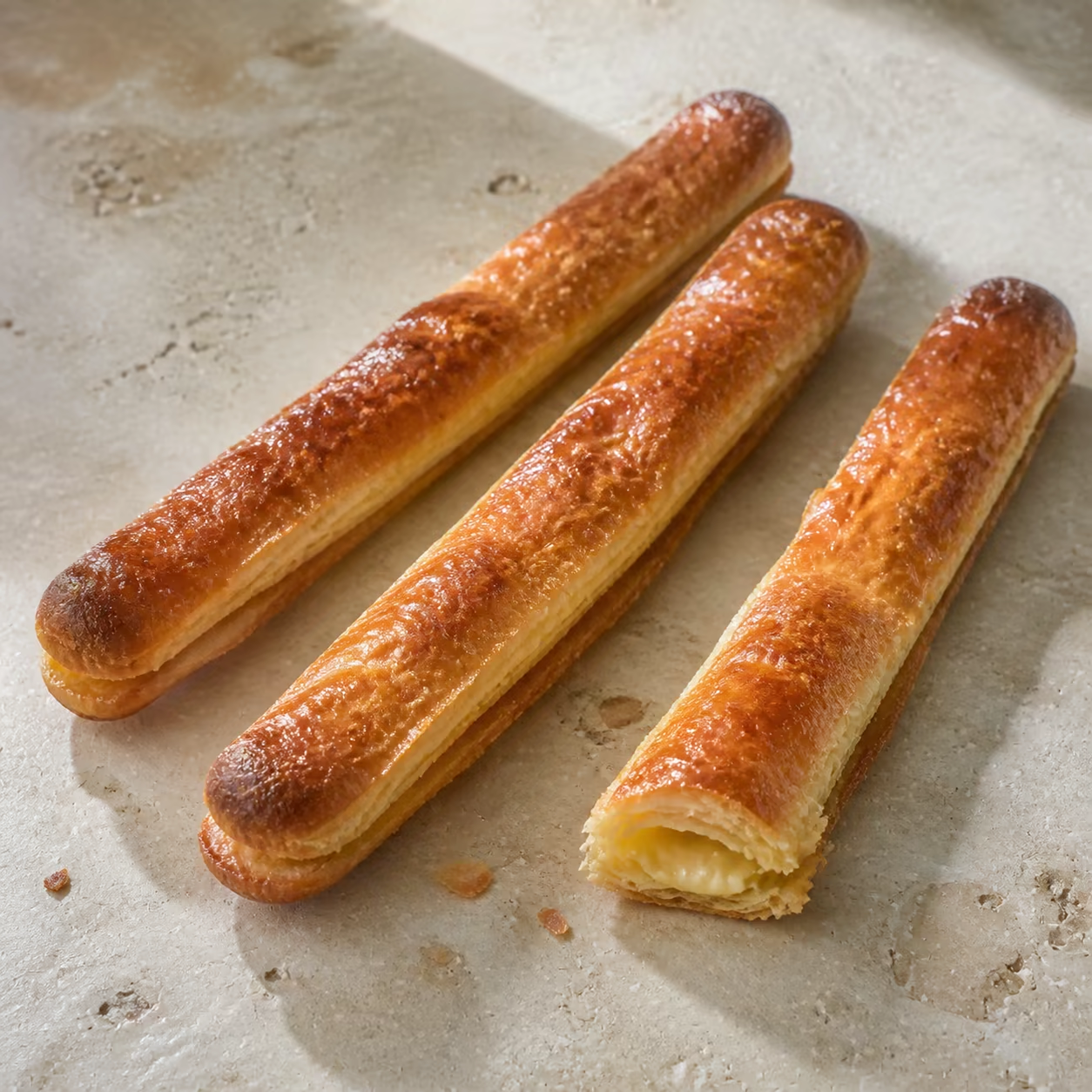
Claudino is an exceptionally long, narrow cake made from two halves of golden puff pastry joined like a sandwich with a layer of pale pastry cream. Sugar placed on the dough before baking caramelises, leaving a glossy surface and a fine crisp shell. Its profile recalls an éclair, but the dough is laminated puff pastry—not choux—and the open side exposes both flakes and filling.
Proportion is central to its identity: it resembles a flattened cigar with softly rounded ends and is far longer than it is wide. The laminated crust splinters into flakes while the milk-and-yolk cream softens the pastry without hiding it. This is a hand-held counter cake, often eaten still warm with coffee.
- Puff pastry
- Milk
- Egg yolks or whole eggs
- Sugar
- Flour or starch to thicken the cream
- Vanilla, depending on the bakery
Very crisp and lightly caramelised outside, buttery through the layers and soft at the centre. The pale cream contributes milk, yolk and vanilla without the intensity of pure egg-yolk sweet; the contrast is strongest while the pastry is fresh or warm.
The reference form uses pale pastry cream, although some shops employ a yellower egg cream. Size also varies: beyond the narrow coffee-sized cake, O Capote takes orders for giant birthday Claudinos. Regional names such as Caparica and Caparicano do not necessarily indicate different recipes.
The benchmark address is Pastelaria O Capote on Rua dos Pescadores in Costa da Caparica, where batches emerge throughout the day. The same street has another documented tradition at Pastelaria Copacabana, while Xandite operates several Costa locations. In Lisbon, Eater recorded the cake at historic A Tentadora in Campo de Ourique. Confirm opening hours and availability directly with each shop.
A Portuguese bica, espresso or meia de leite.
Current sources agree on a modern origin in Costa da Caparica but differ over the first shop and individual authorship. Fabrico Próprio’s research connects its promotion with chef Carlos Capote; NiT recorded the O Capote family’s account of experiments by bakers at the former Pastelaria Costa Nova in the 1980s; and Eater attributes the first experiment to Papo-Seco. Without a primary archive resolving those accounts, the defensible facts are place, period and pastry-making lineage—not a single named inventor.
O Capote, opened as a pastry shop in 1984, preserved the recipe through bakers from the earlier establishment and became its best-known standard-bearer. In 2023 it reported selling about one thousand a day. The cake spread across the south bank of the Tagus and into Lisbon; it is also called Caparica or Caparicano, although Claudino remains the name tied to the local speciality.
Well documented
Identity supported by institutional, specialist or corroborating sources.
- fabricoproprio.net/enciclopedia/claudino/ (opens in a new tab)
- cm-almada.pt/sites/default/files/2025-10/Almada_Revista_set_out%202025.pdf (opens in a new tab)
- nit.pt/comida/cafes-e-bares/os-verdadeiros-claudinos-so-se-fazem-numa-casa-em-portugal-dali-saem-mil-por-dia (opens in a new tab)
- eater.com/23339627/portugal-claudino-pastry-costa-da-caparica-pasteis-de-nata-eclair (opens in a new tab)
- dicionario.priberam.org/claudino (opens in a new tab)
- mapapraiadosol.com/pastelaria-o-capote/ (opens in a new tab)
Pastries from here — Lisbon
 Catalogue image
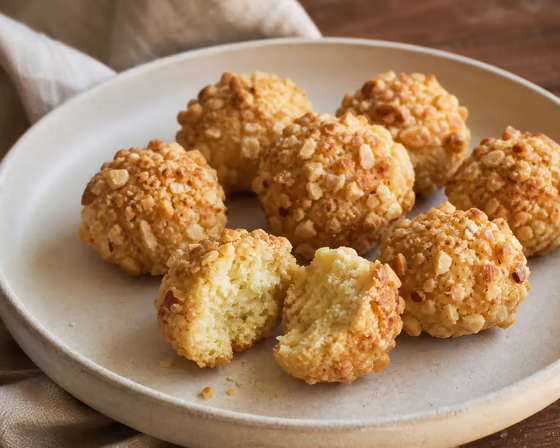
 Amendoados
Small dry, crumbly cakes, shaped by hand and crowned with coarsely chopped almonds.
Lisbon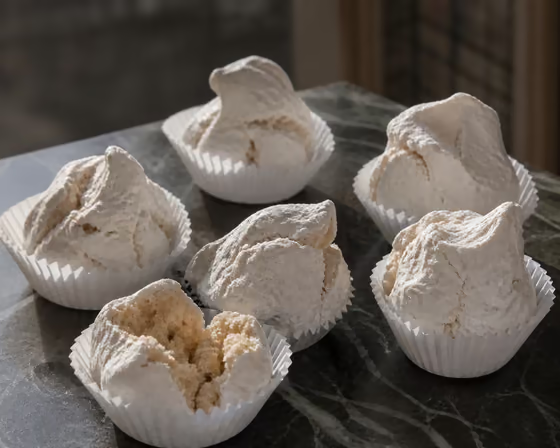 Catalogue image
 Azeitão Almond Meringues
Rustic hand-shaped almond meringues with a white, delicately cracked shell.
Lisbon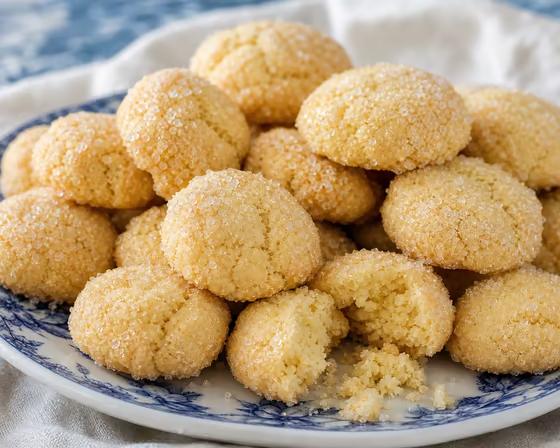 Catalogue image
 Cascais Sands
Beach sand that melts on the tongue.
Lisbon Catalogue image
 Arroubo Grape-Must Preserve
Must reduced slowly—alone as syrup or with fruit as uvada—in terminology that varies among sources and localities.
Lisbon