Loriga White-Maize Broa
A white-maize broa born in Loriga's communal ovens.
- Origin
- Loriga · Serra da Estrela
- Place
- Loriga
- Region
- The Centre
- Category
- Cakes & Sweet Breads
- Season
- Year-round
- Evidence
- Well documented
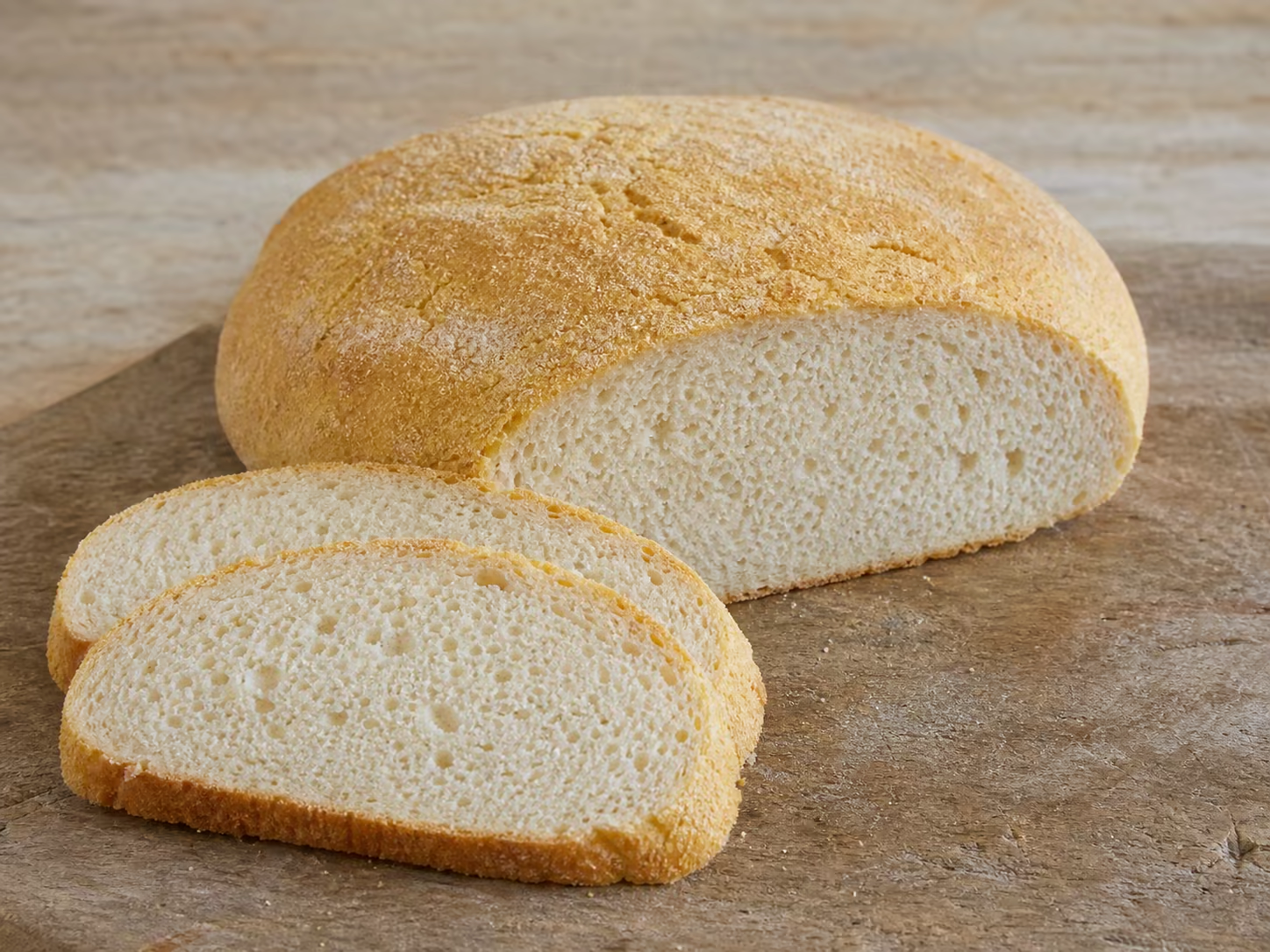
Broa de Loriga is a round, slightly flattened bread made with white maize flour, water, salt and baker's yeast. Its crust is toasted yellow with few cracks; inside, the crumb is white, dry and porous.
The flour is mixed with hot water, kneaded and left to rise for about two hours before entering a very hot oven. It is an austere broa closely tied to the mountain village's everyday diet.
- white maize flour
- water
- salt
- baker's yeast
A clean maize flavour, firm crust and dry, white, porous crumb.
It differs from darker Portuguese broas through its use of white maize; family marks and the degree of toasting varied between bakers and ovens.
The Confraternity of Broa and Bolo Negro de Loriga identifies Loripão as a current producer and maintains a list of places to buy and taste it in Loriga; confirm hours and availability before visiting.
Serra cheese, butter or a mountain soup.
For more than two centuries, broa was central to life in Loriga. Many families combined maize cultivation with industrial work and baked their bread in communal ovens managed by women known as forneiras.
Before rising, the dough was blessed and marked with a cross; each family then identified its loaf with pinches, holes or small objects so it could be recognised among the communal batch.
Well documented
Identity supported by institutional, specialist or corroborating sources.
- tradicional.dgadr.gov.pt/pt/cat/doces-e-produtos-de-pastelaria/1048-broa-de-loriga (opens in a new tab)
- confrariadeloriga.com/index.php/a-broa/historia (opens in a new tab)
- confrariadeloriga.com/index.php/a-broa/como-adquirir (opens in a new tab)
Pastries from here — The Centre
 Catalogue image
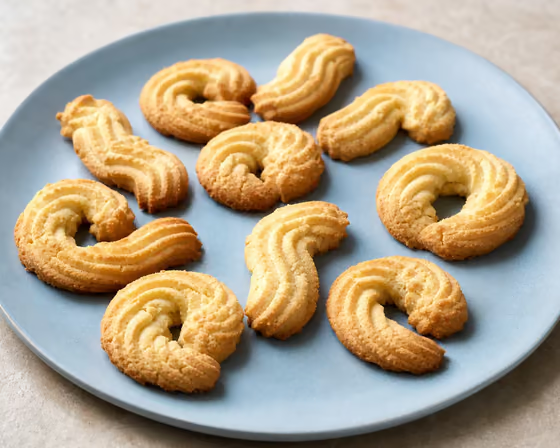
 Ílhavo Piped Butter Biscuits
Regional buttery biscuits piped into deeply ridged rings and curves.
The Centre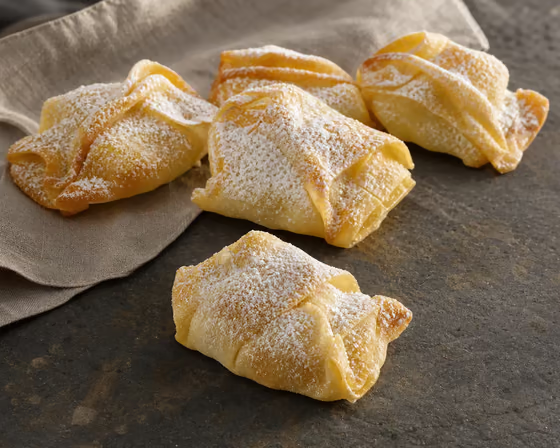 Catalogue image
 Saint Friar Gil’s Saddlebags
The small saddlebag-shaped pastry created at Vouzela’s vocational school and recognised as an innovative sweet.
The Centre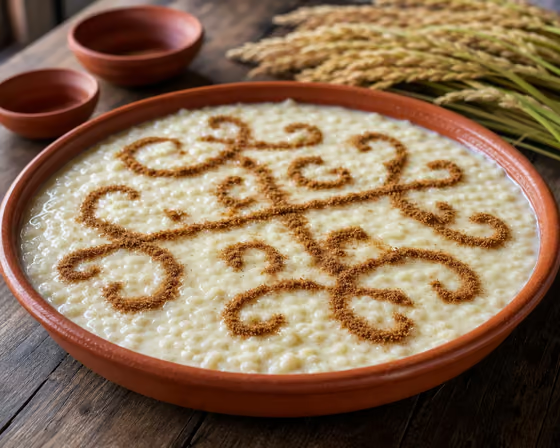 Catalogue image
 Baixo Mondego Rice Pudding
Mondego Carolino rice and Gândara milk, traced with cinnamon.
The Centre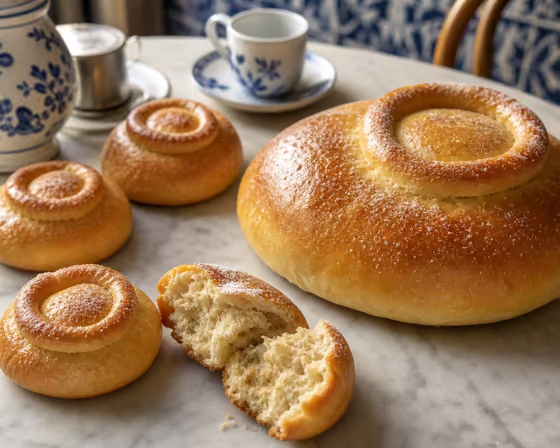 Catalogue image
 Arrufada de Coimbra
Coimbra's light, fragrant sweet bread, given by godparents at Easter.
The Centre