Ançã Sweet Bread
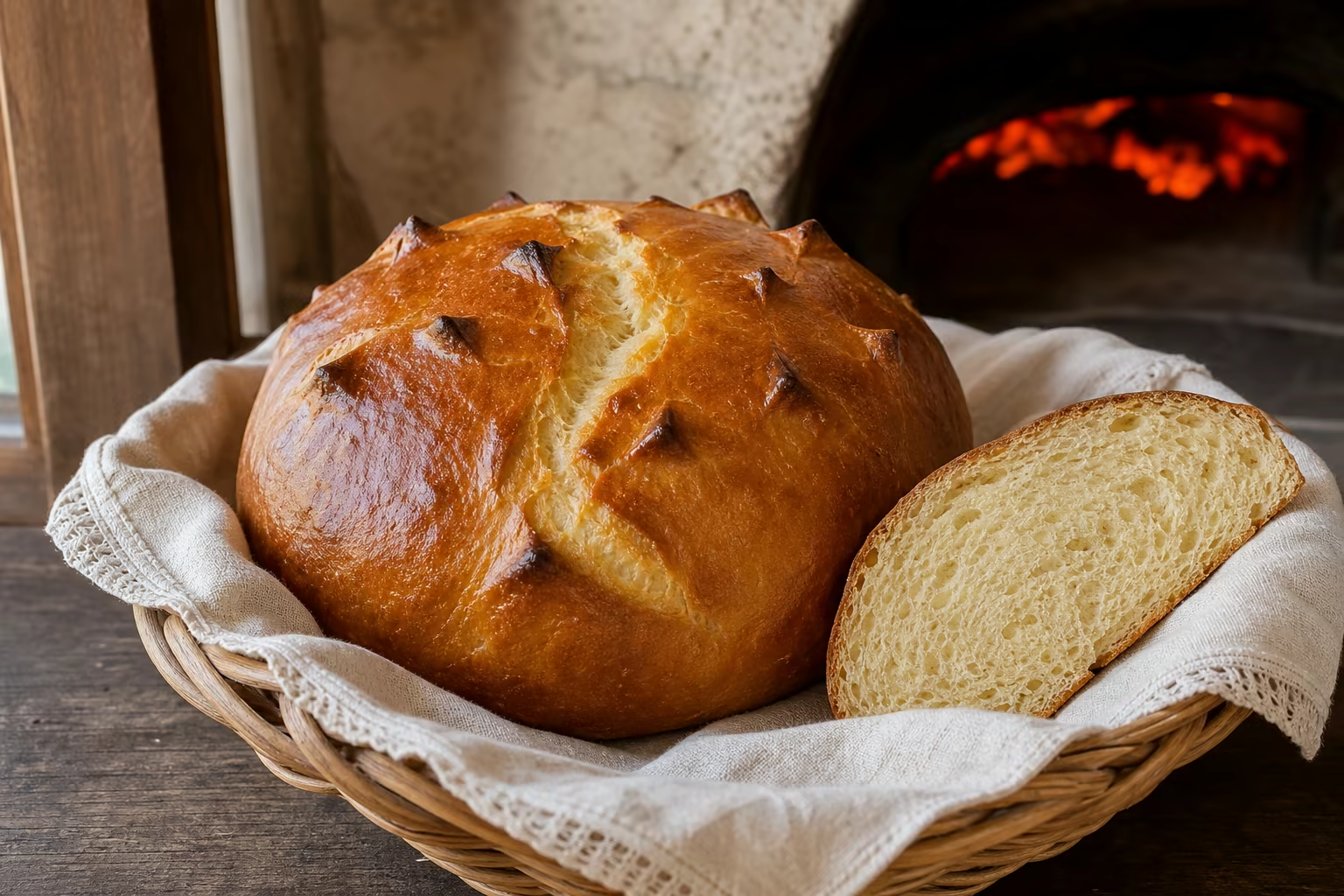
A lightly sweet, soft golden Easter bread marked by little crests.
- Origin
- Ançã · Cantanhede
- Place
- Ançã · Cantanhede
- Region
- The Centre
- Category
- Cakes & Sweet Breads
- Season
- Year-round · especially Easter
- Evidence
- Well documented
Bolo de Ançã belongs to Beira Litoral's family of sweet Easter breads. Flour, sugar, eggs, butter and baker's yeast form a light, soft and only mildly sweet dough, kneaded by hand, proved twice and brushed with yolk before wood-fired baking.
Its deeply golden surface rises into characteristic little crests. It keeps reasonably well and, despite its strong Easter association, is sold year-round by Ançã's traditional women bakers from baskets, fairs and markets.
- flour
- sugar
- eggs
- butter
- baker's yeast
- egg yolk for glazing
Lightly sweet, buttery and soft, with a thin toasted-yolk crust and elastic crumb.
Ançã also makes cinnamon-scented S-shaped bolos de cornos and richer, more egg-heavy bolos finos given as Easter gifts.
In Ançã and at markets around Cantanhede, Coimbra and Figueira da Foz, looking for the traditional women bakers and their baskets.
Milky coffee, tea or aged cheese.
Its origin is lost to time, and generations of women bakers made it an emblem of the town. In 1933, writer Jaime Cortesão recorded that admirers from Lisbon returned to the capital with their cars loaded with the speciality. Cantanhede municipality keeps that identity active: in 2026 it announced the 23rd Bolo de Ançã Fair, describing the cake as one of the greatest symbols of local gastronomic identity.
Well documented
Identity supported by institutional, specialist or corroborating sources.
- tradicional.dgadr.gov.pt/pt/cat/doces-e-produtos-de-pastelaria/998-bolo-de-anca (opens in a new tab)
- cm-cantanhede.pt/mcsite/evento/24230/xxiii-feira-do-bolo-de-anca (opens in a new tab)
Pastries from here — The Centre
 Catalogue image
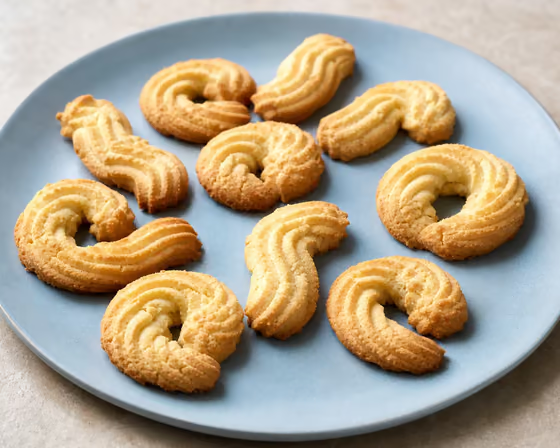
 Ílhavo Piped Butter Biscuits
Regional buttery biscuits piped into deeply ridged rings and curves.
The Centre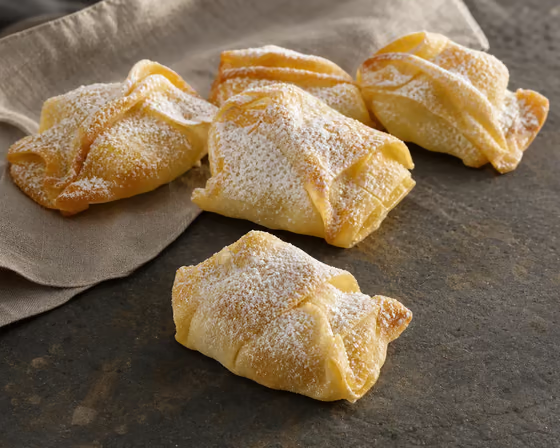 Catalogue image
 Saint Friar Gil’s Saddlebags
The small saddlebag-shaped pastry created at Vouzela’s vocational school and recognised as an innovative sweet.
The Centre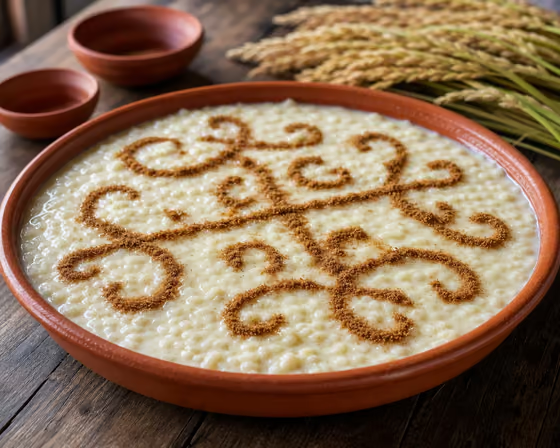 Catalogue image
 Baixo Mondego Rice Pudding
Mondego Carolino rice and Gândara milk, traced with cinnamon.
The Centre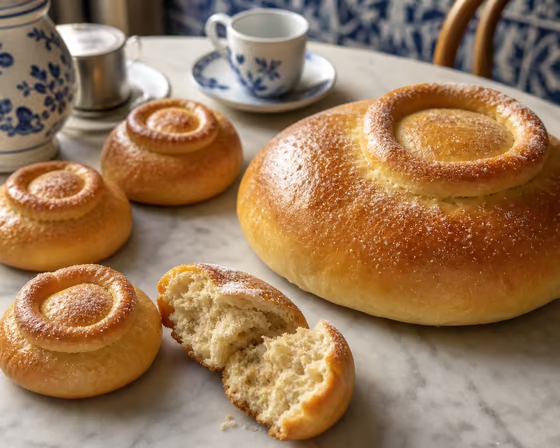 Catalogue image
 Arrufada de Coimbra
Coimbra's light, fragrant sweet bread, given by godparents at Easter.
The Centre