Oliveira de Azeméis Zamacóis
Also known as: Oliveira de Azeméis Zamacóis · Zamacol
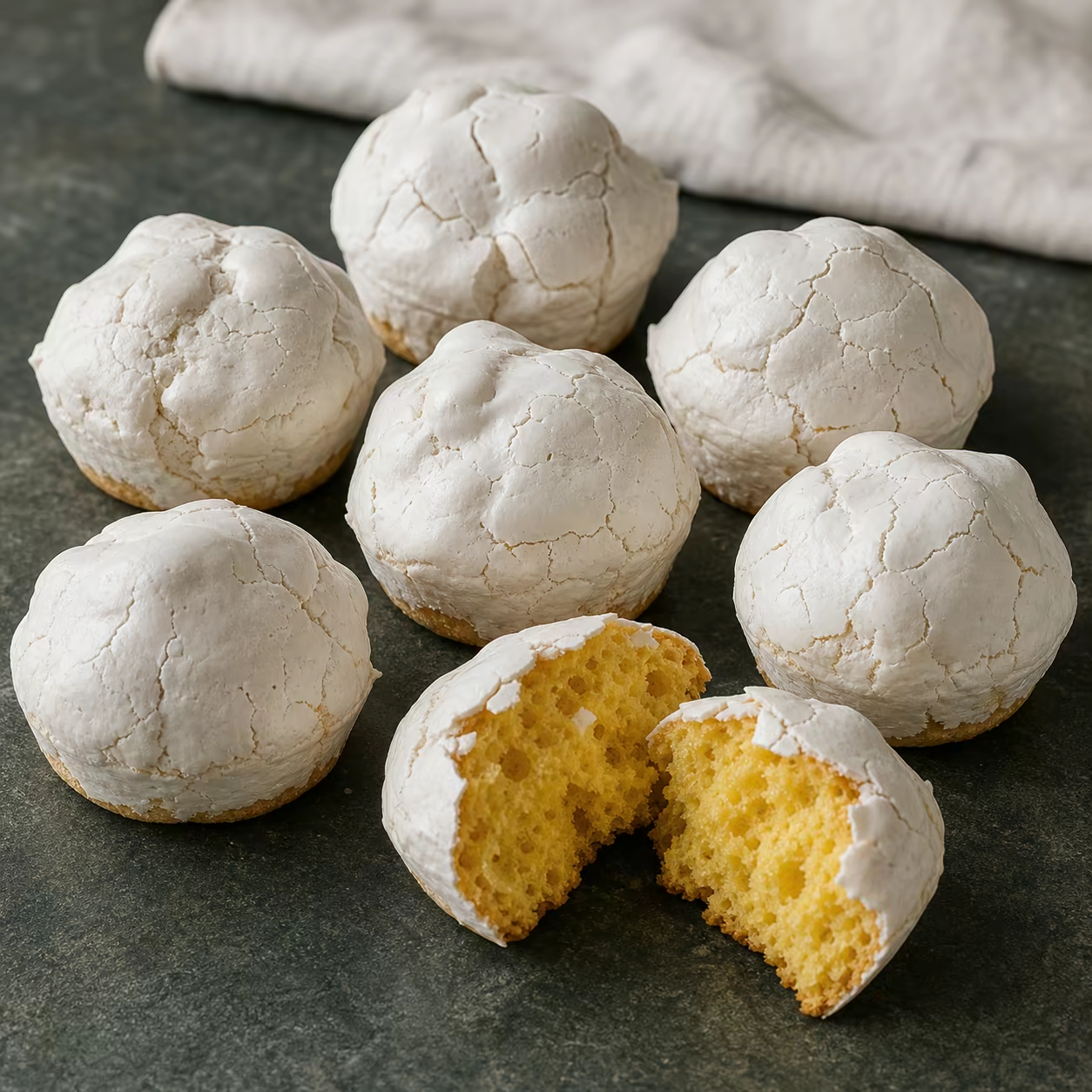
A highly puffed, yolk-rich little cake enclosed in a crisp white shell.
- Origin
- Oliveira de Azeméis · Aveiro District
- Place
- Oliveira de Azeméis
- Region
- The North
- Category
- Cakes & Sweet Breads
- Season
- Year-round and local food events
- Evidence
- Well documented
Zamacóis are small regional cakes from Oliveira de Azeméis, made with flour, sugar, butter and eggs. Their yolk-rich batter rises in small moulds into a highly puffed golden cake. Once cool, each cake is covered with beaten egg white and sugar, which dries into a thin, crisp white shell.
That combination separates them from an ordinary muffin: beneath the brittle white surface is a light, yellow, buttery crumb. Modern recipes sometimes place them near the cavaca family, but their name and attachment to Oliveira de Azeméis are distinctive.
- wheat flour
- sugar
- butter
- egg yolks and eggs
- egg whites
A light, yellow, buttery crumb wrapped in a sweet, dry and brittle shell.
Proportions vary among household recipes. The constant is a small puffed egg-and-butter cake finished with a white egg-white-and-sugar coating; versions with soft frosting or coconut do not match the municipal description.
Look for them in traditional pastry shops and food events in Oliveira de Azeméis, especially initiatives connected with the municipal Sabores de Azeméis programme. They are not an everyday item everywhere, so check before visiting.
Espresso or black tea, whose bitterness balances the sugary shell.
Zamacol appears in Portugal's national list of traditional products and is presented by Oliveira de Azeméis municipality among the sweets that define the local pastry tradition. The municipal 'Sabores de Azeméis' brochure records both the cake ingredients and the egg-white-and-sugar coating, describing its crisp shell.
Local memory recalls women selling them from baskets in the city streets. A story repeated in popular recipe writing attributes the formula to a zarzuela singer said to have passed through Oliveira de Azeméis in the eighteenth century; this is oral tradition rather than a documented origin.
Well documented
Identity supported by institutional, specialist or corroborating sources.
- cm-oaz.pt/download.php (opens in a new tab)
- eubrdialogues.com/sites/default/files/acoes/documentos/049xlix_lista_de_produtos_tradicionais_portugueses_v_19_0.pdf (opens in a new tab)
- cozinhatradicional.com/zamacois-oliveira-de-azemeis/ (opens in a new tab)
- ondasdaserra.pt/index.php/oliveira-concelho/oliveira-conhecer/item/916-gastronomia-oliveirense (opens in a new tab)
Pastries from here — The North
 Catalogue image
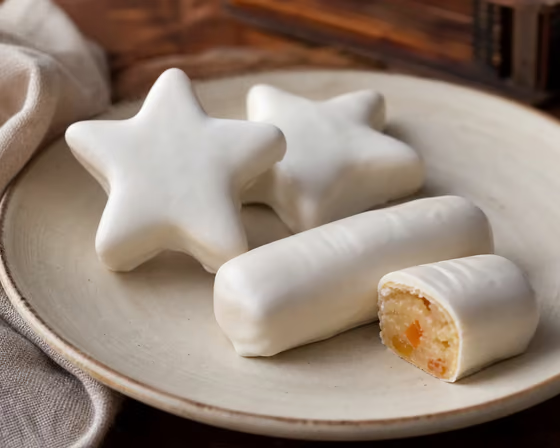
 A Bella Queijadinha de Barcelos
A white star of almond, preserved fruit and family memory.
The North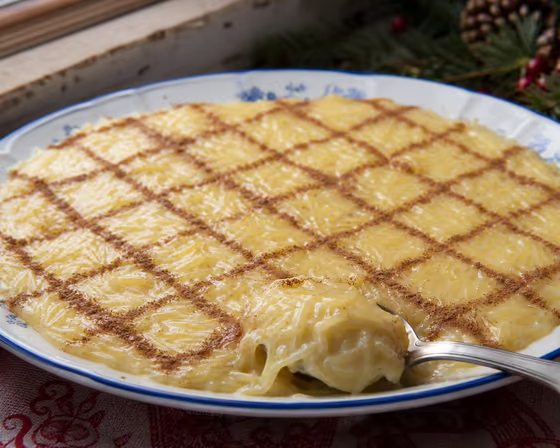 Catalogue image
 Sweet Vermicelli
Fine wheat threads simmered in milk and yolk, scored with cinnamon.
The North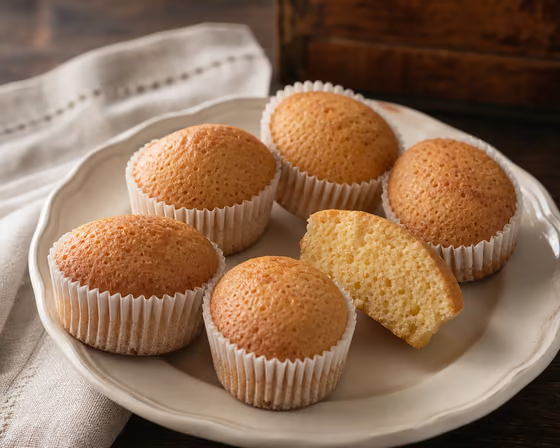 Catalogue image
 Amarantinos
Small egg, lemon and cinnamon cakes whose historical identity is not told consistently by the sources.
The North Catalogue image
 Vieira do Minho Cone Wafers
Paper-thin crisp wafers, iron-baked and rolled by hand while still hot.
The North