Sweet Vermicelli
Also known as: Sweet aletria · Portuguese vermicelli pudding · Sliceable aletria · Mugasa's aletria
Fine wheat threads simmered in milk and yolk, scored with cinnamon.
- Origin
- Traditional Portuguese sweet, strongly associated with the Minho and the north, Moorish in root and convent-refined (16th-18th c.)
- Place
- Minho
- Region
- The North
- Category
- Puddings & Spoon Sweets
- Season
- Christmas
- Evidence
- Well documented
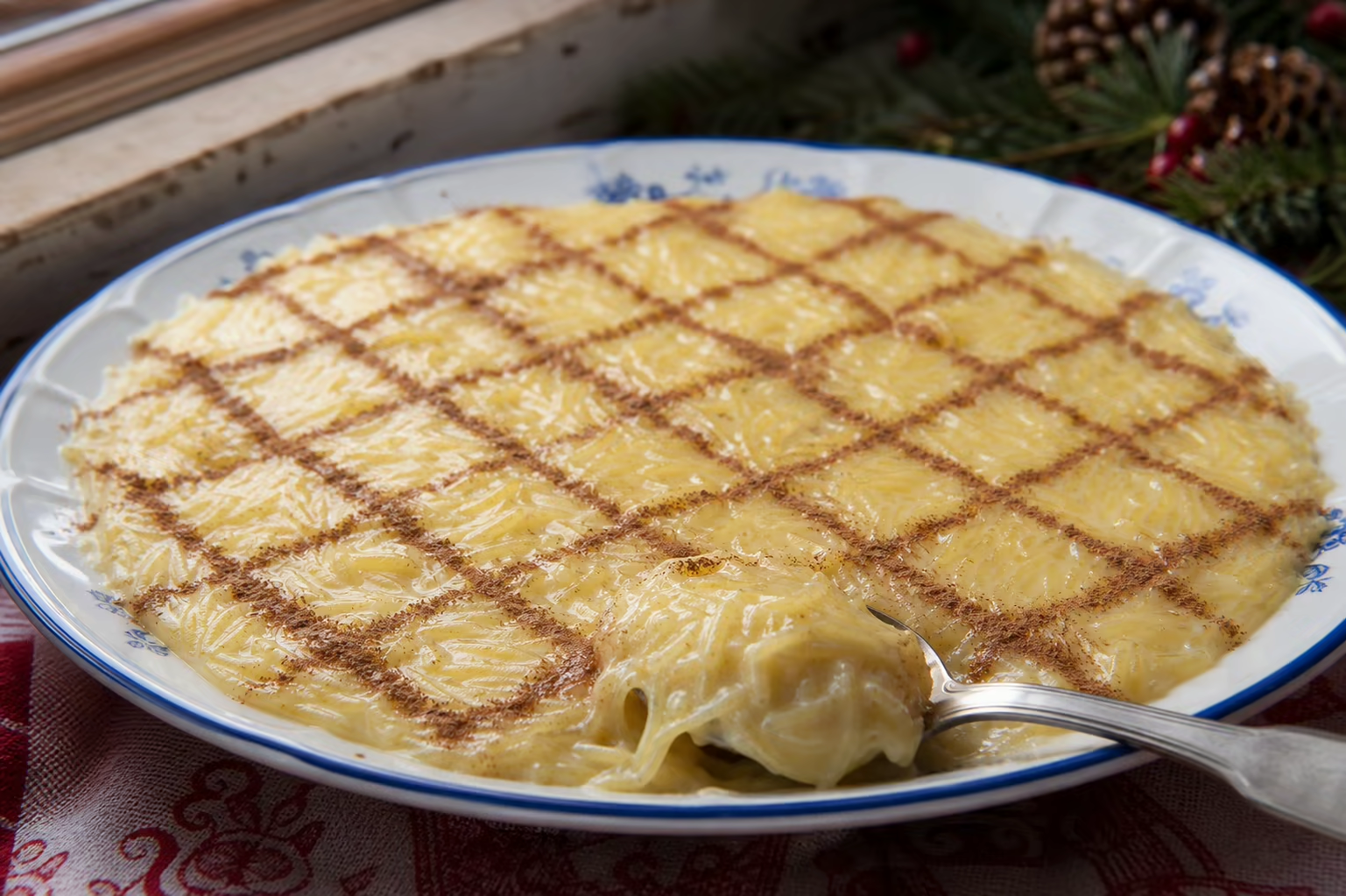
Aletria is one of Portugal's best-loved Christmas sweets, especially in the Minho and the north: wheat pasta drawn into threads as fine as hair, slowly simmered in milk scented with lemon peel and a cinnamon stick until it turns golden and creamy. Bound with egg yolks, it sits somewhere between rice pudding and custard, yet the gentle bite of the threads themselves sets it apart from any other spoon sweet.
It is served soft and glossy, spread across a deep plate or a wide platter. Over the top, ground cinnamon is traced into diamonds, lattices or the maker's initials — the flourish that turns a homemade pudding into a point of pride on the Christmas Eve table.
- Aletria pasta (fine wheat threads)
- Milk
- Sugar
- Egg yolks
- Lemon peel
- Cinnamon stick
- Ground cinnamon
- Pinch of salt
Sweet and comforting, with the citrus lift of lemon and the warmth of cinnamon balancing the richness of the yolks. The texture is creamy but never smooth: you always feel the soft strand of pasta, which gives it body and makes it lighter on the palate than rice pudding.
The main divide is texture: creamy and spoonable in the Minho, firm and sliceable in the Beiras, where it is sometimes browned in the oven. Some enrich it with extra yolks for a deeper orange hue, some scent it with only lemon or only cinnamon, and there are versions that fold in custard or orange zest.
It is above all a home sweet, made on Christmas Eve throughout the Minho and the north, though also found across the country in traditional pastelarias and restaurants. In Fogueira, Sangalhos, Restaurante Mugasa serves Mugasa's Aletria year-round from the recipe of Dona Helena, chef Ricardo Nogueira's mother; this rendition reached the 140 public-vote finalists of the Seven Wonders of Portuguese Sweets in 2019. Confirm availability.
It belongs to the Christmas Eve parade of sweets, beside rice pudding, rabanadas and sonhos. It pairs well with a tawny Port, a Moscatel, or — in true Minho fashion — a glass of red vinho verde; a plain espresso at the end cuts the sweetness.
The threaded pasta itself is an Arab legacy: the word aletria comes from Arabic al-itriyya, and the product reached the Iberian Peninsula with the Muslim presence, around the 8th-9th centuries, long before anyone sweetened it. It was in Portugal's convents, between the 16th and 18th centuries, that it took its present sweet form, as part of the egg-and-sugar-rich tradition of conventual sweets — customarily linked to using up the yolks left over when egg whites were put to other uses.
From that convent kitchen it passed into the home, settling as a Christmas sweet across most of the country, with particular strength in the Minho and the north. A regional split survives: in the Beiras aletria is made firmer, to be cut into slices (aletria de faca); in the Minho it is preferred creamy, to be eaten with a spoon.
Well documented
Identity supported by institutional, specialist or corroborating sources.
- pt.wikipedia.org/wiki/Aletria_(sobremesa) (opens in a new tab)
- en.wikipedia.org/wiki/Aletria (opens in a new tab)
- pastalove.co.uk/blogs/news/itriyya-the-original-arab-pasta (opens in a new tab)
- rotadabairrada.pt/pt/onde-comer/restaurante-mugasa (opens in a new tab)
- cm-anadia.pt/cmanadia/uploads/document/file/3586/nws_2019_345_1101_tur_fgastsant_press.pdf (opens in a new tab)
- caruspinus.pt/wp-content/uploads/2019/05/LISTA_7MDOCESP_140_NOMEADOS_2ELIMINATORIA.pdf (opens in a new tab)
Pastries from here — The North
 Catalogue image
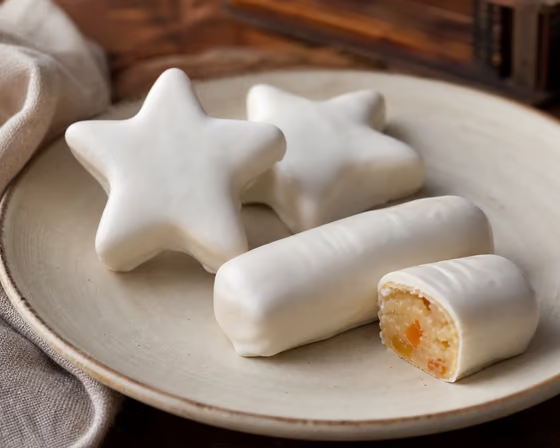
 A Bella Queijadinha de Barcelos
A white star of almond, preserved fruit and family memory.
The North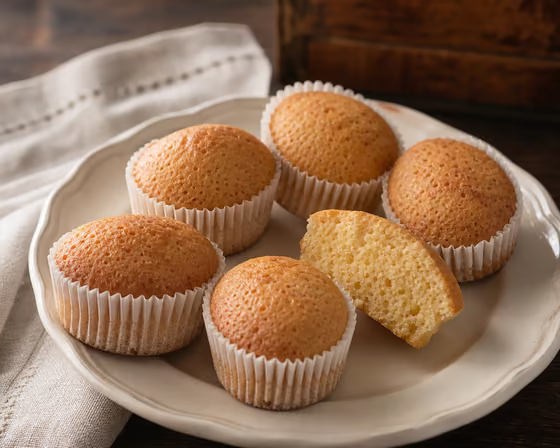 Catalogue image
 Amarantinos
Small egg, lemon and cinnamon cakes whose historical identity is not told consistently by the sources.
The North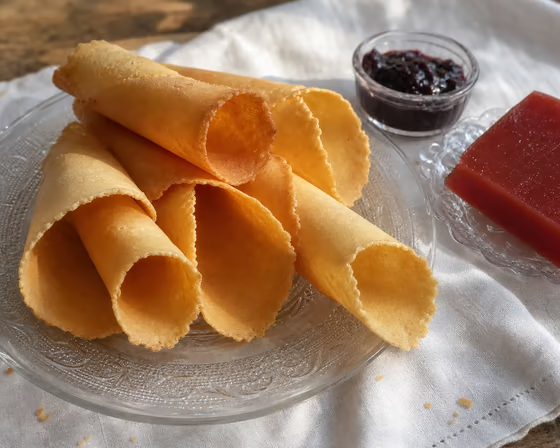 Catalogue image
 Vieira do Minho Cone Wafers
Paper-thin crisp wafers, iron-baked and rolled by hand while still hot.
The North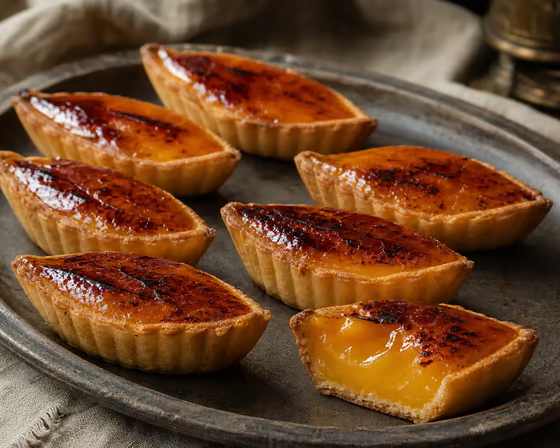 Catalogue image
 Lamego Santa Clara Egg-Yolk Boats
Buttery boats of egg-yolk cream and Port, sealed beneath an iron-burned sugar crust.
The North