Amarantinos
Small egg, lemon and cinnamon cakes whose historical identity is not told consistently by the sources.
- Origin
- Amarante and Douro Verde · documented but disputed convent attribution
- Place
- Amarante
- Region
- The North
- Category
- Convent Sweets
- Season
- No specific seasonality demonstrated in the reviewed sources
- Evidence
- Well documented
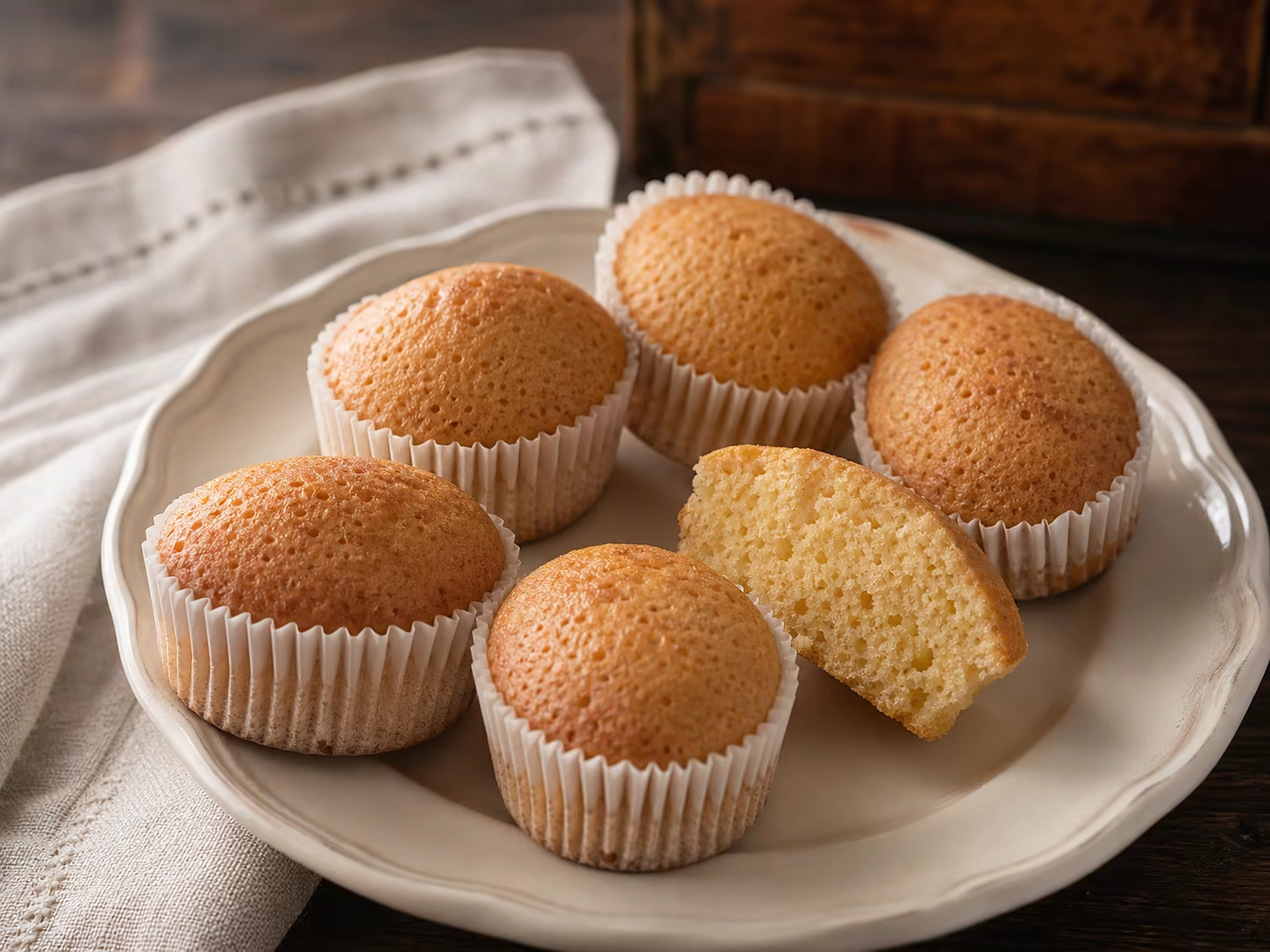
In the formula published by MINHA TERRA in 2013, Amarantinos are small cakes made with equal weights of flour and sugar, four eggs, cinnamon and lemon zest. The yolks are beaten with sugar and flavourings, the flour is incorporated, and whipped egg whites are folded in. The batter is baked in thoroughly greased small moulds; once unmoulded, the cakes are placed in pleated paper cases. DGADR reproduces the same ingredients and method.
DGADR's record delimits the production area to Amarante, Baião, Marco de Canaveses, Cinfães, Penafiel and Resende. The book underlying that record places Amarantinos among Amarante's convent sweets in the Douro Verde territory. Confeitaria da Ponte in Amarante currently includes the product by this name in its catalogue.
- Flour
- Sugar
- Eggs
- Cinnamon
- Lemon zest
The formula documents egg, lemon and cinnamon; beaten egg whites provide lightness.
Do not automatically conflate this small cake with Margaridas: one academic source records ‘amarantinos’ as an old name for those puff-pastry pieces, while modern sources also document Amarantinos with their own flour, sugar and egg formula.
Confeitaria da Ponte confirms current sale in Amarante. DGADR documents production in Baião, Marco de Canaveses, Cinfães, Penafiel and Resende as well, without identifying specific shops.
The reviewed sources specify no traditional accompaniment for Amarantinos.
The convent attribution should not be presented as a settled fact. QUALIFICA/oriGIn Portugal's indicative list associates ‘Amarantinos’ with Amarante's Santa Clara convent, while warning that the annex's data must be confirmed case by case. A University Portucalense study published in 2011 attributes Amarantinos, Toucinho-do-Céu de São Gonçalo and Sopa Dourada to the São Gonçalo convent; for Santa Clara, it lists other sweets, including Margaridas.
A 2023 academic article on Minho's monastic heritage adds another difficulty: in its table of sweets from Santa Clara in Amarante, it identifies Margaridas as ‘formerly called amarantinos’. This may represent a historical name now applied differently, or competing classification traditions; it does not prove that the small cake documented by DGADR is identical to the puff-pastry item described as a Margarida. This page therefore retains the documented modern product and exposes the disagreement, without merging the two sweets or choosing one convent as a certain origin.
Well documented
Identity supported by institutional, specialist or corroborating sources.
- tradicional.dgadr.gov.pt/pt/cat/doces-e-produtos-de-pastelaria/1019-amarantinos (opens in a new tab)
- oldwww.animar-dl.pt/site/assets/files/4651/receitas.pdf (opens in a new tab)
- repositorio.upt.pt/server/api/core/bitstreams/a3f2c551-be6b-40d6-afa3-6f596934fa64/content (opens in a new tab)
- scielo.cl/pdf/rivar/v10n30/0719-4994-rivar-10-30-89.pdf (opens in a new tab)
- qualificaportugal.pt/wp-content/uploads/2024/05/CQ-12-criterios-produto-da-docaria-conventual-3-05072016.pdf (opens in a new tab)
- confeitariadaponte.pt/produtos/ (opens in a new tab)
Pastries from here — The North
 Catalogue image
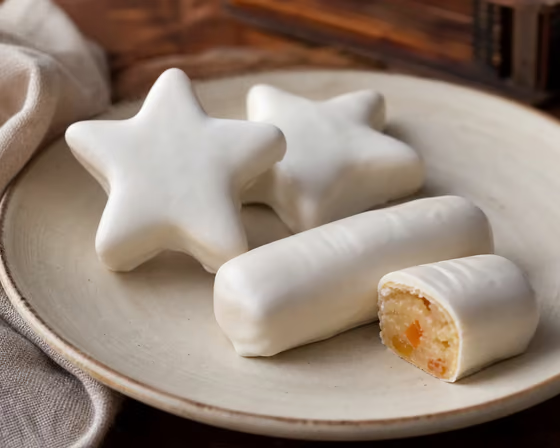
 A Bella Queijadinha de Barcelos
A white star of almond, preserved fruit and family memory.
The North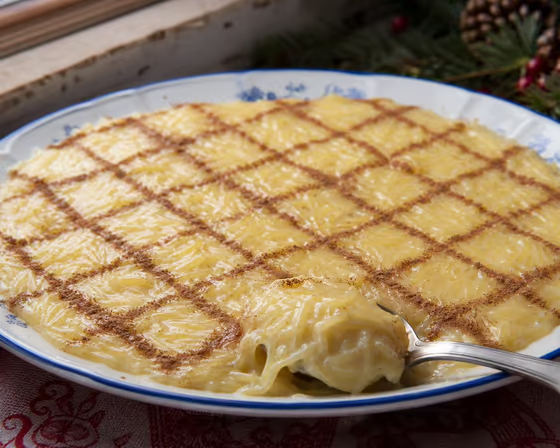 Catalogue image
 Sweet Vermicelli
Fine wheat threads simmered in milk and yolk, scored with cinnamon.
The North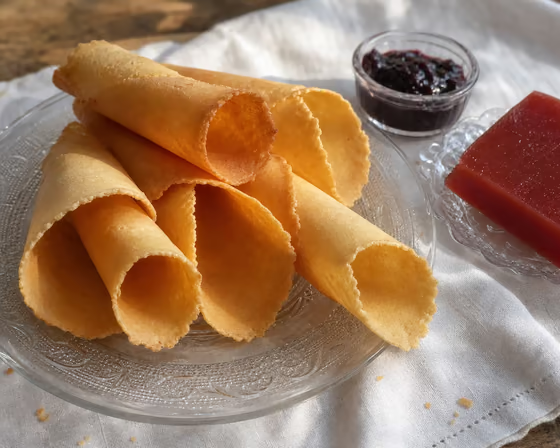 Catalogue image
 Vieira do Minho Cone Wafers
Paper-thin crisp wafers, iron-baked and rolled by hand while still hot.
The North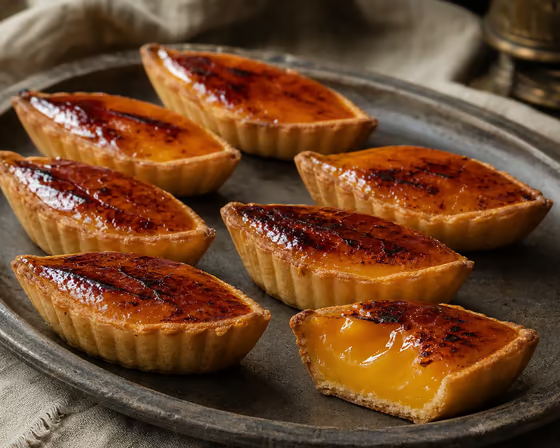 Catalogue image
 Lamego Santa Clara Egg-Yolk Boats
Buttery boats of egg-yolk cream and Port, sealed beneath an iron-burned sugar crust.
The North