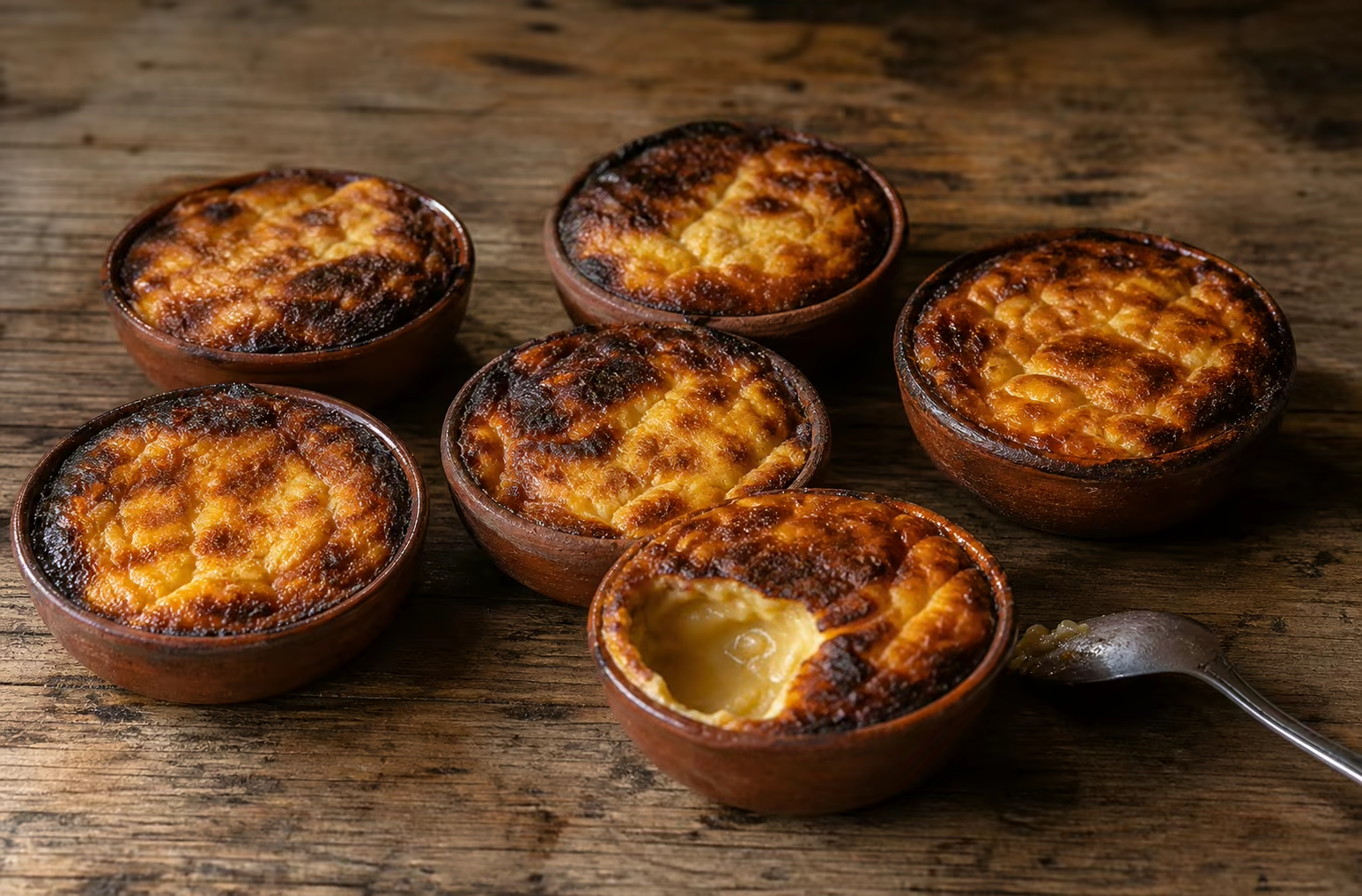
Tigelada
Also known as: Abrantes Tigelada · Tigelada da Beira Baixa · Tigelada de Castelo Branco
Eggs and milk in a clay bowl, gilded in the heat of a wood-fired oven.
- Origin
- Beira Baixa and the Médio Tejo; milk tigeladas are known from the 16th century, but their exact continuity with today's regional formulas is unknown
- Place
- Beira Baixa
- Region
- The Centre
- Category
- Puddings & Spoon Sweets
- Season
- Year-round, with a festive tradition in early summer
- Evidence
- Well documented
Tigelada names a family of egg, milk and sugar desserts baked in earthenware, with distinct local formulas in Beira Baixa, the Médio Tejo and elsewhere. The professional-training formula expressly identified as “Tigelada (Beira Baixa)” includes flour and directs the cook to heat an olive-oiled vessel before adding the mixture.
Other documented recipes use lemon, cinnamon, honey or goat's milk. Those elements belong to specific variants and should not be merged into a supposedly universal recipe. Fierce heat and earthenware produce the browned surface and tender interior shared across the family.
- Eggs
- Milk
- Sugar
- Flour
- Olive oil for the vessel in CFPSA's Beira Baixa formula
- Lemon, cinnamon, honey or goat's milk only in documented variants
Sweet but balanced, with the citrus perfume of lemon and the warmth of cinnamon cutting through the richness of the eggs. Outside, a golden, lightly scorched skin; inside, a trembling, silky custard, somewhere between a baked pudding and a sweet omelette. Served warm or cold, always in its clay bowl.
The main recipe publishes the technical formula identified as “Beira Baixa.” Abrantes, Proença-a-Nova, Lousã, Arganil, Pampilhosa da Serra and Oliveira do Hospital retain their own identities or recipes; some use lemon, cinnamon, honey, goat's milk or different flours. Variants should be compared without transferring one town's ingredients to another.
Look for it in the pastry shops and restaurants of Castelo Branco and Proença-a-Nova, and its well-documented cousin in Abrantes, especially those baked in a wood-fired oven and served in their own clay bowl. At Beira Baixa fairs and festivals it appears in individual dishes; the real thing is known by its cracked skin and oven aroma, not by a caramel topping.
It needs little to shine: a strong coffee or a small glass of a regional fortified wine, such as a Moscatel. It rounds off a hearty lunch nicely, when you want something sweet but without the heaviness of cream.
Dona Maria of Portugal's culinary manuscript contains “Milk tigeladas of Dona Isabel de Vilhena.” Modern scholarship treats the notebook as a private family recipe collection; the title is not “D. Maria de Vilhena,” and the recipe's presence proves neither a convent origin nor direct descent to today's regional tigeladas.
In Abrantes an oral tradition links tigelada to the Convent of Nossa Senhora da Graça and transmission through laundresses. DGADR records this as tradition rather than a demonstrated chronology. The precise origin and historical relationship among the different formulas remain unknown. What current sources securely support is the sweet's strong presence in Beira Baixa and the Médio Tejo and its traditional baking in earthenware, often using wood-oven heat.
Well documented
Identity supported by institutional, specialist or corroborating sources.
- tradicional.dgadr.gov.pt/pt/cat/doces-e-produtos-de-pastelaria/752-tigelada-de-abrantes (opens in a new tab)
- tradicional.dgadr.gov.pt/pt/cat/doces-e-produtos-de-pastelaria/961-tigelada-de-mel (opens in a new tab)
- pt.scribd.com/document/517568512/1765-Pastelaria-Docaria-Conventual-1-1 (opens in a new tab)
- pt.scribd.com/document/648333184/O-mais-antigo-livro-de-cozinha-portugues (opens in a new tab)
- turismodocentro.pt/artigo/docaria-regional-do-centro-de-portugal/ (opens in a new tab)
Pastries from here — The Centre
 Catalogue image
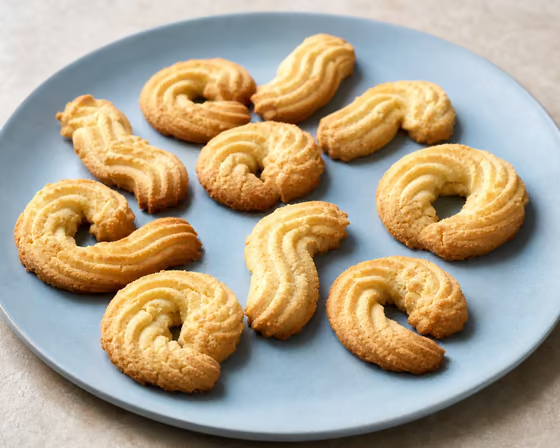
 Ílhavo Piped Butter Biscuits
Regional buttery biscuits piped into deeply ridged rings and curves.
The Centre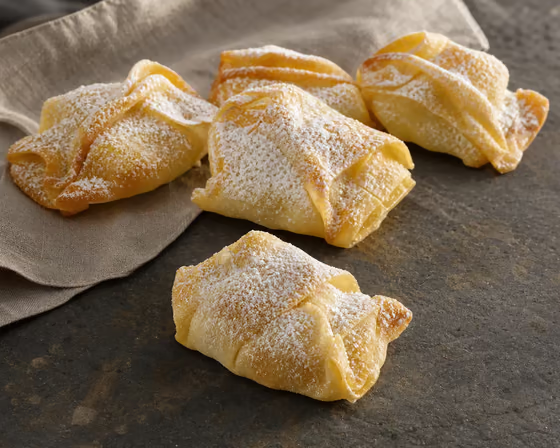 Catalogue image
 Saint Friar Gil’s Saddlebags
The small saddlebag-shaped pastry created at Vouzela’s vocational school and recognised as an innovative sweet.
The Centre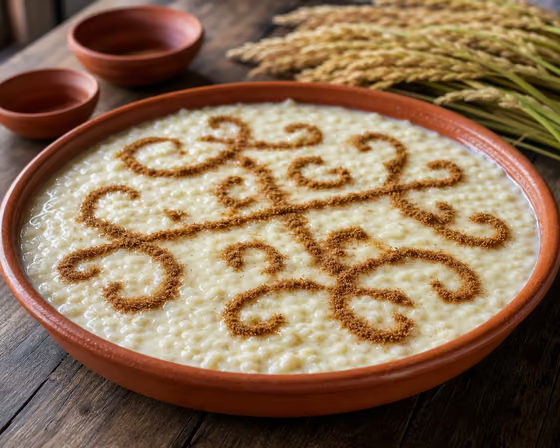 Catalogue image
 Baixo Mondego Rice Pudding
Mondego Carolino rice and Gândara milk, traced with cinnamon.
The Centre Catalogue image
 Arrufada de Coimbra
Coimbra's light, fragrant sweet bread, given by godparents at Easter.
The Centre