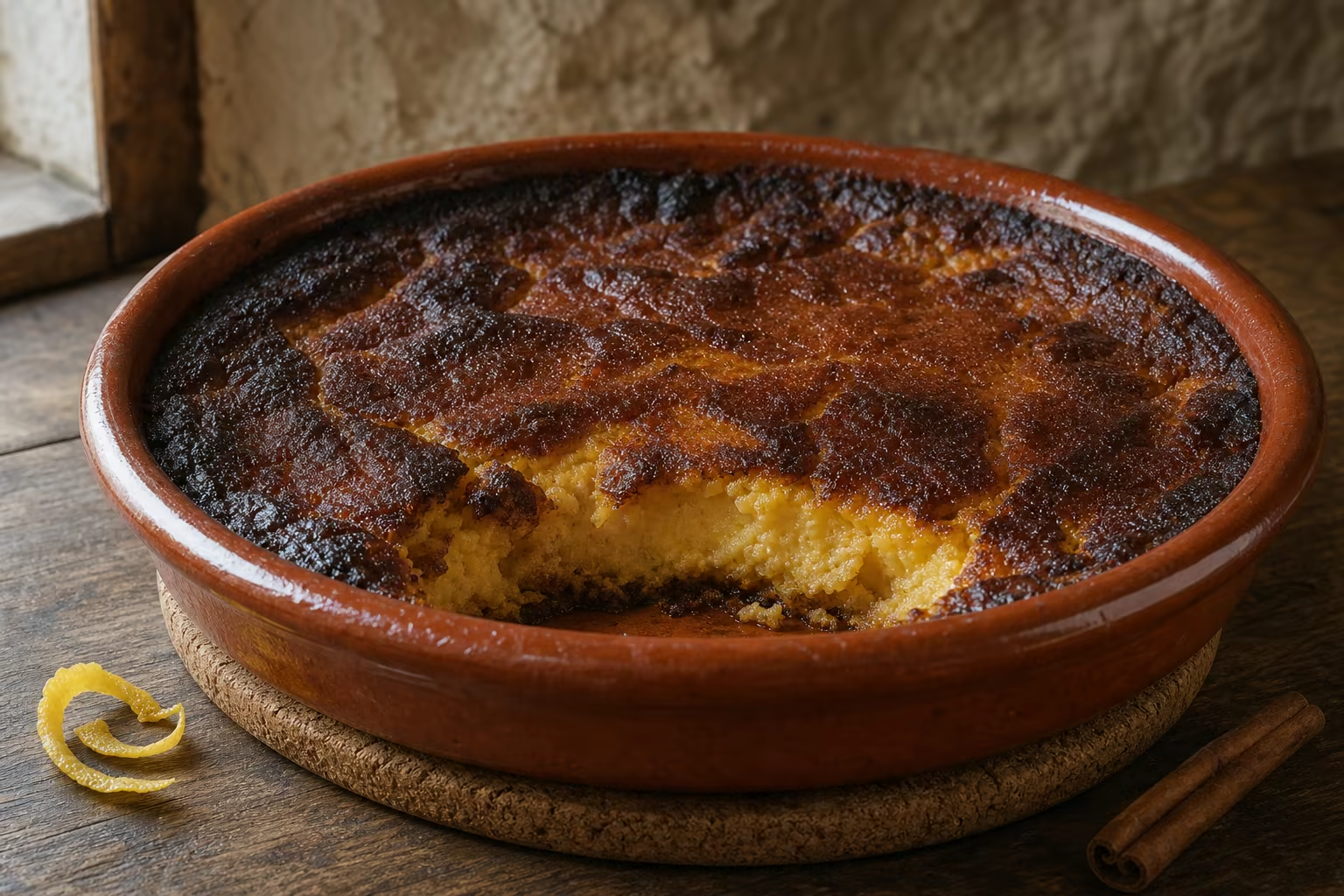
Oliveira do Hospital Earthenware Custard
Also known as: Oliveira do Hospital Earthenware Custard
A corn-bread-flour tigelada toasted in a Molelos earthenware pot.
- Origin
- Oliveira do Hospital · Beira Serra, Coimbra Region
- Place
- Oliveira do Hospital · Beira Serra
- Region
- The Centre
- Category
- Puddings & Spoon Sweets
- Season
- Year-round · especially Easter, Christmas and celebrations
- Evidence
- Well documented
Tigelada de Oliveira do Hospital combines whole eggs, full-fat milk, sugar, corn-bread flour, lemon and cinnamon. The mixture enters an already hot clay pot and bakes until deeply toasted above, golden within and soft enough to spoon, with gentle lemon and caramel aromas.
A small amount of corn-bread flour gives the custard body and a distinctive rustic texture. Its vessel is part of its identity too: tradition calls for red Molelos earthenware reserved for tigelada, although local memory records earlier use of black clay pots.
It is served from the baking pot in spoonfuls. The toasted layer clinging to the hot clay at the bottom is an especially coveted part of the dessert.
- Whole eggs
- Full-fat milk
- Corn-bread flour
- Sugar
- Lemon zest
- Cinnamon
Milky and egg-rich, with rustic body from corn-bread flour, lemon and cinnamon fragrance, and caramel notes from the toasted top and bottom.
Thin and thick tigelada are both known, while household formulas may use cinnamon, honey, lemon or wheat, rye and corn flours. The municipal reference recipe uses corn-bread flour. Some families preserve sheep's milk, goat's milk or whey from curd cheese instead of modern cow's milk.
At traditional restaurants and food events in Oliveira do Hospital, including weeks devoted to Sabores Serranos; look for it served in its baking pot.
Coffee, lemon tea or a small glass of honey spirit.
In Oliveira do Hospital, tigelada is presented as an emblem of municipal identity. It was once made chiefly at Easter, Christmas, weddings, baptisms and community feasts; today it appears regularly at family tables, on restaurant menus and at local food events.
The technique used the retained heat of the wood-fired oven after corn bread had baked. Goat's or sheep's milk, rooted in the region's pastoral economy, gradually gave way to cow's milk around the mid-20th century. The recipe published in the Coimbra Region Gastronomic Charter draws on oral and written community research and is presented as the municipality's most broadly accepted formula.
Well documented
Identity supported by institutional, specialist or corroborating sources.
- visitarganil.pt/wp-content/uploads/2023/12/carta_gastrono_mica_jan2022_compacto.pdf (opens in a new tab)
- cm-oliveiradohospital.pt/servicos/cultura/carta-gastronomica/ (opens in a new tab)
- turismodocentro.pt/artigo/pascoa-receitas-centro-de-portugal/ (opens in a new tab)
- enoturismo.pt/guia/tigelada/ (opens in a new tab)
- eubrdialogues.com/sites/default/files/acoes/documentos/049xlix_lista_de_produtos_tradicionais_portugueses_v_19_0.pdf (opens in a new tab)
Pastries from here — The Centre
 Catalogue image
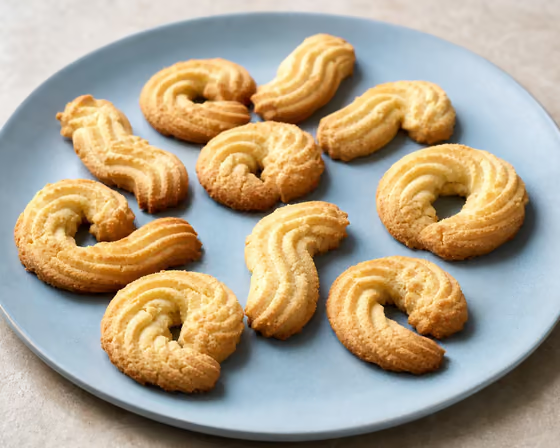
 Ílhavo Piped Butter Biscuits
Regional buttery biscuits piped into deeply ridged rings and curves.
The Centre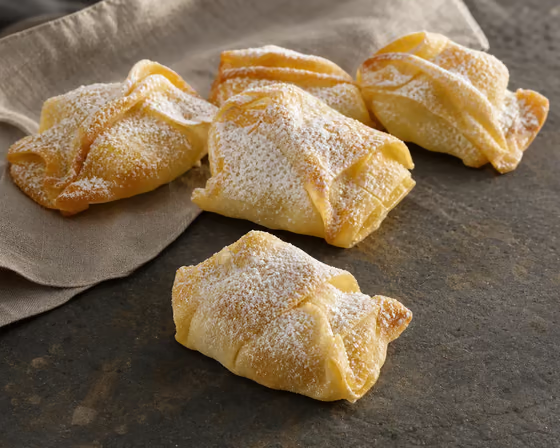 Catalogue image
 Saint Friar Gil’s Saddlebags
The small saddlebag-shaped pastry created at Vouzela’s vocational school and recognised as an innovative sweet.
The Centre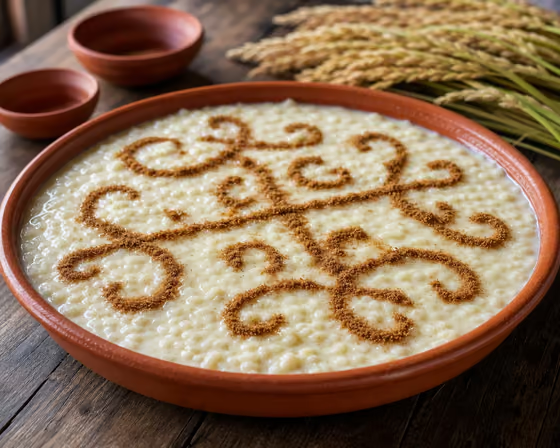 Catalogue image
 Baixo Mondego Rice Pudding
Mondego Carolino rice and Gândara milk, traced with cinnamon.
The Centre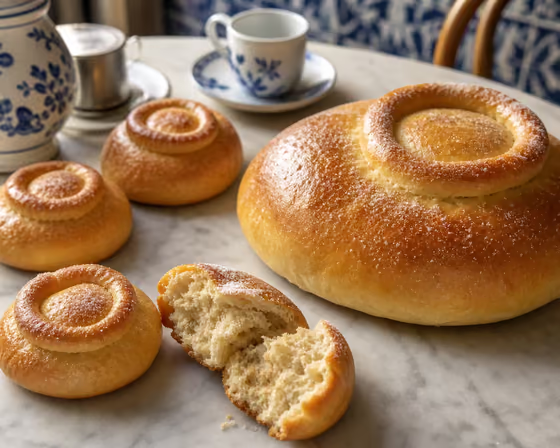 Catalogue image
 Arrufada de Coimbra
Coimbra's light, fragrant sweet bread, given by godparents at Easter.
The Centre