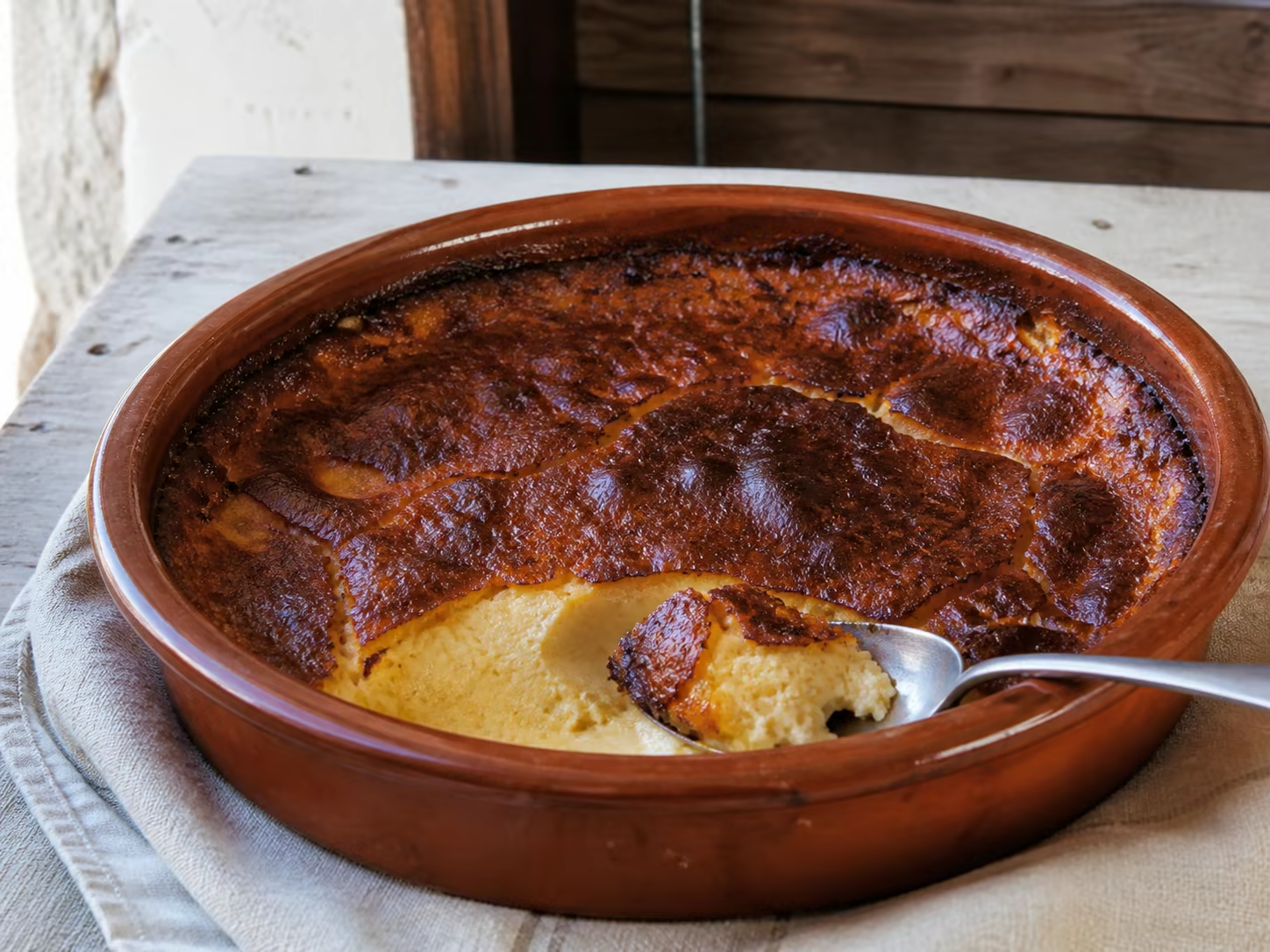
Arganil Earthenware Custard
Also known as: Arganil Earthenware Custard
Eggs and milk baked dark for an hour in red glazed earthenware.
- Origin
- Arganil · Beira Serra, Coimbra Region
- Place
- Arganil · Beira Serra
- Region
- The Centre
- Category
- Puddings & Spoon Sweets
- Season
- Year-round · celebrations and gatherings
- Evidence
- Well documented
Tigelada de Arganil is an oven-baked sweet served in the same red glazed earthenware pot in which it cooks. Whole eggs, milk and sugar form a simple mixture scented with lemon peel and a pinch of cinnamon, then remain for about an hour in a very hot oven, traditionally wood-fired.
The fierce heat creates an irregular, deeply toasted dark surface over a yellow, tender and slightly porous interior. There is no pastry base or poured caramel: the crust develops directly as the eggs, milk and sugar bake against the hot clay.
It is served cold by the spoon, still in its pot. Its communal presentation and the contrast between the almost scorched top and milky centre distinguish this version within the wider Beira tigelada family.
- Whole eggs
- Milk
- Sugar
- Lemon peel
- Cinnamon
Milky and egg-rich, with clean sweetness, lemon and cinnamon fragrance, and a faint pleasant bitterness from the deeply toasted top.
Cinnamon intensity, sugar proportion and the darkness of the top vary by household. It differs from Pampilhosa da Serra's goat-milk and aguadilha tradition and from the flour-thickened Lousã version.
At traditional restaurants, food fairs and homes in Arganil and the Beira Serra villages; look for it served in its earthenware pot.
Coffee, lemon tea or a mountain honey liqueur.
Tigelada belongs to the festive cooking of the Beira Serra, made from everyday rural-household ingredients and the retained heat of the oven. In Arganil, the municipal recipe preserves an older technique: the red glazed pot enters a very hot oven, and its mouth was traditionally protected with brown paper to keep the surface from burning excessively.
The same family of sweets takes on distinct forms in Lousã, Pampilhosa da Serra, Proença-a-Nova, Oliveira do Hospital and elsewhere in Central Portugal. Arganil's version is identified by its direct egg, milk and sugar formula, its lemon scent and its long bake in the serving vessel.
Well documented
Identity supported by institutional, specialist or corroborating sources.
- visitarganil.pt/diretorio/tigelada/ (opens in a new tab)
- eubrdialogues.com/sites/default/files/acoes/documentos/049xlix_lista_de_produtos_tradicionais_portugueses_v_19_0.pdf (opens in a new tab)
Pastries from here — The Centre
 Catalogue image
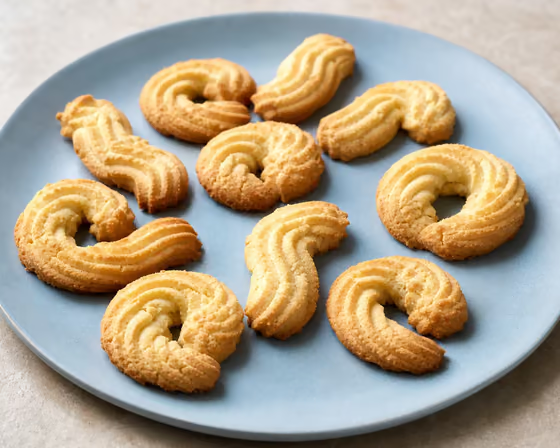
 Ílhavo Piped Butter Biscuits
Regional buttery biscuits piped into deeply ridged rings and curves.
The Centre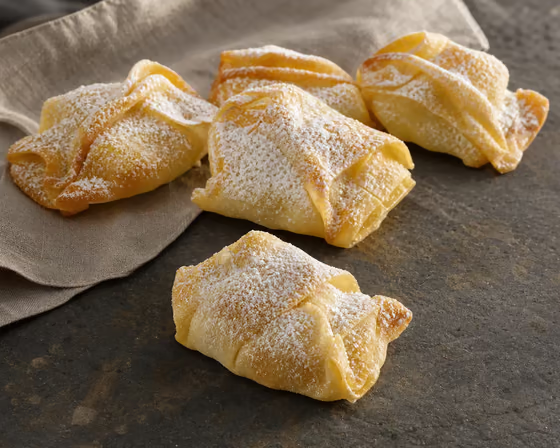 Catalogue image
 Saint Friar Gil’s Saddlebags
The small saddlebag-shaped pastry created at Vouzela’s vocational school and recognised as an innovative sweet.
The Centre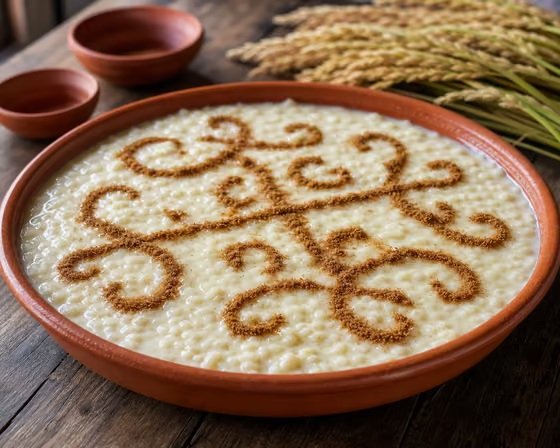 Catalogue image
 Baixo Mondego Rice Pudding
Mondego Carolino rice and Gândara milk, traced with cinnamon.
The Centre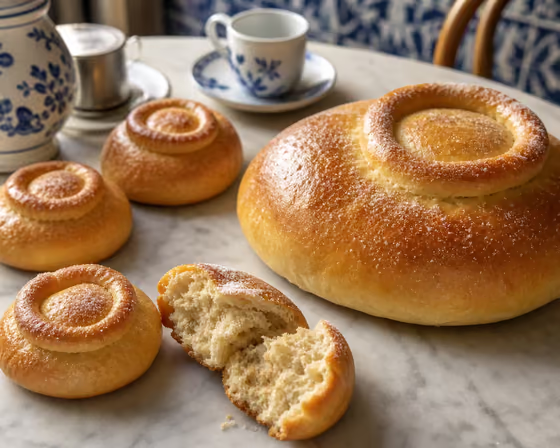 Catalogue image
 Arrufada de Coimbra
Coimbra's light, fragrant sweet bread, given by godparents at Easter.
The Centre