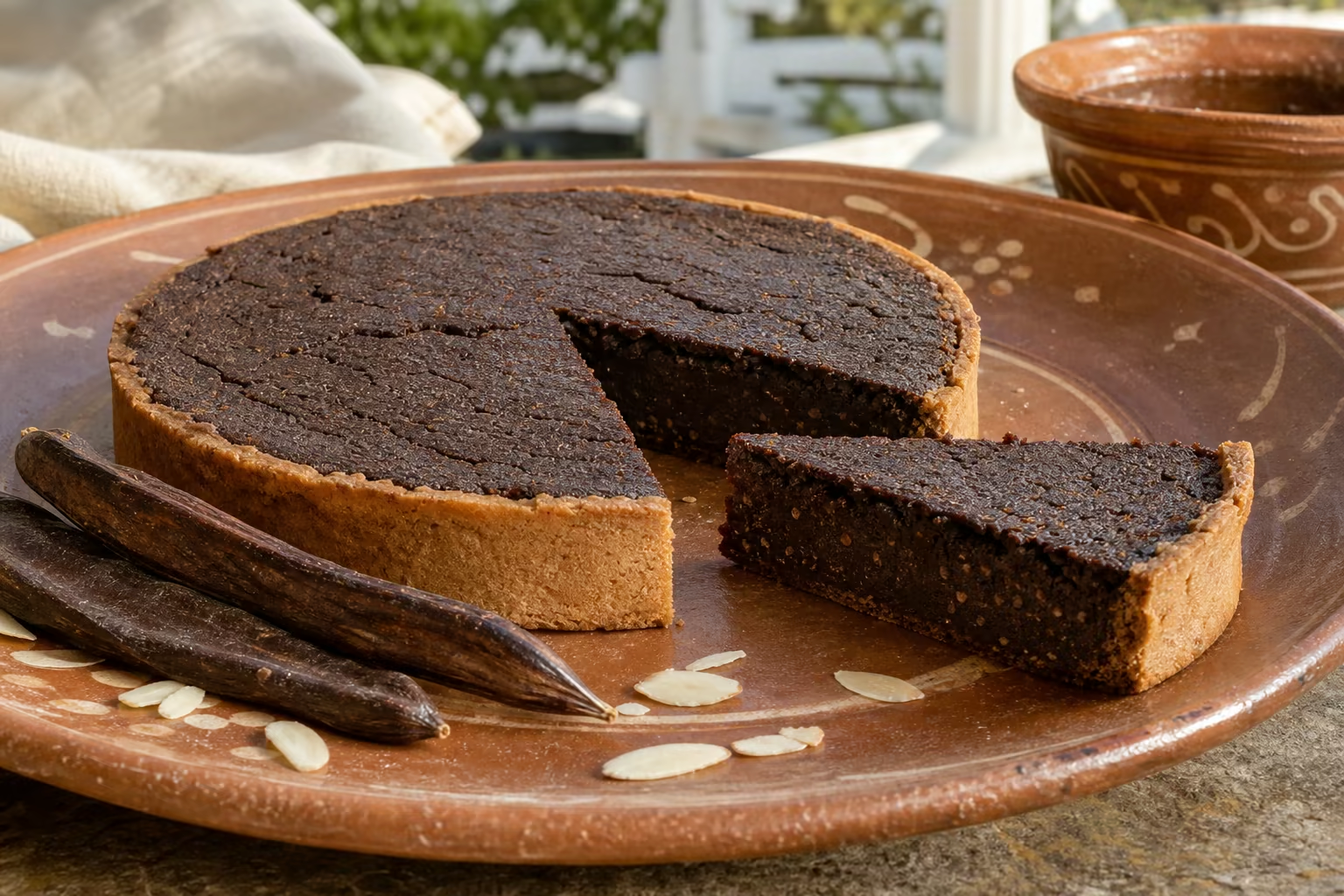
Carob Tart
Also known as: Carob and almond tart · Algarve carob cake
Carob and almond in an Algarve tart with several documented formulas.
- Origin
- Algarve · contemporary regional preparation based on carob
- Place
- Algarve
- Region
- The Algarve
- Category
- Cakes & Sweet Breads
- Season
- Year-round
- Evidence
- Limited documentation
Carob tart is a sweet preparation associated with the Algarve that uses flour from the dried pod in the base, filling or both. Published formulas do not define one model: a Continente version credited to The Healthy Sins combines carob and wheat in the base and uses carob, cocoa, almond, yolks, cinnamon, vanilla and lemon in the filling; another recipe published by Receitas e Menus omits cocoa and vanilla and folds whipped egg whites into a carob-and-almond filling.
That diversity makes it unsafe to claim a 'most traditional' form without a historical or institutional specification. The documented common ground is the regional association and the use of carob, often alongside almond. Texture, height and even the presence of cocoa depend on the chosen formula.
- Carob flour
- Ground almond or almond flour
- Eggs or yolks
- Sugar
- Butter
- Wheat flour or shortcrust pastry
- Lemon zest
- Cocoa, cinnamon and vanilla in some versions
Carob contributes toasted, sweet and earthy notes, while almond adds richness. Texture can range from a lighter filling folded with whipped whites to a denser cream made with yolks, cocoa and water, depending on the recipe.
The Continente/The Healthy Sins version uses carob in the base too and adds cocoa, vanilla, cinnamon, water and four yolks to the filling. Receitas e Menus publishes a blind-baked homemade pastry base and a cocoa-free filling with six separated eggs, almond and lemon. Another family uses bought shortcrust pastry. These differences are documented as versions, not as a proven historical evolution.
Several culinary publishers present it as an Algarve sweet. In pastry shops and restaurants, check the composition: some versions contain cocoa as well as carob, while others use only carob and almond in the filling.
As an editorial suggestion, serve a small slice with unsweetened coffee or tea; the consulted recipes establish no compulsory traditional accompaniment.
DGADR documents carob as a traditional Algarve product and describes its regional importance. That ingredient history does not by itself prove the age or origin of the tart. The sources assembled for this entry publish current recipes and confirm contemporary use of the name Carob Tart, but provide no dated first recipe, authorship or continuous rural lineage. The tart's own chronology therefore remains unknown.
Association with the Algarve is consistent across the culinary literature consulted, while composition varies considerably. This entry separates what is known about the ingredient from what remains undocumented about the dessert.
Limited documentation
The identity is documented, but its origin, composition or availability has limited sourcing.
- guiarural.pt/index.php/page/o-que-e-a-alfarroba.html (opens in a new tab)
- tradicional.dgadr.gov.pt/pt/cat/frutos-secos-secados-e-similares/272-alfarroba (opens in a new tab)
- agroportal.pt/o-valor-da-alfarroba-producao-nacional-e-referencia-mundial/ (opens in a new tab)
- depts.washington.edu/hortlib/pal/carob-to-carat/ (opens in a new tab)
- counting-stuff.com/going-back-from-carats-to-carobs/ (opens in a new tab)
- barlavento.pt/destaque/alfarroba-do-algarve-vai-ter-certificacao-igp (opens in a new tab)
- feed.continente.pt/receitas/tarte-de-alfarroba (opens in a new tab)
- receitasemenus.net/tarte-de-alfarroba/ (opens in a new tab)
Pastries from here — The Algarve
 Catalogue image
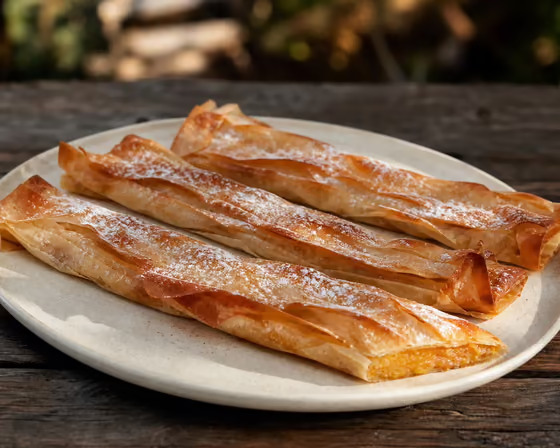
 Aljezur Sweet-Potato Pillows
A long pillow of crisp pastry leaves wrapped around Aljezur sweet potato.
The Algarve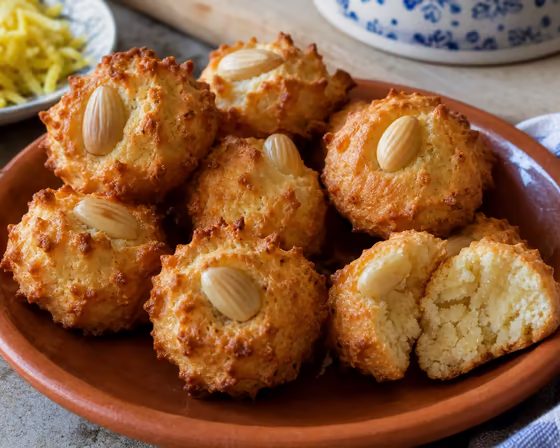 Catalogue image
 Almond Spiky Biscuits
Bristling peaks of almond, lemon and egg white, crisp outside and soft at the centre.
The Algarve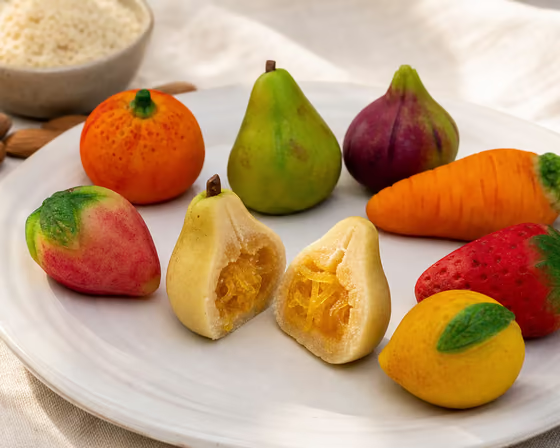 Catalogue image
 Silves Almond Sweets
Algarve figures hand-shaped and painted in almond paste.
The Algarve Catalogue image
 Algarve Nut Sweet Bread
An upland sweet bread enriched with olive oil, spices and walnuts or almonds.
The Algarve