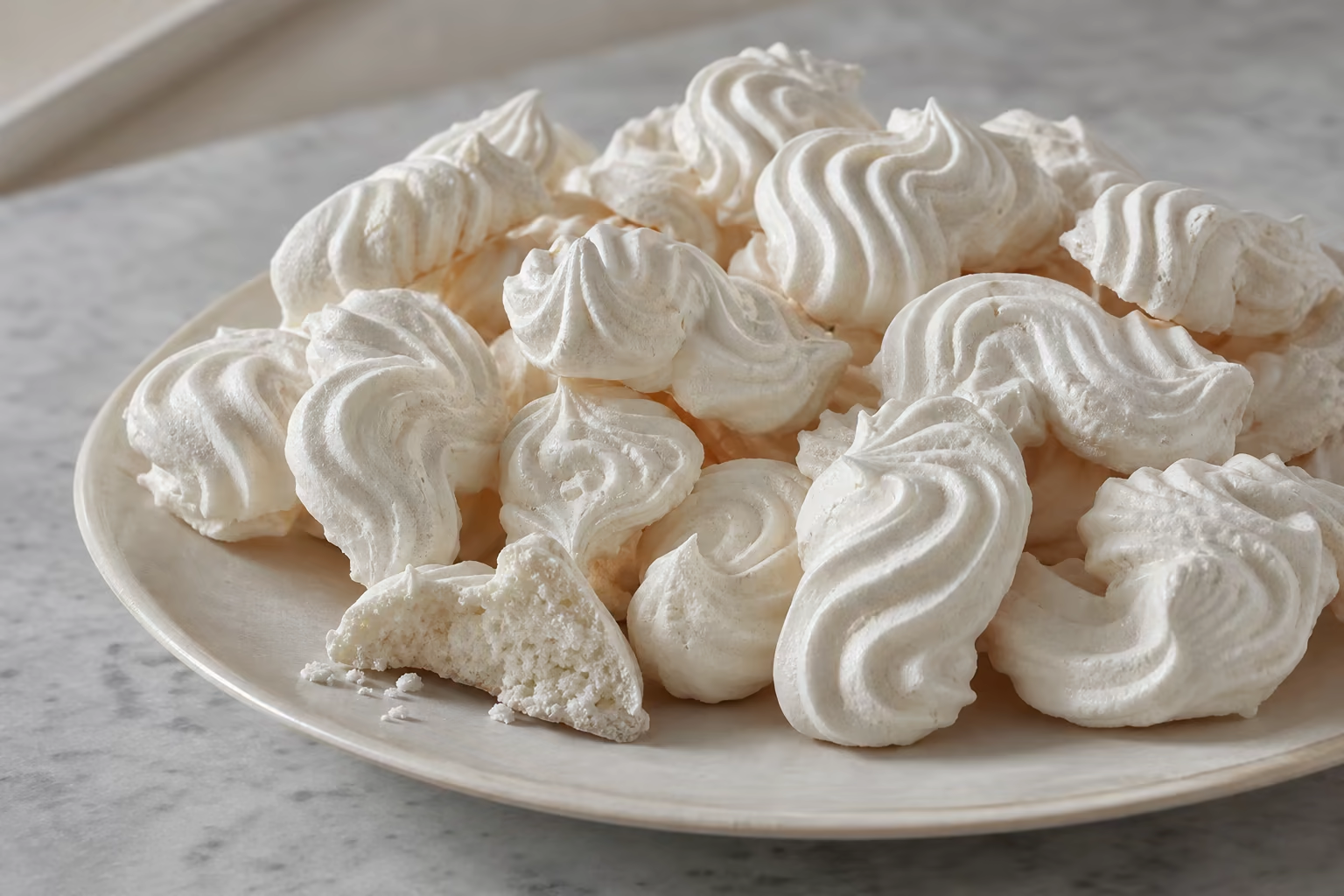
Meringues
Also known as: Portuguese meringues · Meringue kisses
Whipped egg whites and sugar, shaped and slowly dried in the oven.
- Origin
- Portugal · nationally distributed confection with regional records
- Place
- Nationwide
- Region
- Nationwide
- Category
- Cakes & Sweet Breads
- Season
- No documented nationwide season; festive presence recorded on São Jorge
- Evidence
- Well documented
A doctoral thesis deposited at NOVA University Lisbon describes ordinary suspiros as made from sugar and egg whites and records that in Portugal the confection was also known as merengue. The Portuguese name therefore denotes a local expression of the international meringue family, not an exclusively Portuguese technique.
A Yämmi recipe published by Continente whips egg whites with salt and drops of lemon juice, gradually incorporates sugar, shapes small mounds and bakes them first at 100°C and then at 50°C. It notes that time varies with size and that the pieces must cool completely before being removed from the baking paper.
- Egg whites
- Sugar
- Salt in one published recipe
- Lemon juice in one published recipe
Continente describes its Easter variation as light and crisp. Final texture depends on size, drying and humidity; the consulted sources do not establish one profile for every Portuguese suspiro.
The consulted base recipe allows food colouring. Another published Easter version adds cocoa to the meringue and a chocolate base. These examples document contemporary variation without proving that they are nationwide traditional forms.
Municipal documentation confirms them within São Jorge's confectionery tradition, including Santo Amaro. For other places and current points of sale, check directly before travelling.
As an editorial suggestion, unsweetened coffee or fresh fruit.
The consulted sources do not establish when the name suspiro entered Portuguese usage, who created the confection or how the technique reached the country. Nor do they prove that the Portuguese version arose in a convent to use egg whites left over from yolk-based sweets. That plausible explanation is not presented here as settled history.
Regional presence is documentable. Characterisation studies for the revision of Velas's Municipal Master Plan include suspiros among the traditional confectionery of São Jorge island and mention them among Santo Amaro specialities offered on the Sundays of the Holy Spirit and the Holy Trinity.
Well documented
Identity supported by institutional, specialist or corroborating sources.
- run.unl.pt/server/api/core/bitstreams/29656ff3-1322-42e2-a7f9-ea0772ca6207/content (opens in a new tab)
- feed.continente.pt/receitas/yammi/suspiros (opens in a new tab)
- feed.continente.pt/receitas/yammi/suspiros-pascoa-xl (opens in a new tab)
- cmvelas.pt/wp-content/uploads/2019/11/Volume-V-Setor-Urbano.pdf (opens in a new tab)
Pastries from here — Nationwide
 Catalogue image
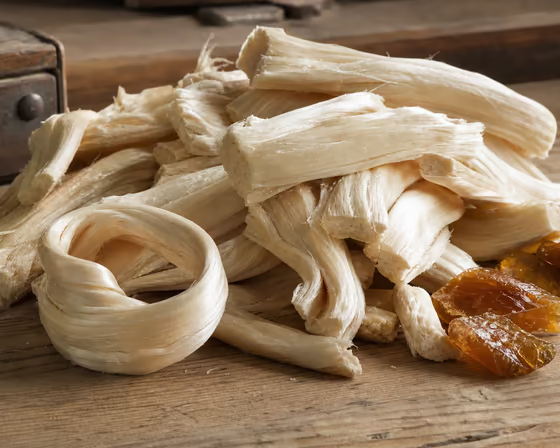
 Alféloa
Sugar or molasses cooked to a hard stage and worked until pale.
Nationwide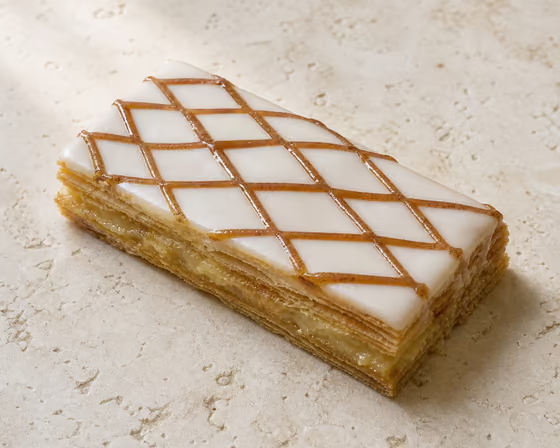 Catalogue image
 Portuguese Gila Allumette
A rectangular puff pastry with cream, gila and cinnamon beneath diamond-patterned royal icing.
Nationwide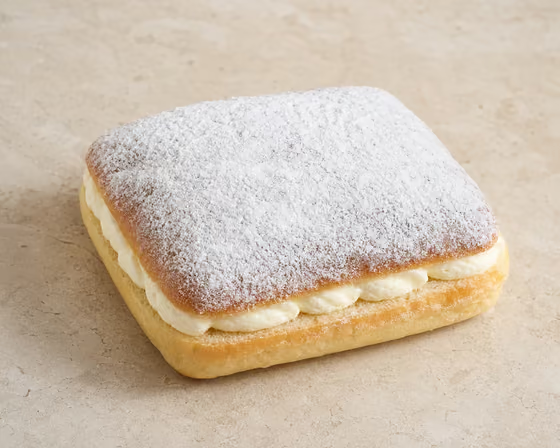 Catalogue image
 Portuguese Brioche Almofada
Light brioche dough, fresh buttercream and icing sugar.
Nationwide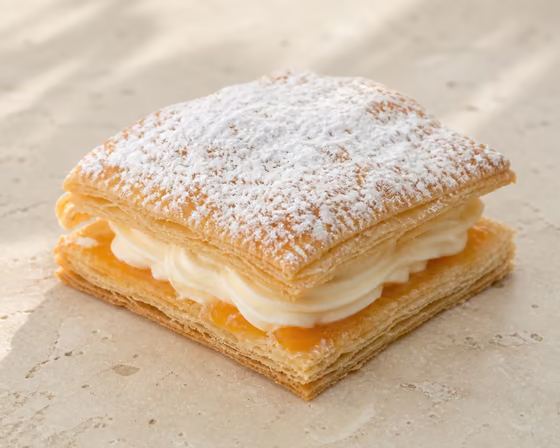 Catalogue image
 Portuguese Puff-Pastry Almofada
Puff pastry with white cream, egg sweet and icing sugar—the laminated Almofada variant.
Nationwide