Bragança Súplicas
Also known as: Súplicas
Egg, sugar and flour biscuits documented in Bragança tradition and studied by the local Polytechnic Institute.
- Origin
- Traditional confectionery of Bragança · Trás-os-Montes
- Place
- Bragança
- Region
- Trás-os-Montes
- Category
- Cakes & Sweet Breads
- Season
- No verified traditional season · check local availability
- Evidence
- Well documented
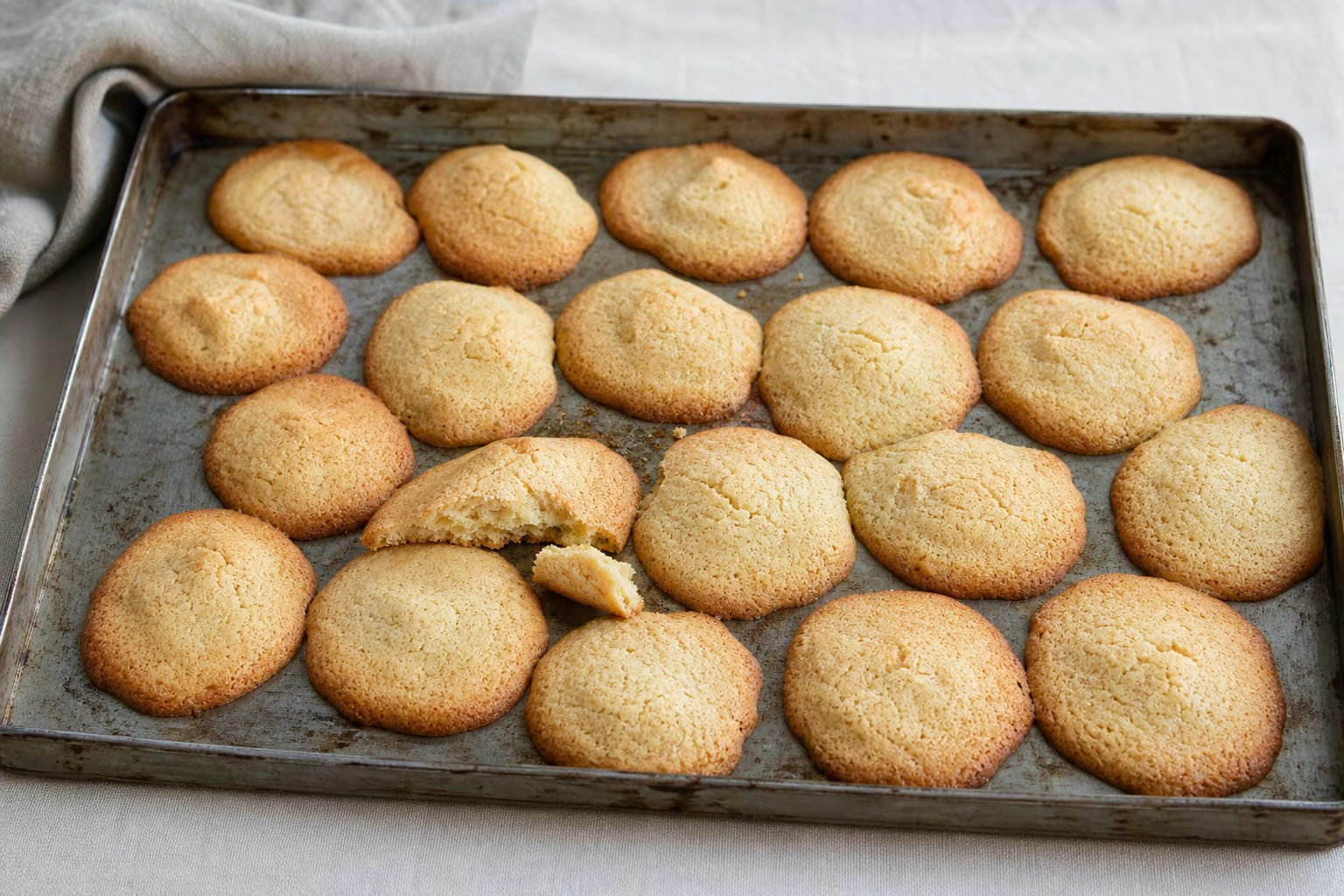
Súplicas de Bragança are biscuits or small baked cakes made with eggs, sugar and wheat flour. Research from the Polytechnic Institute of Bragança (IPB) describes them as a pastry product typical of Bragança and prepares the traditional recipe with eight eggs, one extra yolk, 500 grams of sugar and 600 grams of flour. The dough is divided into small portions and baked at 180°C for 12 minutes. Other published recipes use six or eight eggs per 500 grams each of sugar and flour, demonstrating household variation.
Culinary sources describe a crisp exterior and soft interior; low moisture during storage was also observed in the scientific study. The regional identity is confirmed by Bragança municipal tourism, which lists súplicas, roscas and económicos among Rio de Onor's traditional sweets.
The image on this page is an editorial interpretation consistent with the baked, golden portions described by published recipes. It is not a photograph of an authenticated example and does not establish a compulsory shape or texture.
- Eggs
- Sugar
- Flour
- Additional yolk in some published recipes
- Fat for greasing the tray in some recipes
Sweet, with a crisp exterior and an interior described as soft by culinary sources; sugar, egg and flour dominate the base recipe. Citrus flavourings belong to published adaptations rather than the traditional formula studied by IPB.
Published formulas converge on eggs, sugar and flour but vary in egg count, the addition of an extra yolk, proportions and baking time. Súplicas de Miranda do Corvo are a separate tradition: they contain yolks, cinnamon and lemon and are baked in moulds, so they should not be treated as a simple variant of this record.
A 2020 commercial initiative in Bragança included súplicas among products available from participating pastry shops, but this review did not confirm a specific current producer. Check local availability before visiting; they also remain documented as a home recipe.
No traditional pairing was identified in the institutional or academic sources consulted; tea or coffee are editorial suggestions.
Food historian Virgílio Nogueiro Gomes recorded Súplicas in his childhood memories of Bragança and found a recipe in his mother's notebook. He also connected them with the Trás-os-Montes confectionery published by Maria de Lourdes Modesto and a reference by Manuel Mendes in Os Ofícios. Gomes notes recipes bearing the same name in Landim and Vila Nova de Foz Côa, so 'Súplicas' does not necessarily denote one local tradition or immutable formula.
An attribution to Lorvão Monastery is repeated by culinary sources, but Gomes presents it only as a possibility and supplies no documentary proof. No source was found for the story that the name arose because people 'begged' for the cakes at fairs. Their origin and etymology remain undetermined. What is established is their place in the food culture of northeastern Trás-os-Montes: IPB research, municipal tourism documentation and independent culinary testimony converge on the Bragança association.
Well documented
Identity supported by institutional, specialist or corroborating sources.
- turismo.cm-braganca.pt/visitbraganca/uploads/geo_article/brochure/55/folheto_pr11.pdf (opens in a new tab)
- bibliotecadigital.ipb.pt/bitstreams/ea694523-128a-4e9e-a90f-6343a036d813/download (opens in a new tab)
- bibliotecadigital.ipb.pt/bitstreams/de65385c-bdeb-469c-87a1-d4336b09be4a/download (opens in a new tab)
- virgiliogomes.com/index.php/cronicas/378-suplicas (opens in a new tab)
- festivaldopaodelo.pt/suplicas-de-braganca/ (opens in a new tab)
- dahortaparaacozinha.com/home/2023/2/3/splicas-de-bragana (opens in a new tab)
- teleculinaria.pt/receitas/suplicas-de-braganca/ (opens in a new tab)
- nit.pt/comida/cafes-e-bares/vamos-ajudar-o-comercio-local-um-bolo-e-uma-bebida-agora-custam-150e (opens in a new tab)
Pastries from here — Trás-os-Montes
 Catalogue image
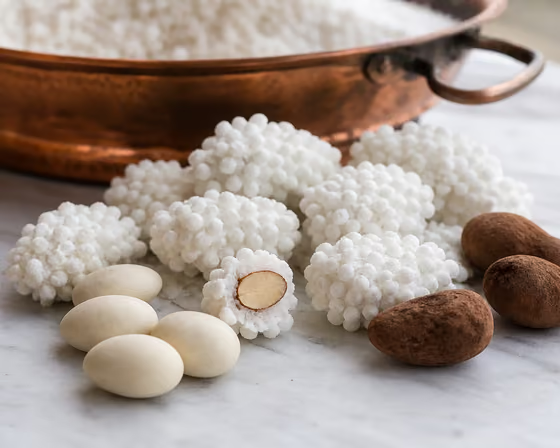
 Moncorvo Sugar-Coated Almonds
The queen of Trás-os-Montes sweets, spun from sugar and patience in copper.
Trás-os-Montes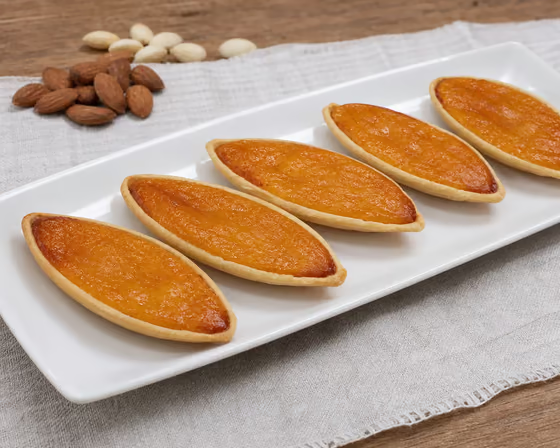 Catalogue image
 Alfândega da Fé Almond Boats
Pale pastry boats with a glossy filling of yolk and Trás-os-Montes almonds.
Trás-os-Montes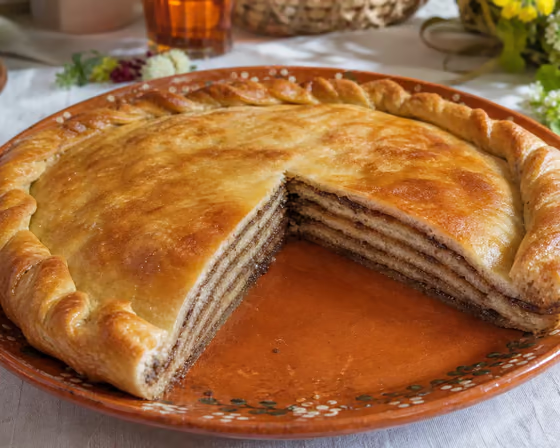 Catalogue image
 Mirandese Sweet Bola
The Easter bola that unravels in layers of sugar and cinnamon.
Trás-os-Montes Catalogue image
 Douro Port-Soaked Cake
A rich egg-and-butter cake soaked while hot in a generous Port-wine syrup.
Trás-os-Montes