Mirandese Sweet Bola
Also known as: Sweet Bola of Miranda · Mirandese Bola
The Easter bola that unravels in layers of sugar and cinnamon.
- Origin
- Mirandese Plateau · Miranda do Douro; published recipe documented from 1908
- Place
- Miranda do Douro
- Region
- Trás-os-Montes
- Category
- Festive & Seasonal
- Season
- Easter (available year-round)
- Evidence
- Well documented
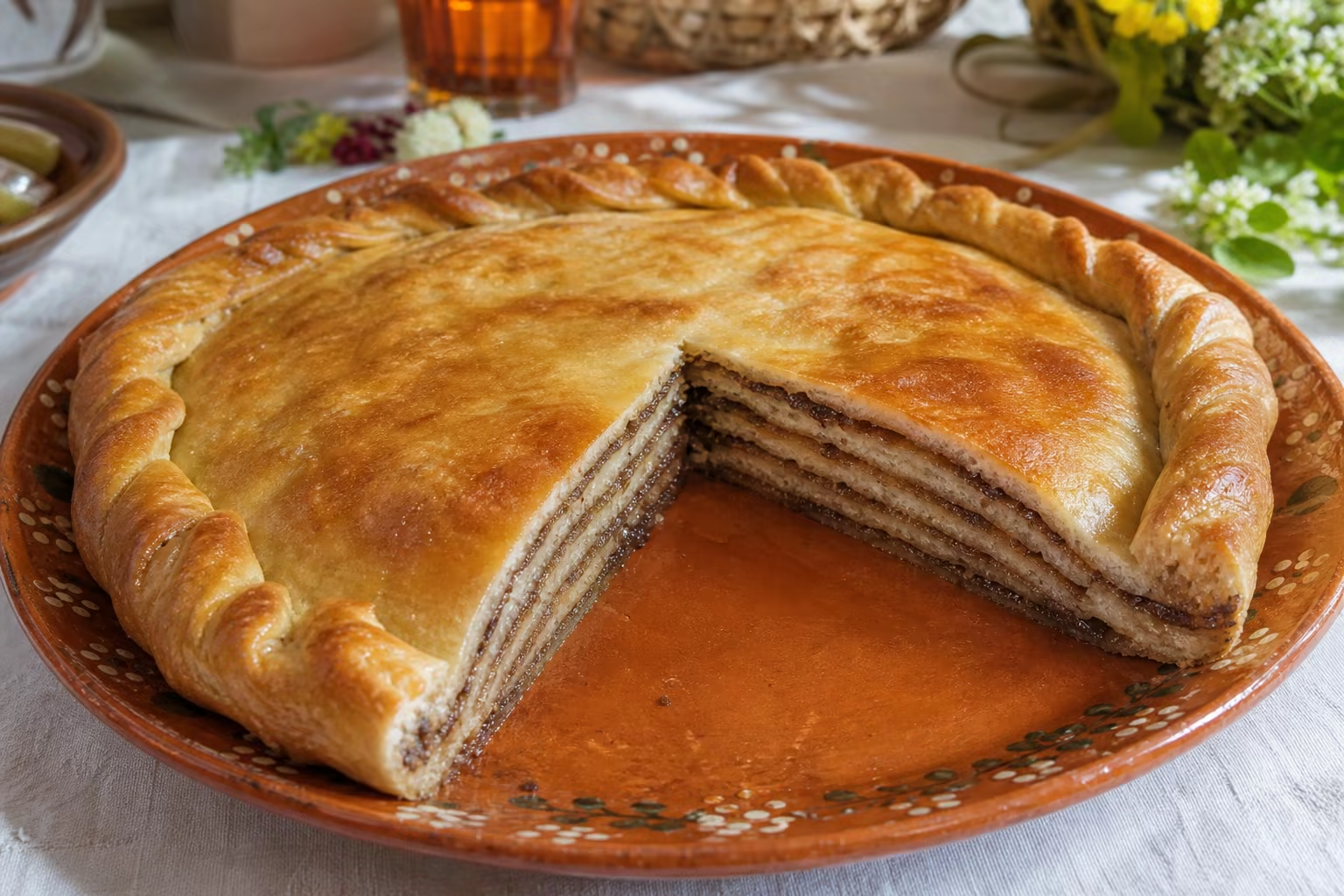
The Bola Doce Mirandesa is one of the gastronomic icons of Miranda do Douro: a flattened sweet bread that at first glance resembles a folar, but thinner, with a corded border crimped by hand to seal the filling. Inside it reveals its true nature: six or seven paper-thin sheets of dough interleaved with layers of sugar and cinnamon, which fuse during baking into a moist, fragrant crumb.
Cut into wide slices, the golden crust gives way to a soft interior flecked with dark streaks of cinnamon. It is neither a decorated celebration cake nor a dry folar — it is a leavened dough, enriched with olive oil and butter, that stays tender for days.
It graces the Easter table alongside the meat folar and cured meats, but it also accompanies any Mirandese afternoon snack throughout the year, sliced at leisure and eaten without hurry.
- Wheat flour
- Eggs
- Sugar
- Cinnamon
- Butter
- Olive oil
- Baker's yeast
- Salt
Sweet and intensely fragrant with cinnamon, with a moist, fluffy crumb that contrasts with a lightly crisp crust; the sugar caramelised between the layers gives it depth without ever cloying.
Every family and bakery keeps its own ratio of layers — six or seven sheets of dough — and the balance of olive oil to butter shifts from house to house, yielding bolas that are more or less dense.
It is found in the bakeries and pastry shops of Miranda do Douro all year round, but Easter is its high season; the Feira da Bola Doce, held over the Easter weekend, is the best place to taste it fresh from the oven.
It is eaten as a snack or table sweet. The consulted sources establish no traditional drink; coffee or tea are cautious modern accompaniments.
Its origins are little studied and early written references are scarce. Virgílio Nogueiro Gomes identifies a 1908 formula by Jorge Manuel Martins Pereira in As Terras de Entre Sabor e Douro as possibly the first published recipe; recipes by Maria de Lourdes Modesto in 1982 and Maria Odete Cortes Valente in 1985 follow. Miranda's 1510 Manueline charter mentions cinnamon, proving the spice circulated there, but it does not document the invention or presence of Bola Doce at that date.
Oral tradition remembers bread dough kneaded by hand, enriched and baked in a communal wood-fired oven. Since 2013 Miranda do Douro municipality has dedicated the Easter-weekend Feira da Bola Doce e dos Produtos da Terra to it, including a competition for local examples.
Well documented
Identity supported by institutional, specialist or corroborating sources.
- tradicional.dgadr.gov.pt/pt/cat/doces-e-produtos-de-pastelaria/965-bola-doce-mirandesa (opens in a new tab)
- publico.pt/2023/04/04/fugas/noticia/miranda-douro-bola-doce-pascoa-festa-tres-dias-2044786 (opens in a new tab)
- virgiliogomes.com/index.php/cronicas/853-bola-doce-mirandesa-e-receita (opens in a new tab)
- cm-mdouro.pt/municipio/comunicacao/agenda-de-eventos/evento/feira-da-bola-doce-e-dos-produtos-da-terra-6 (opens in a new tab)
Pastries from here — Trás-os-Montes
 Catalogue image
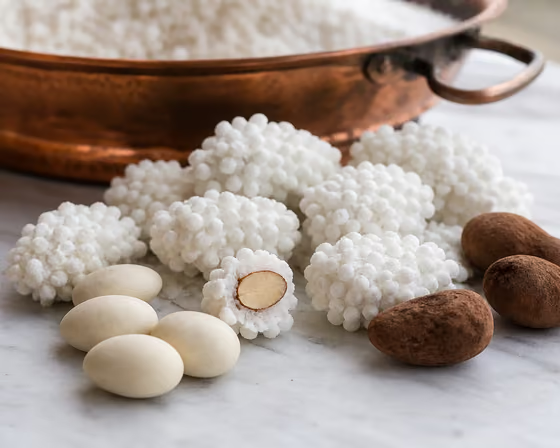
 Moncorvo Sugar-Coated Almonds
The queen of Trás-os-Montes sweets, spun from sugar and patience in copper.
Trás-os-Montes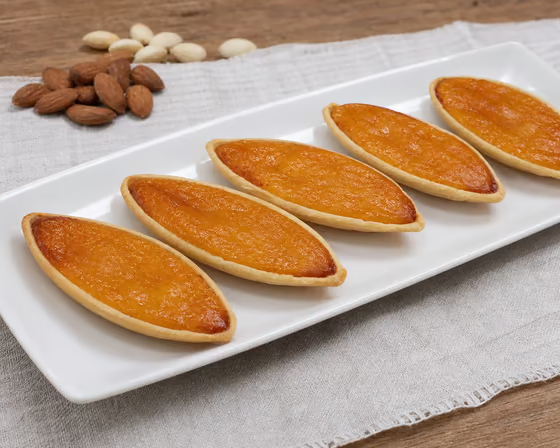 Catalogue image
 Alfândega da Fé Almond Boats
Pale pastry boats with a glossy filling of yolk and Trás-os-Montes almonds.
Trás-os-Montes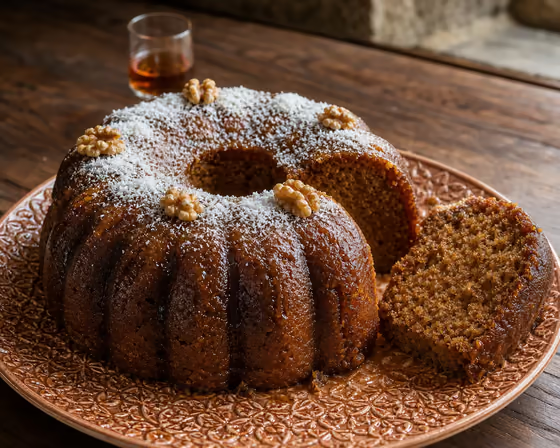 Catalogue image
 Douro Port-Soaked Cake
A rich egg-and-butter cake soaked while hot in a generous Port-wine syrup.
Trás-os-Montes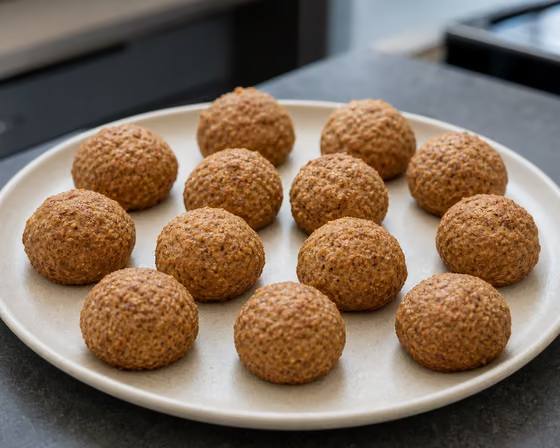 Catalogue image
 Bragança Walnut Cakes
Baked balls of egg white, sugar, walnut and cinnamon, documented in a twentieth-century cookbook but without confirmed living tradition in Bragança.
Trás-os-Montes