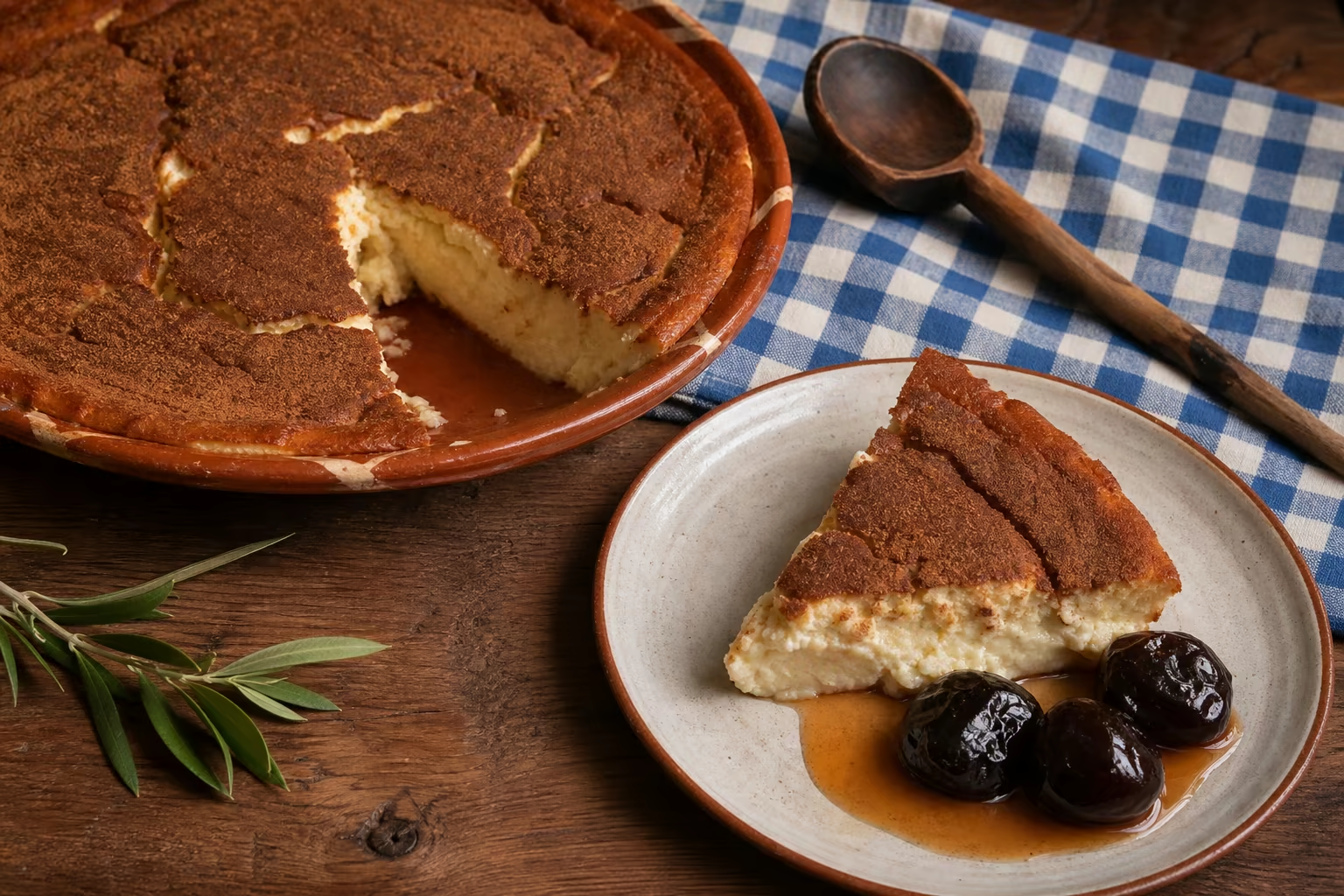
Sericaia
Also known as: Cericá · Sericá
Elvas's cracked, cinnamon-dusted custard, sworn partner of plums in syrup.
- Origin
- Elvas, Alentejo; convent sweet with sixteenth-century roots
- Place
- Elvas
- Region
- The Alentejo
- Category
- Egg-Yolk Sweets
- Season
- Year-round
- Evidence
- Well documented
Sericaia is the flagship sweet of Elvas: a velvety custard of eggs, milk and flour, scented with lemon zest and plenty of cinnamon, baked in an earthenware dish until the surface splits into golden cracks. It is neither quite a baked custard nor a pastry cream — it sits somewhere between the two, fluffy within and just firm enough to hold a spoon.
It is almost always served cold or lukewarm, in broad slices, dusted with cinnamon and — this is the Alentejo golden rule — alongside Elvas plums in syrup. The pairing of the gentle custard with the dense, sugary fruit is what makes sericaia a fixture of festive tables across the Alto Alentejo.
It is a sweet of few ingredients and exact gesture: the egg whites are whipped stiff and folded into the batter to give it the lightness that sets it apart from any other egg custard.
- Eggs
- Milk
- Sugar
- Flour
- Cinnamon (stick and ground)
- Lemon zest
- Pinch of salt
Soft, creamy and comforting, the gentle sweetness of egg yolks meeting the warmth of cinnamon and a lift of lemon. Texture is its charm: airy from the beaten whites, with a thin cracked crust playing against a silky interior.
Variations come mostly down to texture — some firmer and taller, others almost runny at the centre — and how heavily it is cinnamoned. Some serve it warm, others cold; but a side of Elvas plums in syrup is all but non-negotiable.
Found in the traditional pastry shops and restaurants of Elvas and across the Alto Alentejo, often presented in individual earthenware dishes. The genuine version always arrives generously cinnamoned, with Elvas plums in syrup alongside.
Elvas plums in syrup are the mandatory match. To drink, a sweet or fortified Alentejo wine, or simply an espresso to cut the sweetness.
Sericaia carries its probable journey in its name: the word is usually linked to the Malay-Indonesian serikaya (or srikaya), a sweet of eggs and milk from Southeast Asia. Tradition places its arrival in Portugal in the sixteenth century, in the wake of the Portuguese presence in Malacca and Goa, and credits the recipe's introduction to D. Constantino de Bragança, viceroy of India. The dates and details vary from source to source and are best read as tradition rather than documented fact.
The origin is in fact disputed between Vila Viçosa — where the Convento das Chagas is named — and Elvas, whose religious houses (among them the Convent of Santa Clara and that of Nossa Senhora da Conceição) claim the recipe; hence too the rivalry between the names "sericaia" and "sericá". It was in the convents of the Alto Alentejo that the sweet took on its Portuguese character, with cinnamon and lemon. Today sericaia appears in Portugal's inventory of Traditional Products, but it holds no protected European designation (PDO/PGI/TSG) — it is the Ameixa d'Elvas plum served alongside it that carries PDO status.
Well documented
Identity supported by institutional, specialist or corroborating sources.
- tradicional.dgadr.gov.pt/pt/cat/doces-e-produtos-de-pastelaria/402-sericaia-de-elvas (opens in a new tab)
- tradicional.dgadr.gov.pt/pt/component/content/article (opens in a new tab)
- cm-elvas.pt/descobrir/gastronomia/ (opens in a new tab)
- visitportugal.com/pt-pt/content/receitas-tradicionais-portuguesas-sericaia (opens in a new tab)
- en.wikipedia.org/wiki/Sericaia (opens in a new tab)
- memoriamedia.net/index.php/sericaia (opens in a new tab)
- radiocampanario.com/origem-do-serica-vila-vicosa-ou-elvas/ (opens in a new tab)
Pastries from here — The Alentejo
 Catalogue image
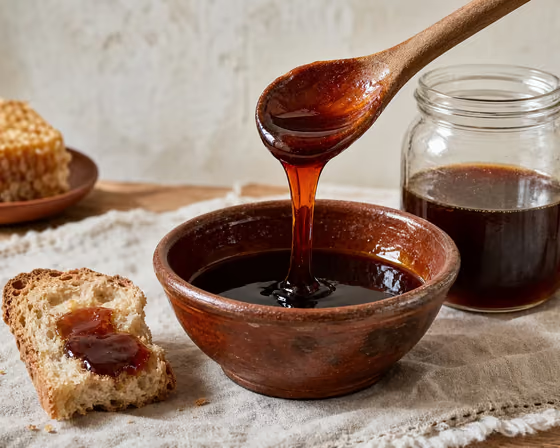
 Portuguese Água-mel Syrup
Water that recovers honey from combs after extraction, filtered and reduced for hours to 70–77° Brix.
The Alentejo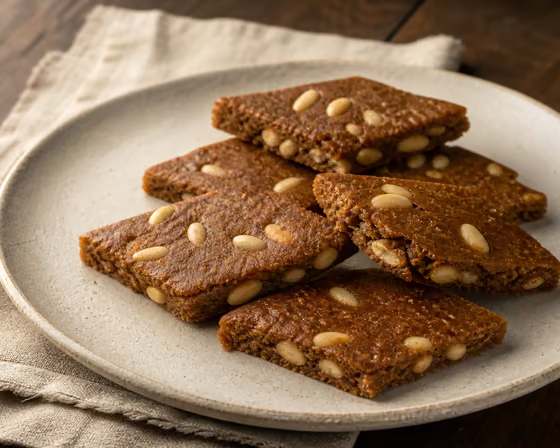 Catalogue image
 Alcomonias
Toasted coarse wheat flour, honey and pine nuts spread and cut into diamonds.
The Alentejo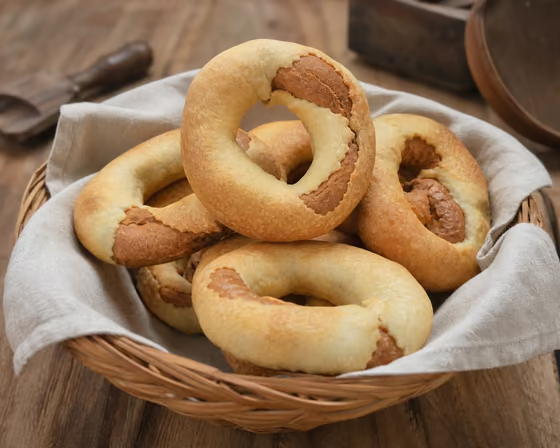 Catalogue image
 Amoreiras-Gare Alcôncoras
A large circular honey-and-olive-oil biscuit born from Amoreiras-Gare's promise-pole tradition.
The Alentejo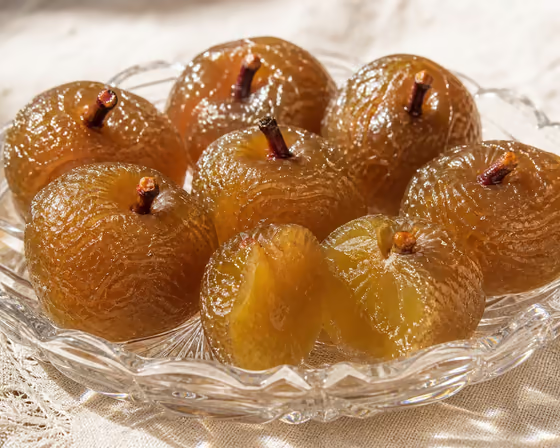 Catalogue image
 Elvas Plums
Protected Rainha Cláudia Verde greengages sold fresh, dried or candied—the sweet form requires at least seven days of slow candying.
The Alentejo