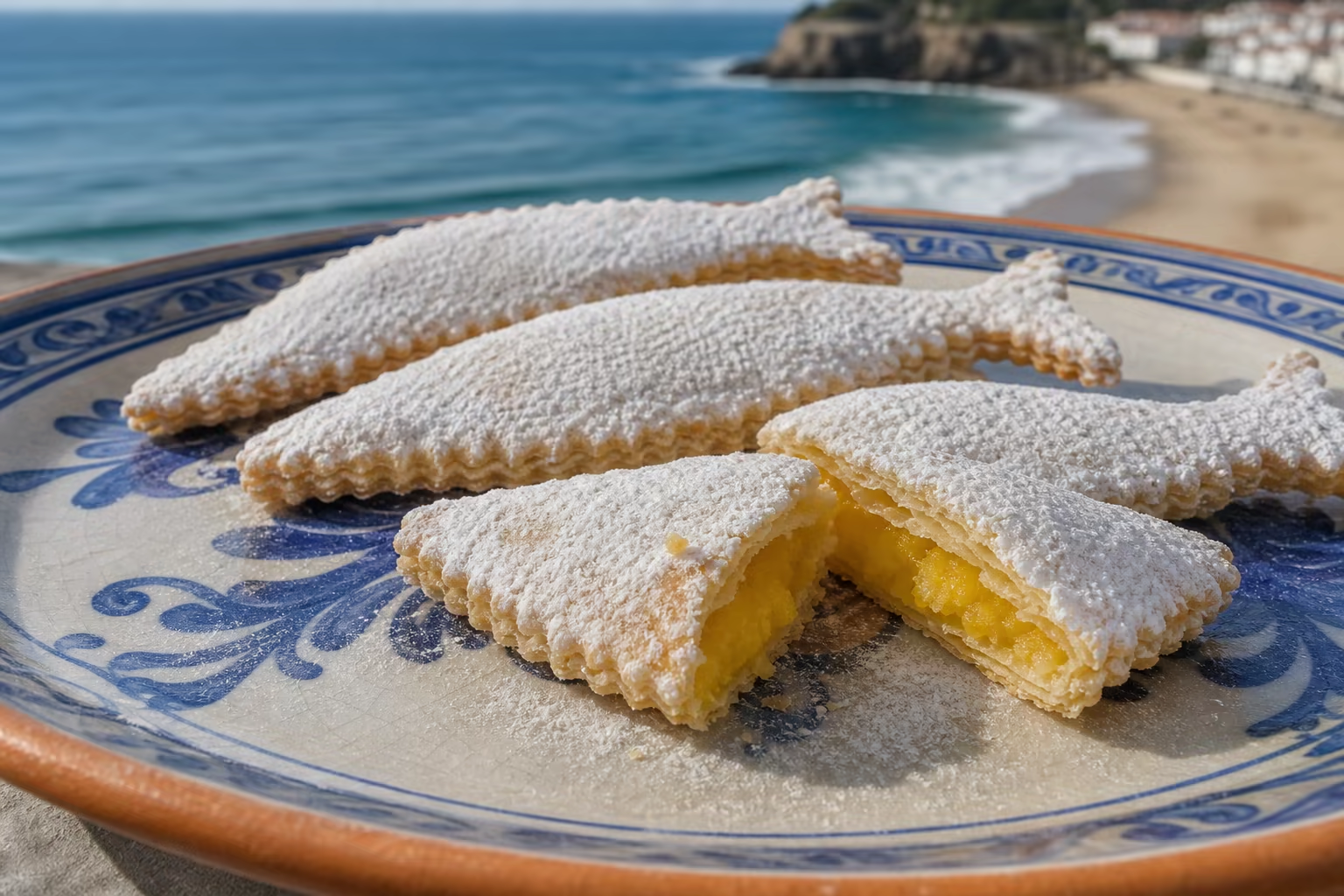
Nazaré Sweet Sardines
Also known as: Nazaré Sweet Sardines · Sweet Sardine
Sardine-shaped pastry filled with egg cream in Nazaré's confectionery tradition.
- Origin
- Nazaré, Leiria district
- Place
- Nazaré
- Region
- The West
- Category
- Laminated & Fine Pastries
- Season
- Seasonality not documented
- Dough family
- Short or tender pastry A flour-and-fat wrapper mixed directly without puff-pastry folds.
- Evidence
- Well documented
Sardinhas doces are a Nazaré speciality made from pastry cut into a fish shape and given a sweet filling. Rota do Peixe describes them as puff pastry covered and filled with egg cream, while the local Findout Nazaré portal includes ‘sardinhas (doces)’ among the products available in the town's pastry shops.
A recipe published by Roteiro Gastronómico de Portugal gives a more precise method: a tender dough made with flour, butter, lard, salt and water is arranged in two layers around portions of egg-yolk, sugar-syrup and gila-squash-preserve filling. The pieces are cut with a pastry wheel or mould, baked and coated in icing sugar. This formula documents one version, but the sources do not establish it as a single specification followed by every producer.
- Wheat flour
- Butter
- Lard
- Salt
- Water
- Egg yolks
- Sugar
- Gila squash preserve
- Icing sugar
In the published recipe, tender dough enriched with butter and lard encloses an egg-yolk, sugar and gila filling and is coated with icing sugar; the sources provide no independent tasting note.
Rota do Peixe calls it ‘puff pastry’, whereas the Roteiro Gastronómico recipe specifies tender dough made with butter and lard. The difference may reflect distinct versions or broad terminology, but the sources do not resolve it. Támares, fóquins and nazarenos are other local sweets, not confirmed variants of this recipe.
The Findout Nazaré portal says sardinhas doces can be sampled in several pastry shops in Nazaré. Because it names no establishments and does not confirm daily availability, check directly before visiting.
No traditional pairing is documented in the reviewed sources.
Regional and local tourism sources treat sardinhas doces as part of Nazaré's typical confectionery, alongside támares, fóquins and nazarenos. Their shape clearly engages with the town's maritime identity, whose historical connection to fishing is documented by Turismo Centro de Portugal.
The reviewed sources identify no creator, creation date, originating workshop or convent transmission. Linking the shape to sardines and local fishing culture is a source-grounded interpretation of its form and setting; a specific story about who devised the sweet or why remains undocumented. This baked Nazaré speciality should not be confused with the Sardinhas Doces de Trancoso, whose traditional recipe includes almond, frying and chocolate.
Well documented
Identity supported by institutional, specialist or corroborating sources.
- gastronomias.com/doces/doce2073.htm (opens in a new tab)
- findoutnazare.pt/tipicidade-tradicao/ (opens in a new tab)
- rotadopeixe.com/rota-do-centro/nazare/ (opens in a new tab)
- turismodocentro.pt/artigo/o-que-visitar-na-nazare/ (opens in a new tab)
- tradicional.dgadr.gov.pt/pt/cat/doces-e-produtos-de-pastelaria/251-sardinhas-doces-de-trancoso (opens in a new tab)
Pastries from here — The West
 Catalogue image
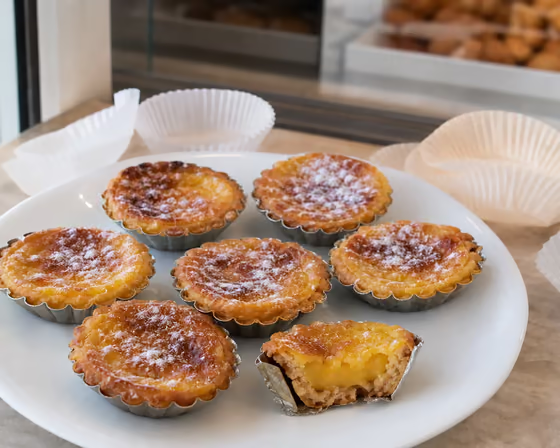
 Friends of Peniche
The sweet named after friends you should not trust.
The West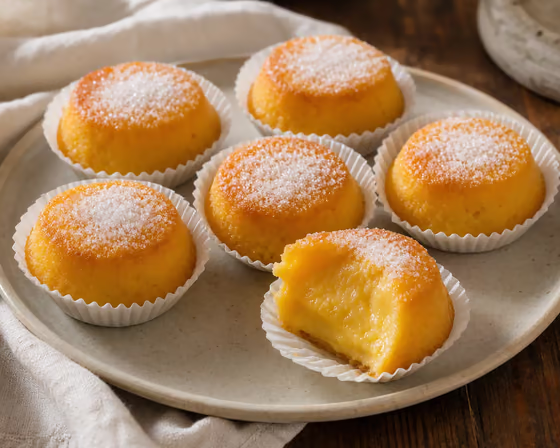 Catalogue image
 Areias Brancas
Small yolk-and-almond pudding cakes, named by the coast and covered with white sugar.
The West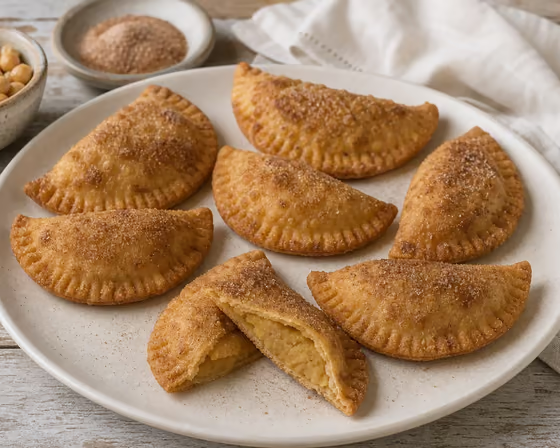 Catalogue image
 Peniche Chickpea Azevias
Thin fried half-moons with a sweet, creamy chickpea, almond and egg-yolk filling.
The West Catalogue image
 Lourinhã DOC Brandy Bonbon
A dark-chocolate bonbon with a Lourinhã DOC brandy heart.
The West