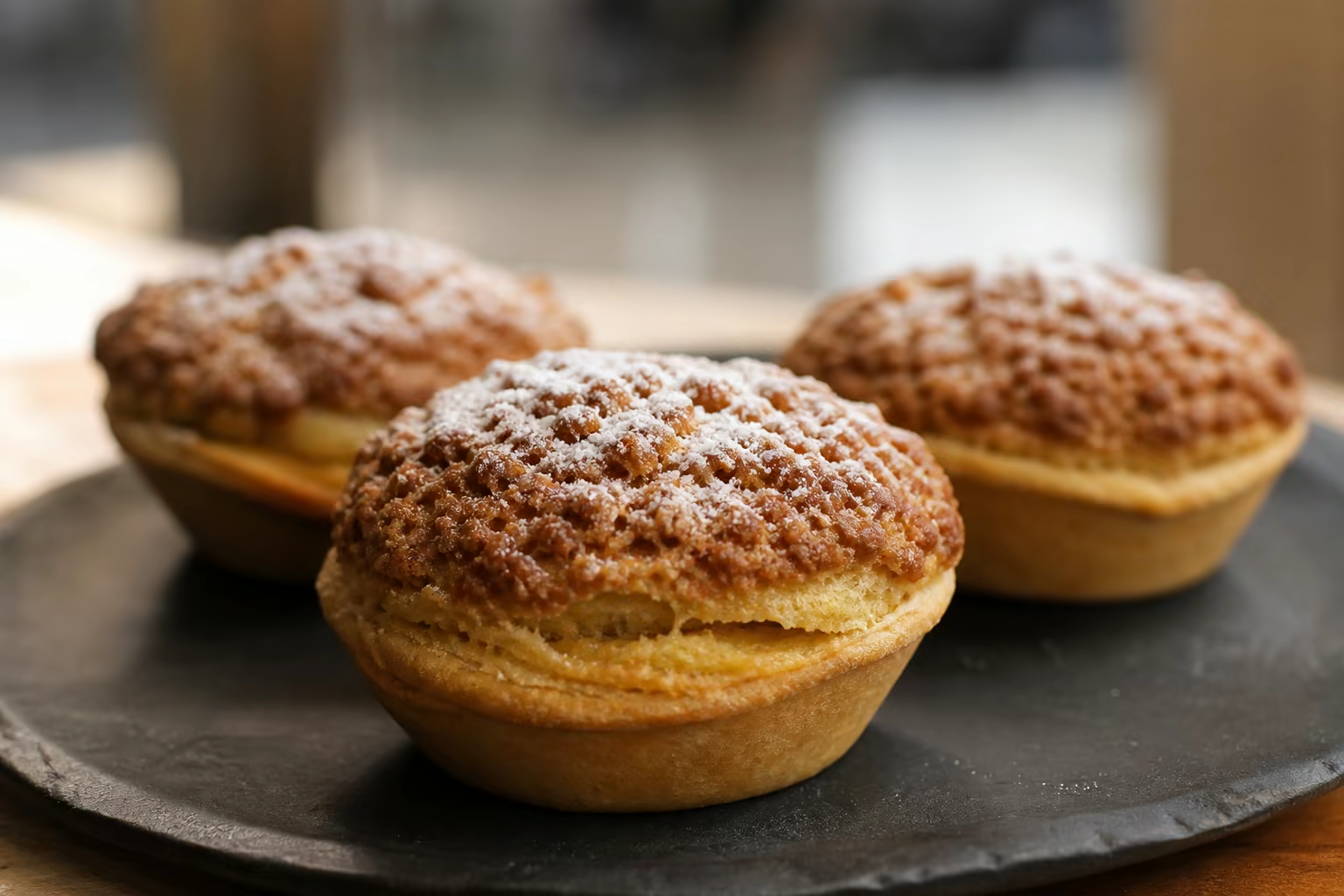
Citânia Rock Pastries
Also known as: Citânia Rock Pastries · Sanfins Rock Pastries
An almond-and-coconut pastry with a craggy crown recalling the stonework of ancient Citânia de Sanfins.
- Origin
- Paços de Ferreira · Tâmega e Sousa
- Place
- Paços de Ferreira
- Region
- The North
- Category
- Cakes & Sweet Breads
- Season
- Year-round; especially promoted during December's gastronomic events
- Evidence
- Well documented
Rochas da Citânia are small round pastries from Paços de Ferreira. A pale base baked in a fluted mould supports an irregular almond-and-coconut crown, toasted to a deep brown and finished with a light dusting of icing sugar. In profile, tender layered pastry sits beneath the coarse, craggy crust.
The published regional formula combines water, type 55 wheat flour, margarine, salt, sugar and eggs with coconut and almond. Almond is what distinguishes them from Brisas do Pilar, another Paços de Ferreira speciality promoted alongside them. The name connects their rocky texture with Citânia de Sanfins, one of north-west Iberia's major Iron Age settlements and a defining heritage site of the municipality.
- type 55 wheat flour
- water
- margarine
- eggs
- sugar
- coconut
- almond
- salt
- icing sugar
Sweet and egg-rich, with toasted coconut, almond and a contrast between the tender base and coarse crown.
The toast and cragginess of the crown vary by pastry shop, and some versions carry more icing sugar. Almond is the published feature separating the Rocha from the Brisa do Pilar.
At pastry shops in Paços de Ferreira, including long-standing businesses advertising Rochas da Citânia as a house speciality, and during the municipality's Gastronomic Weekends.
Espresso, black tea or white Vinho Verde.
Paços de Ferreira Municipality and Porto and Northern Portugal Tourism repeatedly present Rochas da Citânia as part of the local confectionery tradition, together with Brisas do Pilar. Regional gastronomic guides have documented the formula since at least the 2010s, while pastry shops in the municipality continue to make them. Their name turns the archaeology of Sanfins into an edible image: small, irregular and stone-like.
Well documented
Identity supported by institutional, specialist or corroborating sources.
- bairrocapitaldomovel.pt/pt/pastelaria-1%C2%BA-de-dezembro (opens in a new tab)
- cm-terrasdebouro.pt/images/noticias/2016/11/19/Agenda_dos_Fins_de_Semana_Gastron%C3%B3micos_2016_-_2017.pdf (opens in a new tab)
- imediato.pt/pacos-de-ferreira-em-destaque-no-novo-video-da-rota-do-romanico/ (opens in a new tab)
- rotadoromanico.com/documents/614/FDSG-2018-19.pdf (opens in a new tab)
Pastries from here — The North
 Catalogue image
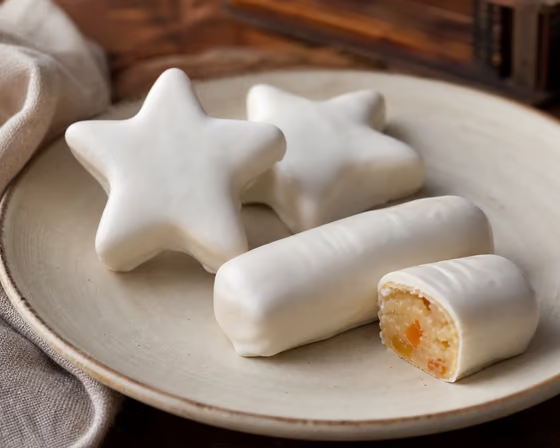
 A Bella Queijadinha de Barcelos
A white star of almond, preserved fruit and family memory.
The North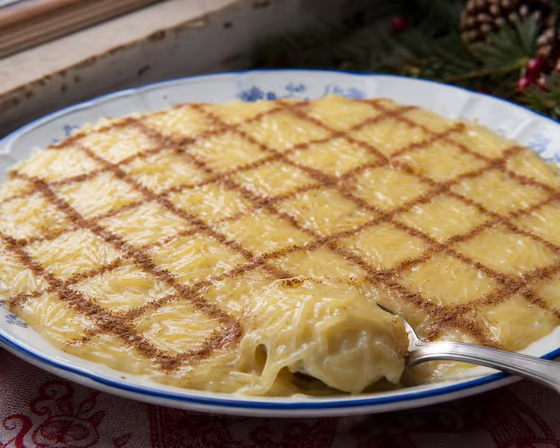 Catalogue image
 Sweet Vermicelli
Fine wheat threads simmered in milk and yolk, scored with cinnamon.
The North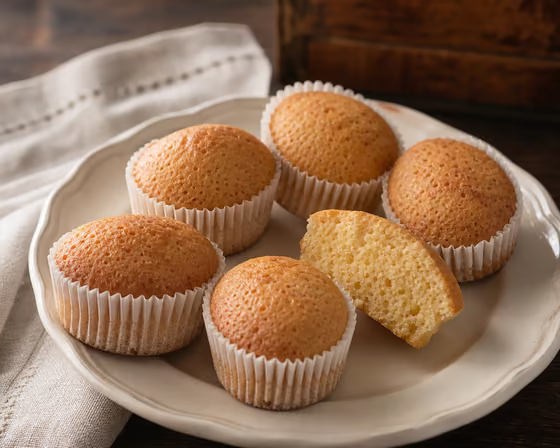 Catalogue image
 Amarantinos
Small egg, lemon and cinnamon cakes whose historical identity is not told consistently by the sources.
The North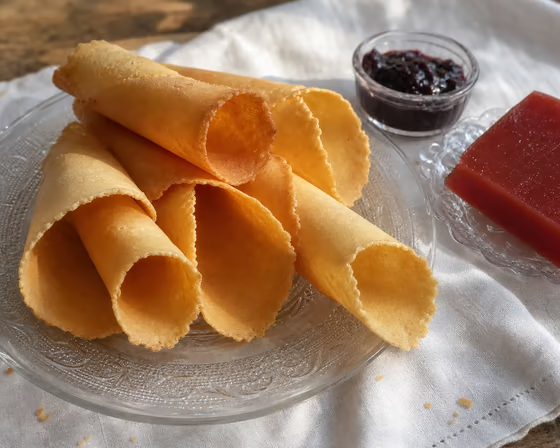 Catalogue image
 Vieira do Minho Cone Wafers
Paper-thin crisp wafers, iron-baked and rolled by hand while still hot.
The North