Ul Sweet Regueifa
Also known as: Ul Sweet Regueifa · Ul Sweet Bread Ring
A cinnamon sweet bread opened by hand into a ring and baked in a wood-fired oven.
- Origin
- Ul · Macinhata da Seixa · Travanca · Oliveira de Azeméis
- Place
- Ul · Oliveira de Azeméis
- Region
- The North
- Category
- Cakes & Sweet Breads
- Season
- Year-round; top sugar chiefly at Christmas, Easter and festivals
- Evidence
- Well documented
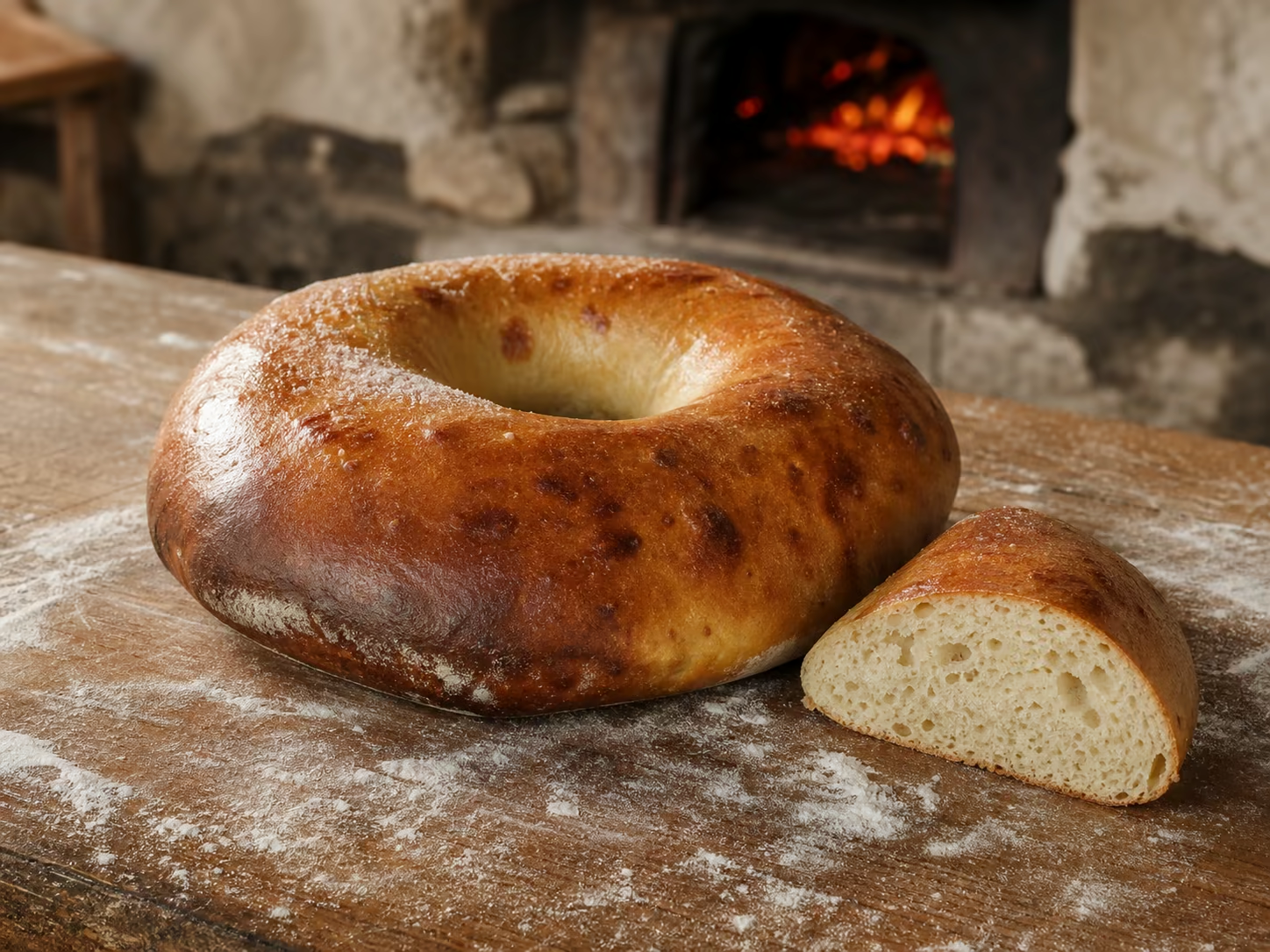
Regueifa de Ul is a traditional sweet bread from Oliveira de Azeméis municipality. It is shaped by hand from a ball of dough, opening a hole roughly in the centre: it is not the braided regueifa common elsewhere in northern Portugal. The crust, brushed with yolk before entering a wood-fired oven, is brown, soft and only slightly glossy; the crumb is white and fluffy, with irregular medium-sized air cells.
The product specification restricts the ingredients to wheat flour, water, yeast, salt, sugar, cinnamon and beaten yolk. A standard loaf measures 20–25 centimetres across, stands 6–8 centimetres high and weighs 270–650 grams. Smaller regueifinhas of about 100 grams are also made. On festive occasions, the top may be lightly dusted with sugar.
- wheat flour
- water
- baker's yeast
- salt
- sugar
- cinnamon
- egg yolk
A soft, fluffy crumb and tender crust, moderately sweet with a light cinnamon aroma and notes from the wood-fired oven.
The specification recognises both the full-sized loaf and a proportionally smaller regueifinha. Surface sugar is optional and chiefly associated with Christmas, Easter and local festivities. Braided loaves enriched with milk, butter, fruit or lemon belong to other traditions and do not match Ul's protected formula.
Authorised production is limited to Ul and a 500-metre strip beside the Antuã river in Macinhata da Seixa and Travanca. Look for producers recognised by APPUL and visit the Mill and Bread Museum Centre in Ul's Milling Theme Park, where the traditional craft and wood-fired ovens remain tied to the territory.
Coffee, black tea, fresh cheese or a thin layer of Portuguese quince paste.
Ul's tradition closely connects its rivers, watermills, millers and women bakers. The regueifa developed alongside Pão or Pada de Ul: it complemented the same work and used the already-hot oven to provide a sweet bread for feast days. Sugar, cinnamon and yolk were costly ingredients, which is why the loaf was originally reserved for special occasions.
The craft passed mainly among women, from mothers and grandmothers to daughters and granddaughters. In 2025, Portugal approved the name 'Regueifa de Ul' as a geographical indication, with national protection effective from 5 March. As of July 2026, the application remains under examination by the European Commission; national protection is therefore in force, but EU PGI registration is not yet complete.
Well documented
Identity supported by institutional, specialist or corroborating sources.
- tradicional.dgadr.gov.pt/en/categories/bread-and-bakery-products/1151-regueifa-de-ul (opens in a new tab)
- tradicional.dgadr.gov.pt/images/prod_imagens/pao/docs/CE_Regueifa_UL.pdf (opens in a new tab)
- diariodarepublica.pt/dr/detalhe/aviso-extrato/6360-2025-910137739 (opens in a new tab)
- diariodarepublica.pt/dr/detalhe/aviso-extrato/14972-2026-1132818528 (opens in a new tab)
- dgadr.gov.pt/pt/dop-igp-etg/pedidos-de-registo-em-analise (opens in a new tab)
- ptpt.pt/pt/produtos/regueifa-de-ul (opens in a new tab)
Pastries from here — The North
 Catalogue image
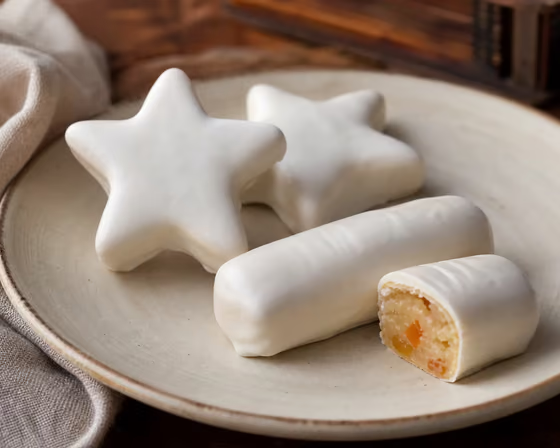
 A Bella Queijadinha de Barcelos
A white star of almond, preserved fruit and family memory.
The North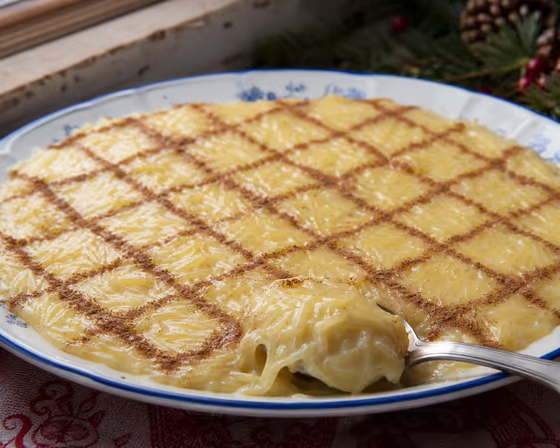 Catalogue image
 Sweet Vermicelli
Fine wheat threads simmered in milk and yolk, scored with cinnamon.
The North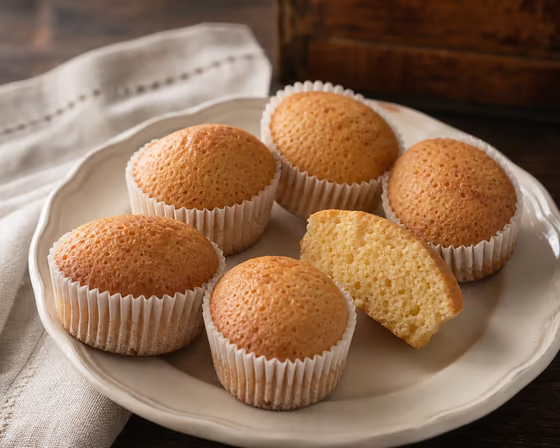 Catalogue image
 Amarantinos
Small egg, lemon and cinnamon cakes whose historical identity is not told consistently by the sources.
The North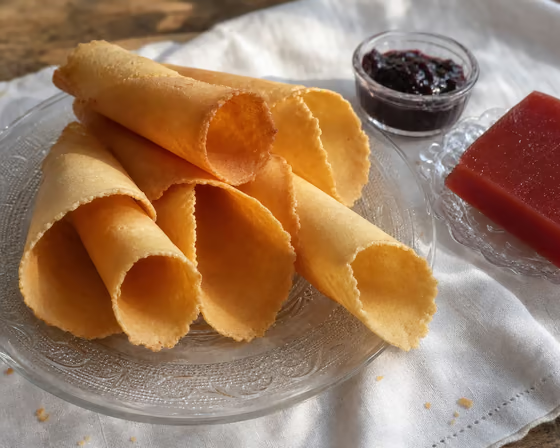 Catalogue image
 Vieira do Minho Cone Wafers
Paper-thin crisp wafers, iron-baked and rolled by hand while still hot.
The North