Raivas
Also known as: Aveiro Raivas
Butter biscuits shaped into irregular ropes and loops, documented as part of Aveiro's sweet identity.
- Origin
- Aveiro · documented regional sweet · date of creation unknown
- Place
- Aveiro
- Region
- The Centre
- Category
- Cakes & Sweet Breads
- Season
- No verified traditional season · check availability
- Evidence
- Well documented
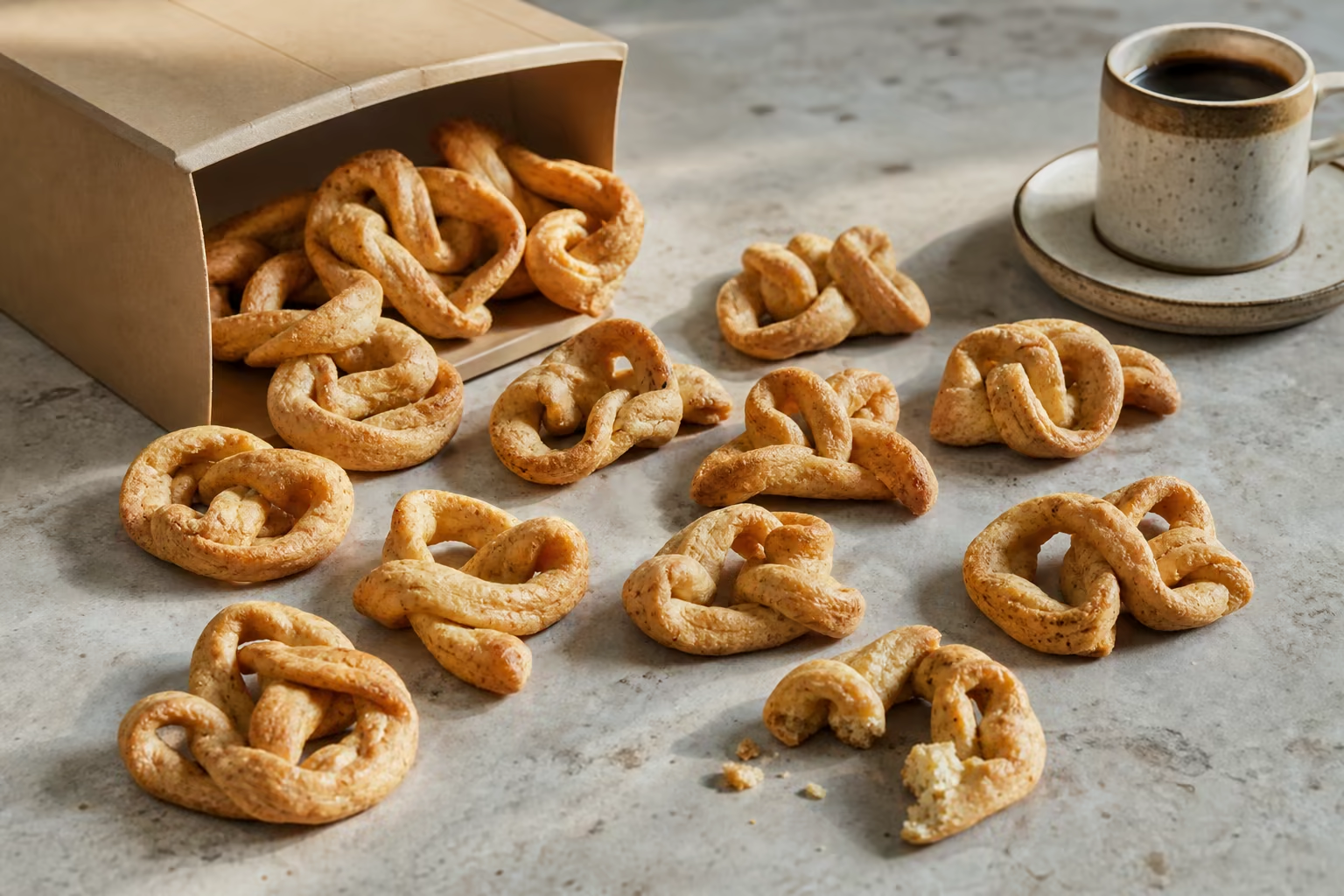
Aveiro Raivas are butter biscuits shaped from thin ropes of dough, folded into loops or irregular designs before baking. Published recipes converge on wheat flour, butter, sugar and eggs; cinnamon appears in some formulas but should not be treated as compulsory. The documented result is dry, crisp and brittle.
Aveiro Municipal Council includes raivas among the municipality's sweets and desserts, while a University of Aveiro project lists them among the sweet products for which the region is known. These sources establish the geographic association. They do not demonstrate one canonical recipe or a convent origin.
The image on this page is an editorial interpretation consistent with the published method of making ropes and irregular designs. It is not a photograph of an authenticated specimen and does not prove a compulsory shape.
- Wheat flour
- Butter
- Sugar
- Eggs
- Cinnamon in some published recipes
A dry, crisp and brittle biscuit with a buttery, moderately sweet profile; cinnamon varies by recipe.
Proportions, the use of cinnamon and the loop designs vary between published recipes. They should not be confused with Raivas de Fataunços, part of the Doçaria de Feira de Vouzela: Portugal's DGADR documents the latter as small spiked horseshoes made with lemon and baked in a wood-fired oven. They share a name but have distinct identities, forms and regional contexts.
Institutional sources recognise raivas as an Aveiro speciality, and a University of Aveiro report records them among the regional products presented by Oficina do Doce. This review did not confirm current availability from a specific producer; check before visiting.
No traditional pairing was identified in the sources consulted; coffee or tea are editorial suggestions.
An issue of Diário de Aveiro dated 5 November 1986 already distinguished 'raivas, from Aveiro' from 'pão-de-ló, from Ovar'. More recent documents from Aveiro Municipal Council and the University of Aveiro maintain the association between raivas and the city and region. Ovar is therefore not treated here as an alternative name or origin for this biscuit.
Culinary and promotional texts repeat a convent origin, an age of more than two centuries and colourful explanations for the name, especially the difficulty of shaping the dough. This review found no primary source or historical research establishing those claims. They are narrative traditions rather than demonstrated facts; the date and circumstances of creation remain unknown.
Well documented
Identity supported by institutional, specialist or corroborating sources.
- cm-aveiro.pt/cmaveiro/uploads/document/file/10607/5b_estcaraterizacaosistemaprodutivoturismo_201911.pdf (opens in a new tab)
- api-portal.ua.pt/api/v1/file/49874 (opens in a new tab)
- proa.ua.pt/index.php/rual/pt/article/download/7913/5635/13993 (opens in a new tab)
- asw.pt/jornais/Diario_Aveiro/DDA_1986-11-05.pdf (opens in a new tab)
- tradicional.dgadr.gov.pt/pt/cat/doces-e-produtos-de-pastelaria/1092-docaria-de-feira-de-vouzela (opens in a new tab)
- cozinhatradicional.com/raivas-aveiro/ (opens in a new tab)
- pingodoce.pt/receitas/raivas-de-aveiro/ (opens in a new tab)
Pastries from here — The Centre
 Catalogue image
 Ílhavo Piped Butter Biscuits
Regional buttery biscuits piped into deeply ridged rings and curves.
The Centre Catalogue image
 Saint Friar Gil’s Saddlebags
The small saddlebag-shaped pastry created at Vouzela’s vocational school and recognised as an innovative sweet.
The Centre Catalogue image
 Baixo Mondego Rice Pudding
Mondego Carolino rice and Gândara milk, traced with cinnamon.
The Centre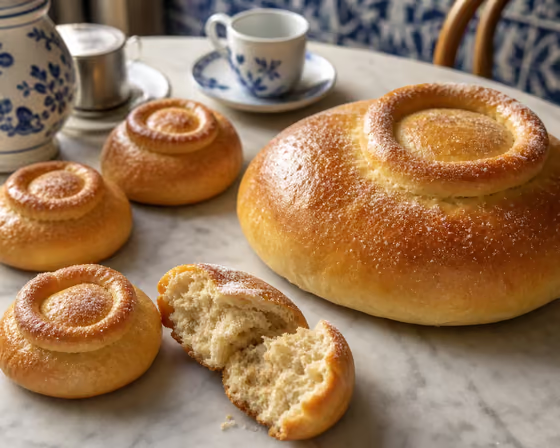 Catalogue image
 Arrufada de Coimbra
Coimbra's light, fragrant sweet bread, given by godparents at Easter.
The Centre