Póvoa-style Rabanada
Also known as: Póvoa-style Rabanada · Leonardo's Rabanada
A whole trimmed bijou roll, soaked in aromatic milk and fried until almost doughnut-like.
- Origin
- Póvoa de Varzim · northern coast
- Place
- Póvoa de Varzim
- Region
- The North
- Category
- Fried Sweets
- Season
- Christmas; also available year-round at local establishments
- Evidence
- Well documented
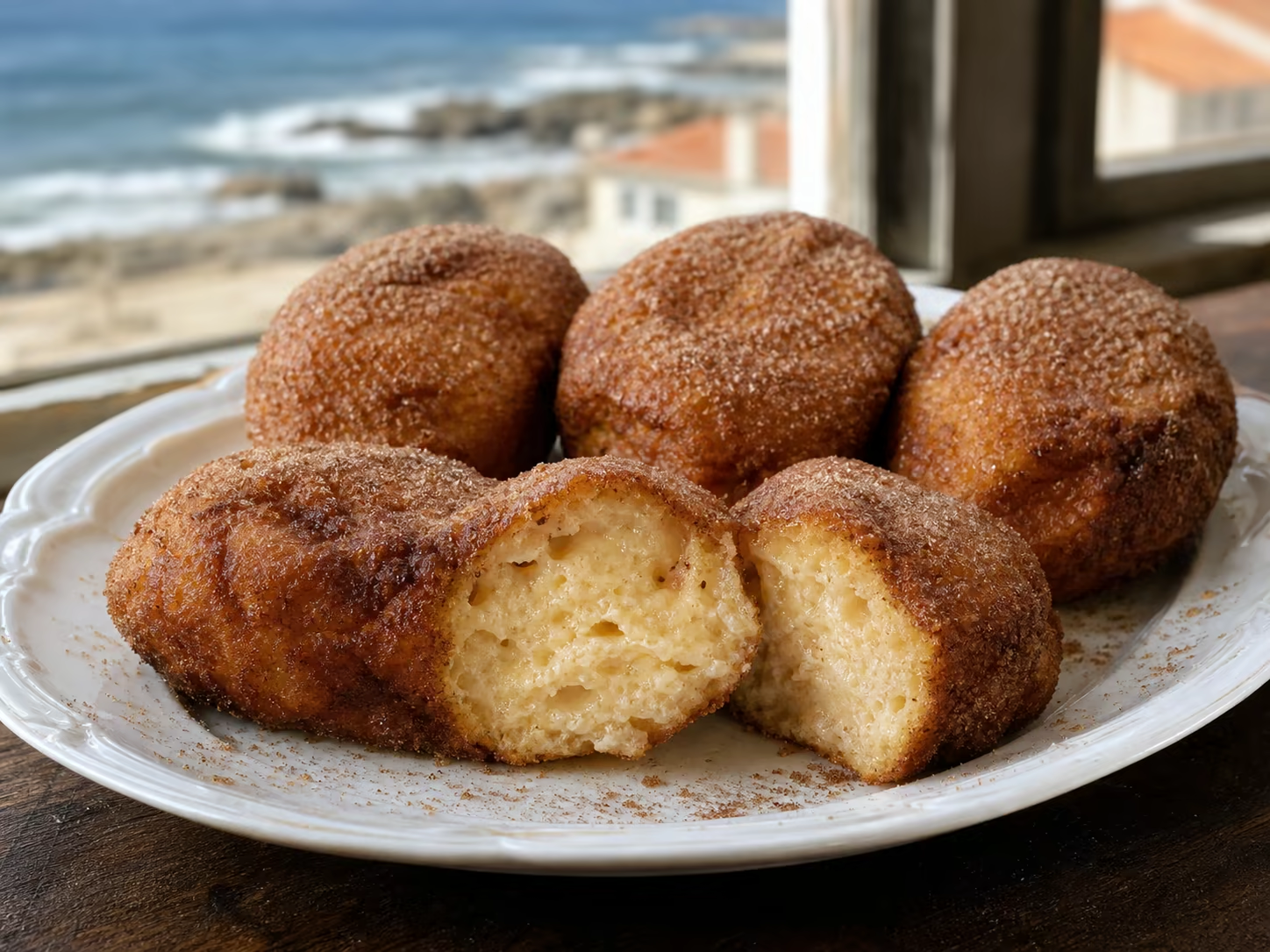
Rabanada à Poveira is distinguished by its bread: rather than slices of a long loaf, it uses a small, dry, well-fermented bijou wheat roll. The roll is trimmed, halved, thoroughly soaked in milk scented with lemon and cinnamon, dipped in egg and fried.
The result retains the rounded volume of the roll and develops a deep golden-brown exterior coated in cinnamon sugar. Its centre becomes very moist, fluffy and almost doughnut-like—the texture the municipal competition regards as faithful to the original form.
- dry bijou wheat rolls
- milk
- eggs
- sugar
- cinnamon stick
- ground cinnamon
- lemon peel
- salt
- frying oil
A caramelised cinnamon-sugar exterior, creamy milk-and-egg centre and fresh lemon fragrance.
Household versions may add Port, wine, honey or nuts, but the municipal reference version uses bijou rolls, milk, egg, lemon and cinnamon.
At restaurants and pastry shops in Póvoa de Varzim, especially at Christmas and during the Delícia de Rabanada competition.
Coffee, tawny Port or black tea.
Rabanadas already belonged to Póvoa's Christmas Eve tradition, but the commercial version known today emerged around the 1950s. At his restaurant, Leonardo da Mata adapted the custom to use leftover local rolls called trigo or bijou; the creation was once known as Leonardo's Rabanada. The municipality keeps the specialty visible through its annual Delícia de Rabanada competition.
Well documented
Identity supported by institutional, specialist or corroborating sources.
- cm-terrasdebouro.pt/images/noticias/2023/3/12/fdsg23.pdf (opens in a new tab)
- cm-pvarzim.pt/content/uploads/2019/06/revista-12-web.pdf (opens in a new tab)
- bloguedoave.blogspot.com/2014/12/sabores-da-povoa-de-varzim-rabanada.html (opens in a new tab)
- cm-pvarzim.pt/comunicacao/noticias/tag/delicia-de-rabanada-2024/ (opens in a new tab)
Pastries from here — The North
 Catalogue image
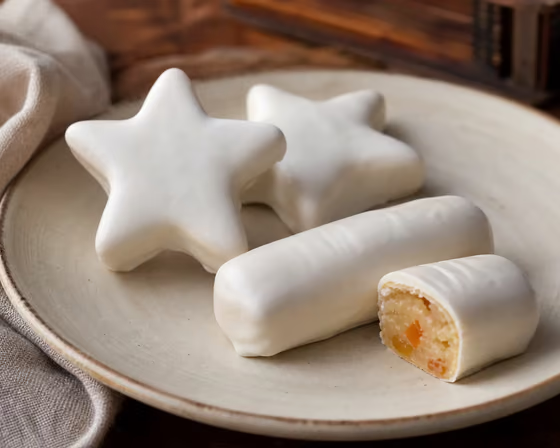
 A Bella Queijadinha de Barcelos
A white star of almond, preserved fruit and family memory.
The North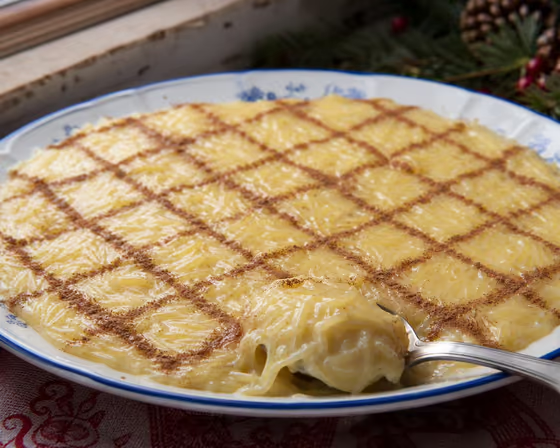 Catalogue image
 Sweet Vermicelli
Fine wheat threads simmered in milk and yolk, scored with cinnamon.
The North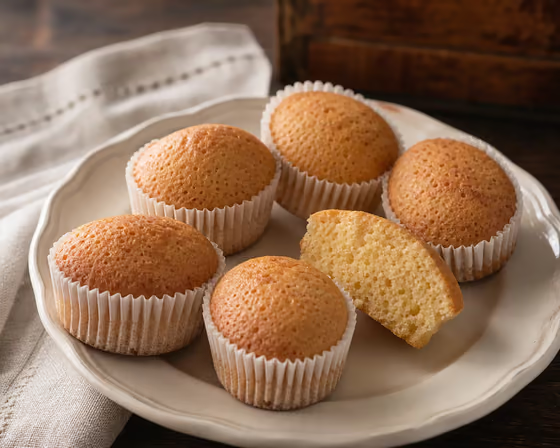 Catalogue image
 Amarantinos
Small egg, lemon and cinnamon cakes whose historical identity is not told consistently by the sources.
The North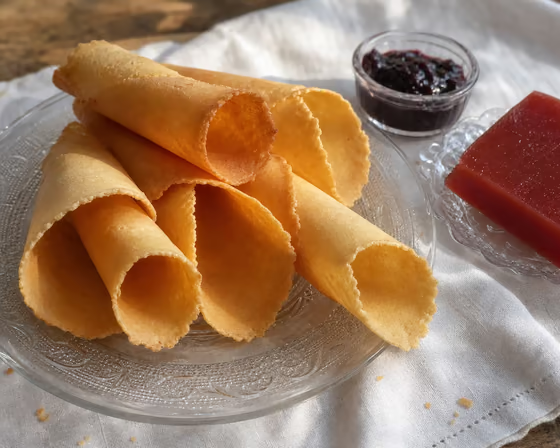 Catalogue image
 Vieira do Minho Cone Wafers
Paper-thin crisp wafers, iron-baked and rolled by hand while still hot.
The North