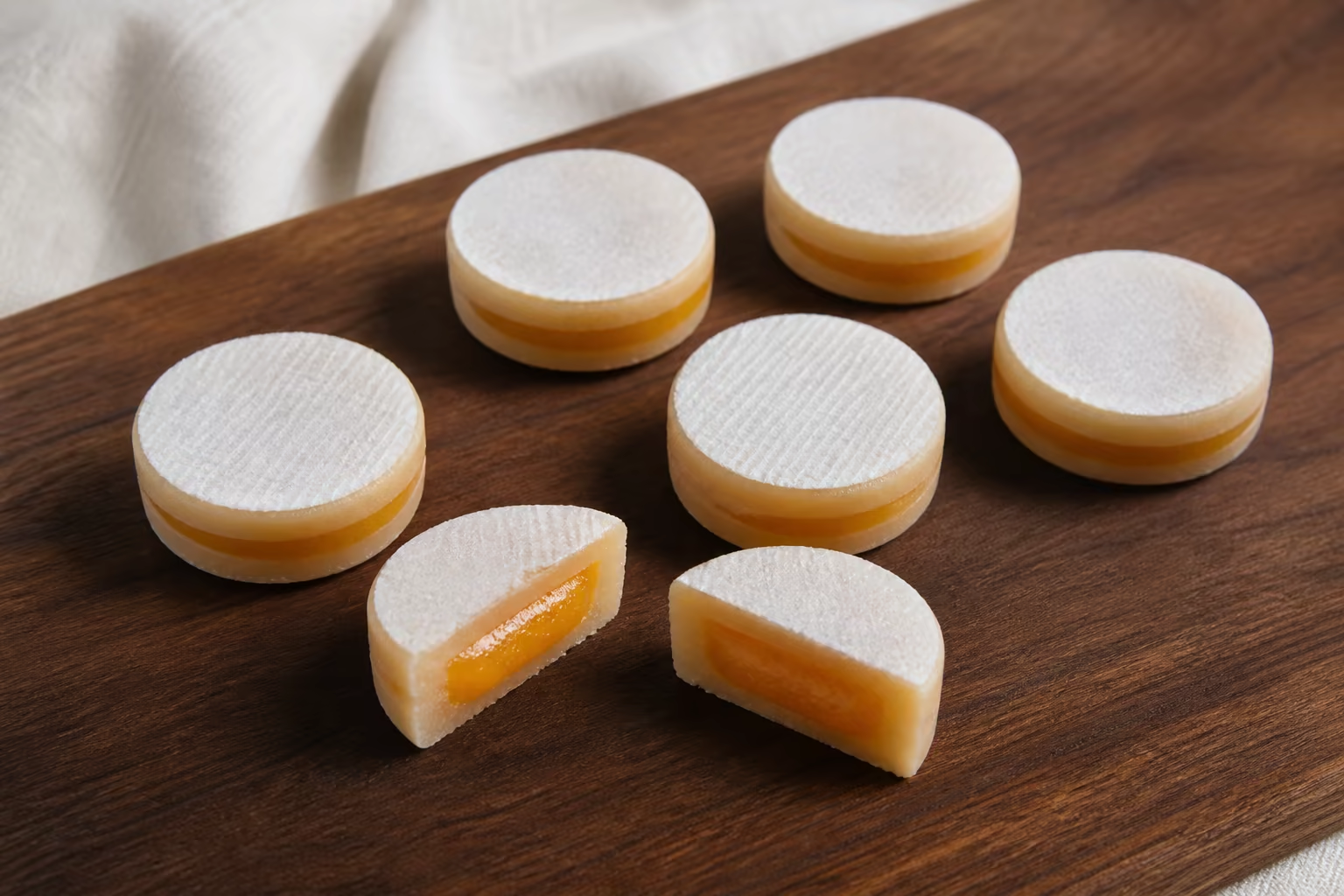
Wafer Queijinhos
Also known as: Queijadinhas de Hóstia · Cristos · Queijinhos do Céu
Two wafer discs enclose a white almond ring and a yellow ovos-moles centre.
- Origin
- Alentejo
- Place
- Alentejo
- Region
- The Alentejo
- Category
- Convent Sweets
- Season
- Year-round
- Evidence
- Well documented
Queijinhos de Hóstia are small Alentejo sweets measuring 4–5 centimetres. Very thin wafer discs form the base and top; between them sits a white ring of almond, sugar, yolk and egg-white paste, with yellow ovos moles in the centre.
They resemble tiny low white cheeses. The wafer is nearly flavourless but provides a dry, delicate skin around the soft, intensely sweet centre.
- sugar
- almonds
- egg yolks
- egg whites
- ovos moles
- wafer sheets
Soft sweet almond, rich ovos moles and a dry, nearly neutral wafer skin.
Queijadinha de Hóstia is DGADR's recorded name for the version awarded in the 1970s. The Gastronomic Charter groups Queijinhos de Hóstia, Cristos and Queijinhos do Céu as names for the family with wafer discs at top and base; this does not establish that every commercial recipe is identical.
At convent-sweet shops across Alentejo, especially in traditional assortments.
Espresso or unsweetened tea.
Wafer sheets are characteristic of convent-rooted confectionery, but no creation date is known. DGADR records that the sweet, then called Queijadinha de Hóstia, won a competition organised by Portuguese television and the national information service in the 1970s. The Alentejo Gastronomic Charter also documents it among Beja's sweets under the names Queijinhos de Hóstia, Cristos or Queijinhos do Céu; a historical study reported by Diário do Alentejo confirms that the name already appeared in Manuel de Castro e Brito's early-twentieth-century survey.
Well documented
Identity supported by institutional, specialist or corroborating sources.
- tradicional.dgadr.gov.pt/pt/cat/doces-e-produtos-de-pastelaria/268-queijinhos-de-hostia (opens in a new tab)
- visitalentejo.pt/fotos/editor2/pdfs/carta_gastronomica_do_alentejo.pdf (opens in a new tab)
- diariodoalentejo.pt/pt/9455/docaria-tradicional-o-estudo-de-castro-e-brito.aspx (opens in a new tab)
Pastries from here — The Alentejo
 Catalogue image
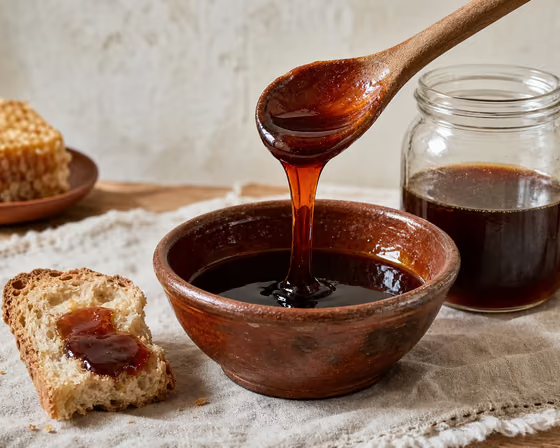
 Portuguese Água-mel Syrup
Water that recovers honey from combs after extraction, filtered and reduced for hours to 70–77° Brix.
The Alentejo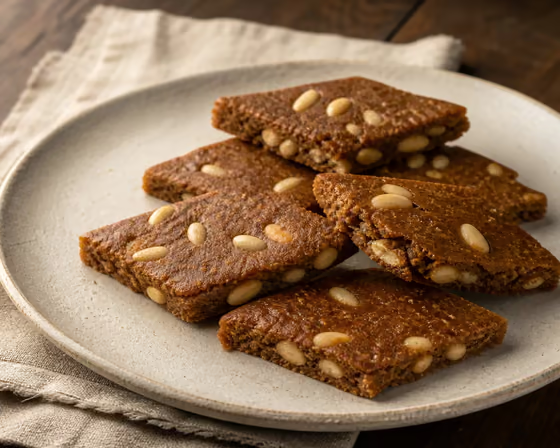 Catalogue image
 Alcomonias
Toasted coarse wheat flour, honey and pine nuts spread and cut into diamonds.
The Alentejo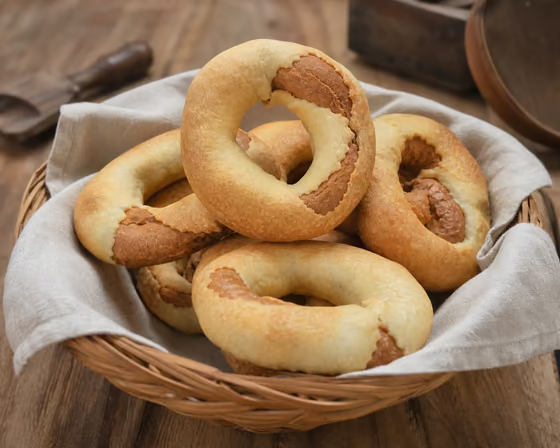 Catalogue image
 Amoreiras-Gare Alcôncoras
A large circular honey-and-olive-oil biscuit born from Amoreiras-Gare's promise-pole tradition.
The Alentejo Catalogue image
 Elvas Plums
Protected Rainha Cláudia Verde greengages sold fresh, dried or candied—the sweet form requires at least seven days of slow candying.
The Alentejo