Vila Franca do Campo Queijadas
Also known as: Queijadas da Vila · Vila Franca cheese tarts
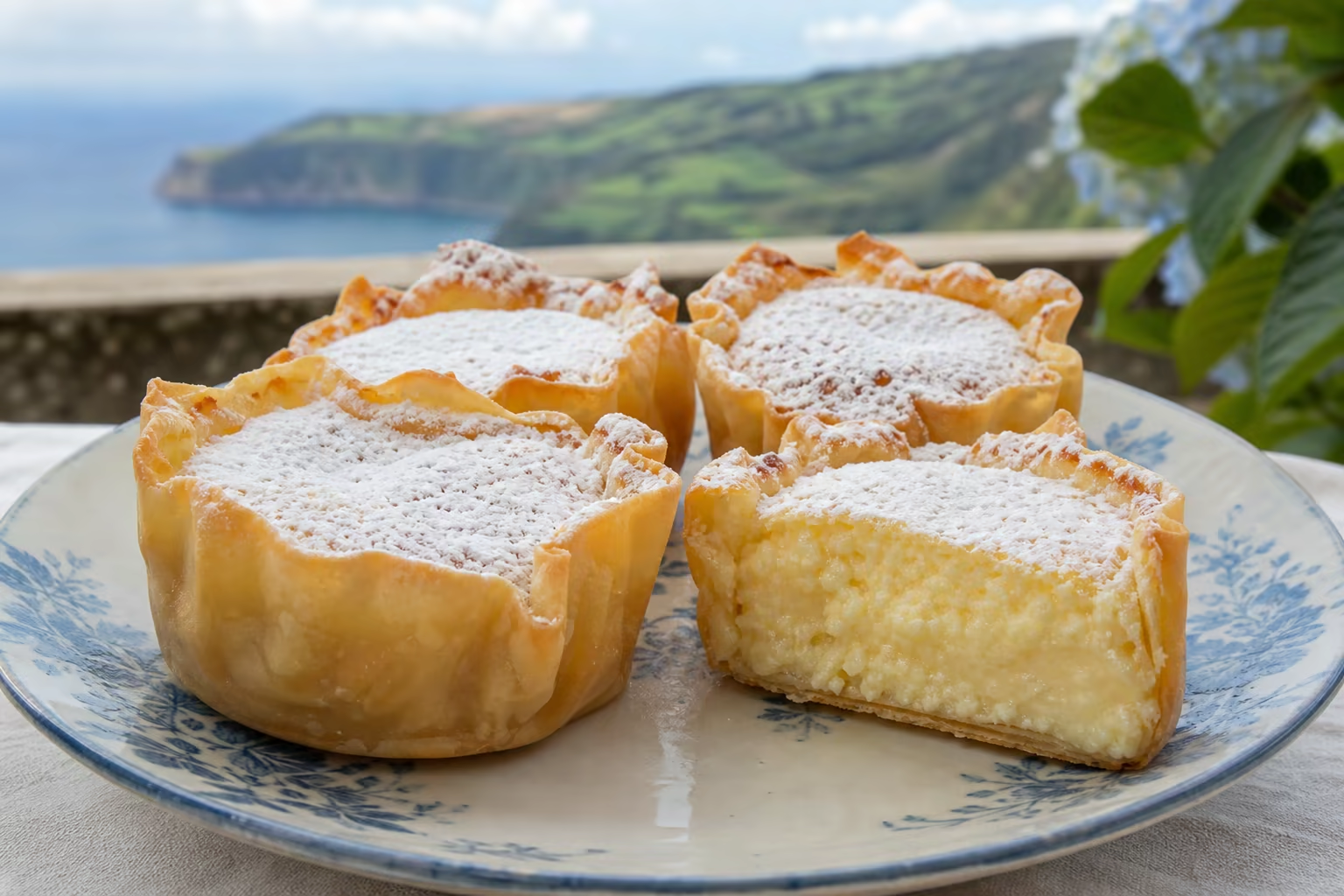
Vila Franca's fluted queijada, made with curdled milk, eggs and very thin pastry.
- Origin
- Vila Franca do Campo, São Miguel · tradition linked to the Convent of Santo André; creation date unknown
- Place
- Vila Franca do Campo
- Region
- The Azores
- Category
- Cakes & Sweet Breads
- Season
- Year-round
- Evidence
- Well documented
DGADR's institutional record documents Queijadas de Vila Franca do Campo with pastry made from flour, egg, lard, butter, sugar, salt and water. The filling begins with curdled, drained milk worked with eggs, sugar, butter and flour. The pastry is rolled very thinly, cut into rounds and lifted against the filling with a wooden pick to form a fluted case; a strip of baking parchment supports each piece during baking. It is finished with a generous dusting of icing sugar.
The sources publish similar but non-identical formulas. DGADR allows three small yolks or one whole egg in the pastry and lists a whole egg in the filling; the Pão de Ló Festival and ByAçores publish a version with one egg in the pastry and one white in the filling, as well as different butter and lard quantities. These differences are preserved as documented variants rather than collapsed into a supposed single recipe.
DGADR records year-round availability in cafés and pastry shops in Vila Franca and elsewhere on the island. ByAçores identifies a visitable factory and an address in Vila Franca, but prices, packaging and commercial availability can change and should be confirmed directly.
- Milk
- Rennet
- Egg yolks
- Whole egg
- Sugar
- Butter
- Lard
- Wheat flour
- Salt
- Icing sugar
The documented composition combines milk curds, eggs, sugar, butter and thin pastry finished with icing sugar. The consulted sources publish no comparative tasting assessment; texture, sweetness and richness necessarily vary by formula and producer.
The cited sources themselves document differences: three small yolks or one egg in the pastry; half or one tablespoon of lard; one teaspoon or two tablespoons of butter in the filling; an egg white or a whole egg. Curdled milk, thin pastry lifted into a fluted case and icing sugar are the convergent features.
DGADR documents sales in cafés and pastry shops in Vila Franca do Campo and elsewhere on the island. ByAçores identifies Queijadas da Vila do Morgado on Rua do Penedo in Vila Franca and mentions factory visits. Confirm opening hours, visits and availability directly before travelling.
DGADR's record suggests coffee or warm tea; it specifies no required variety, producer or service.
The sources connect the tradition with the Convent of Santo André in Vila Franca do Campo. DGADR places the queijada within the historical proximity of convents, cheese-making and the cheese-makers who took milk to the convent; it presents that relationship as a likely development within the circulation of religious recipes and dairy knowledge. Cozinha Açoriana calls it a sweet originating at the convent but expressly states that its exact creation date is unknown.
The convent was founded in the sixteenth century, but the institution's age does not automatically date the recipe. The same source suggests that the arrival of Spanish and Dutch religious women in the eighteenth century may have been decisive, without presenting a first recipe or production document. The convent connection is therefore a tradition published by several sources; century, author and moment of creation remain unproven.
Contemporary continuity is better documented than remote origins: DGADR records year-round production and consumption on the island, while current sources describe production in Vila Franca do Campo.
Well documented
Identity supported by institutional, specialist or corroborating sources.
- tradicional.dgadr.gov.pt/pt/cat/doces-e-produtos-de-pastelaria/701-queijadas-de-vila-franca-do-campo (opens in a new tab)
- byacores.com/queijadas-da-vila/ (opens in a new tab)
- festivaldopaodelo.pt/queijadas-de-vila-franca-do-campo/ (opens in a new tab)
- cozinhaacoriana.pt/queijadas-de-vila-franca/ (opens in a new tab)
Pastries from here — The Azores
 Catalogue image
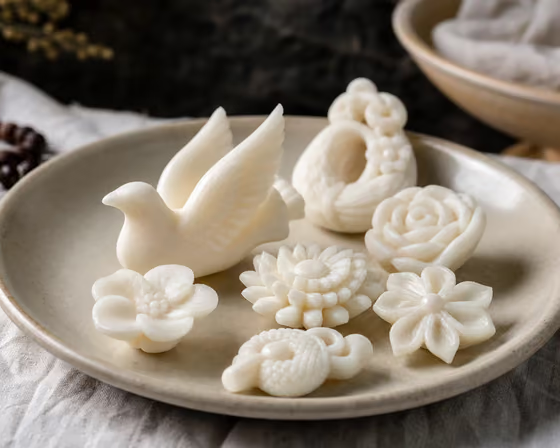
 Alfenim Pulled Sugar
Hand-pulled sugar shaped into animals, flowers, hearts and votive figures.
The Azores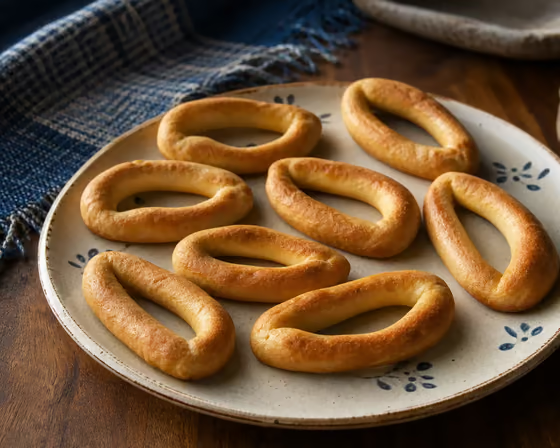 Catalogue image
 Brandy Biscuits
Crisp Santa Maria rings kneaded with eggs, rich fats and a glass of brandy.
The Azores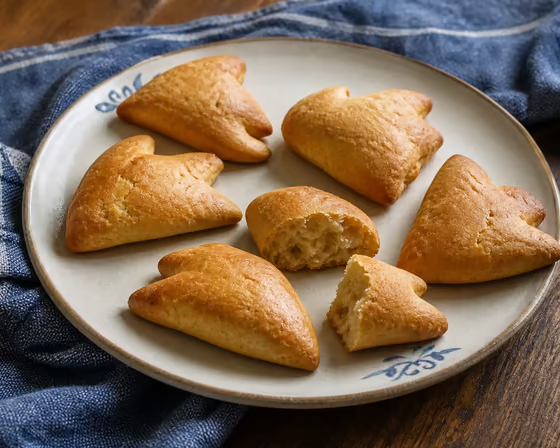 Catalogue image
 Ear-Shaped Biscuits
Santa Maria's triangular enriched biscuits, clipped at the tips like little ears.
The Azores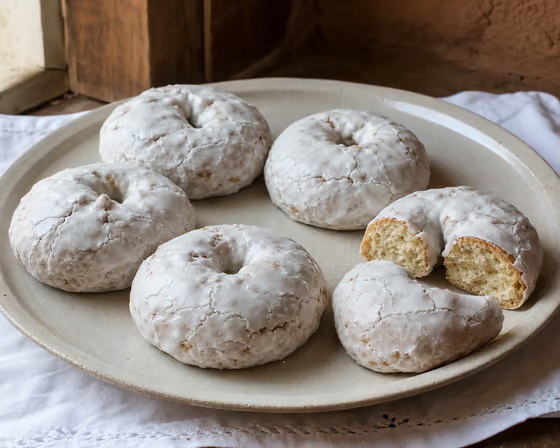 Catalogue image
 Santa Maria Encanelado Biscuits
Santa Maria's yeasted rings under a thick white sugar glaze.
The Azores