Graciosa Queijadas
Also known as: Covilhetes de Leite · Queijadas da Praia
The cheeseless Azorean queijada: milk cooked for hours until it turns amber.
- Origin
- Graciosa Island, Azores; a traditional home-made sweet, sold commercially since 1991
- Place
- Graciosa
- Region
- The Azores
- Category
- Cakes & Sweet Breads
- Season
- Year-round
- Evidence
- Well documented
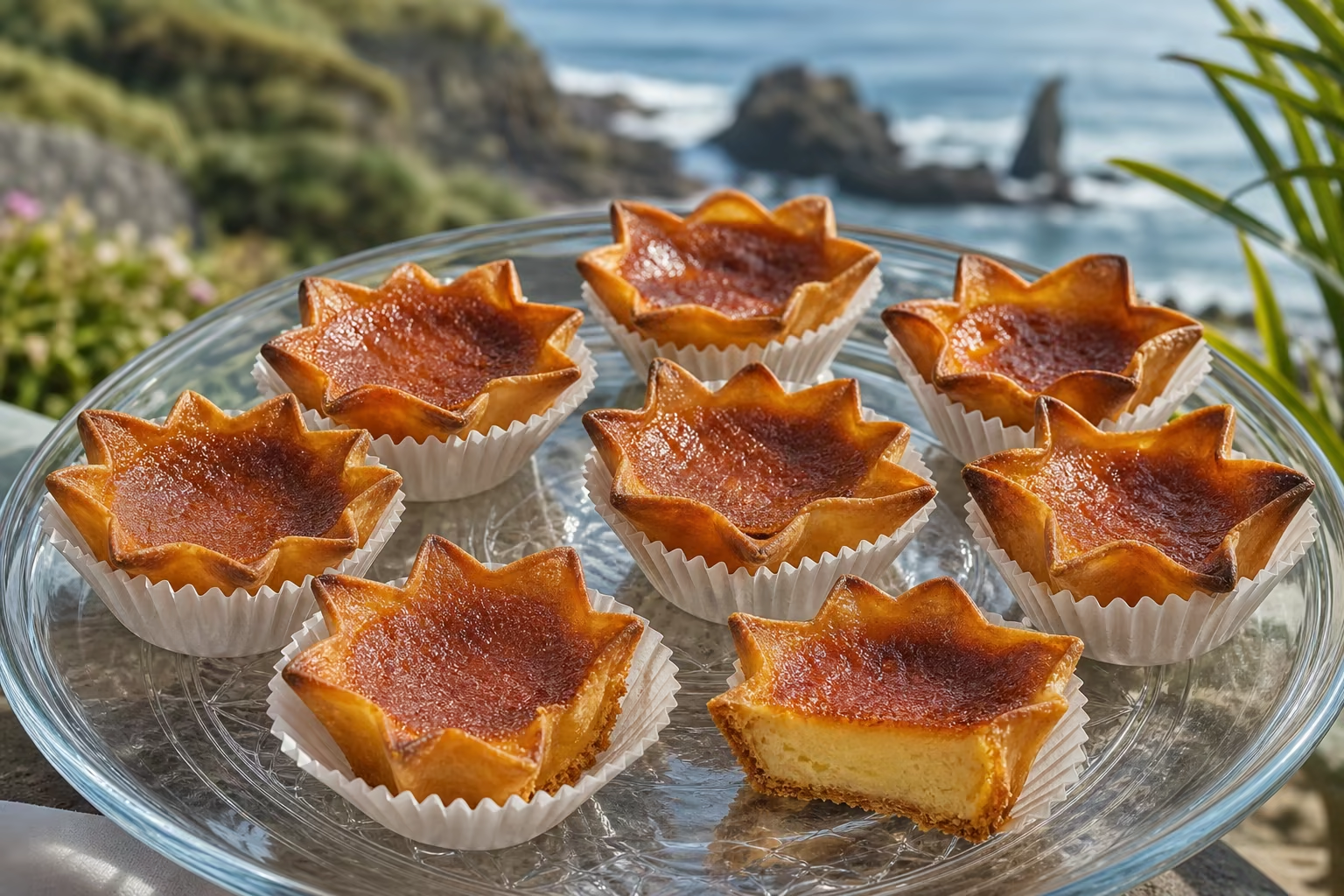
Despite the name, the queijada da Graciosa contains no cheese at all. It is a small open tartlet set in a very thin, crisp pastry case, cut into the shape of a star or a flower, holding a soft, golden filling of milk, sugar and egg yolks scented with cinnamon.
What defines it is time. The milk and sugar cook slowly for hours, reducing to a thick, brown, almost caramelised cream, into which only then go the yolks, the butter and the cinnamon. It is that long cooking that gives it the deep, toasted-milk flavour that few other Portuguese queijadas have.
On Graciosa, the smallest and quietest island of the central group, it was for generations a sweet of the home, present at any feast or gathering under its old name of covilhete de leite.
- Milk
- Sugar
- Egg yolks
- Wheat flour
- Butter
- Cinnamon
- Salt
- Water
Contrast rules: a wafer-thin, crisp pastry rim around a silky, creamy filling. The long-cooked milk gives a deep sweetness, with notes of caramel and toasted milk, and the cinnamon rounds it off. Sweet, certainly, but carried by the bittersweet edge of the reduction so it never tires the palate.
Graciosa's queijada belongs to a wide family of Azorean milk-and-egg queijadas that, despite the name, contain no cheese. The producer also sells separately identified coconut and almond versions. Published home formulas imitate the long reduction of the milk but should not be presented as the commercial recipe guarded by the producing family.
The Queijadas da Graciosa brand is made on the island in São Mateus and distributed to other islands and mainland Portugal. On Graciosa the product is available close to its source; elsewhere, check the producer and ingredients on the label. The visual reference documented by the Azores Crafts and Design Centre is a thin, crisp star-shaped case with a milk-and-egg filling.
It calls for a strong coffee or an espresso to cut the sweetness. On Graciosa it is even better with a small glass of the island's vinho de cheiro or a home-made liqueur, at the slack end of an afternoon.
Before it was a brand and a small factory, the queijada da Graciosa was the knowledge of home kitchens, mastered by countless island housewives and known as covilhete de leite, present at feasts and family gatherings. The recipe, with its secret of judging the milk's setting point, passed from one generation to the next.
From those family kitchens it crossed into commerce through Maria de Jesus Félix, who began selling the sweet around 1991 and, in 2003, secured the Queijadas da Graciosa trademark from Portugal's industrial-property institute. In March 2015 they became the first product to receive the Marca Açores seal, the crowning of a sweet that still leaves the workshop by the thousand each day, from a production that remains essentially artisanal and family-run.
Well documented
Identity supported by institutional, specialist or corroborating sources.
- artesanato.azores.gov.pt/catalogodigital/pt/queijadas-da-graciosa (opens in a new tab)
- turismo.azores.gov.pt/graciosa/ (opens in a new tab)
- pt.wikipedia.org/wiki/Queijada_da_Graciosa (opens in a new tab)
- queijadasdagraciosa.pt/sobre-nos/ (opens in a new tab)
- byacores.com/queijadas-da-graciosa/ (opens in a new tab)
- 24.sapo.pt/vida/artigos/mais-de-2-000-queijadas-da-graciosa-produzidas-todos-os-dias-em-negocio-familiar (opens in a new tab)
- cozinhaacoriana.pt/queijadas-da-graciosa-receberam-primeiro-selo-da-marca-acores/ (opens in a new tab)
- iloveazores.net/2017/01/queijadas-da-graciosa.html (opens in a new tab)
Pastries from here — The Azores
 Catalogue image
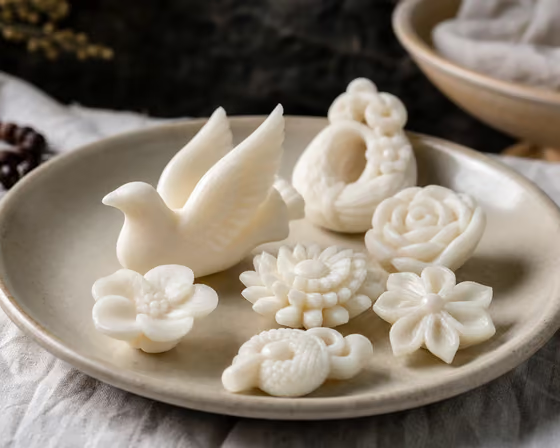
 Alfenim Pulled Sugar
Hand-pulled sugar shaped into animals, flowers, hearts and votive figures.
The Azores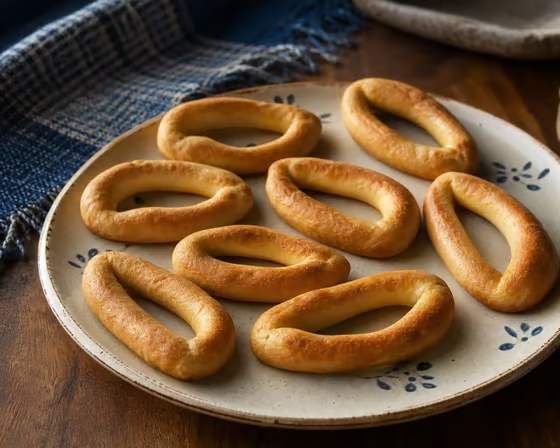 Catalogue image
 Brandy Biscuits
Crisp Santa Maria rings kneaded with eggs, rich fats and a glass of brandy.
The Azores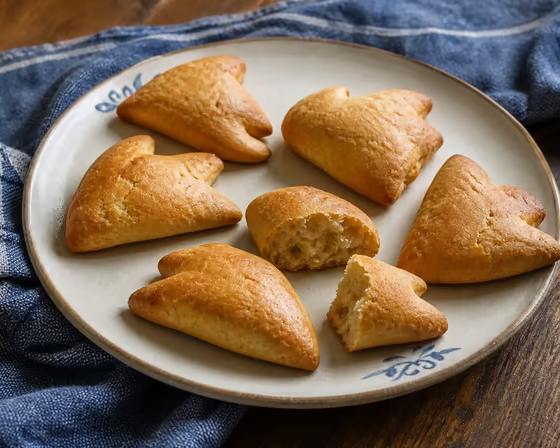 Catalogue image
 Ear-Shaped Biscuits
Santa Maria's triangular enriched biscuits, clipped at the tips like little ears.
The Azores Catalogue image
 Santa Maria Encanelado Biscuits
Santa Maria's yeasted rings under a thick white sugar glaze.
The Azores