Tentúgal Cheese Tart
Tentúgal's convent queijada: a fine pastry star filled with fresh cheese, yolks and milk.
- Origin
- Tentúgal · Montemor-o-Velho
- Place
- Tentúgal · Montemor-o-Velho
- Region
- The Centre
- Category
- Convent Sweets
- Season
- Year-round
- Evidence
- Well documented
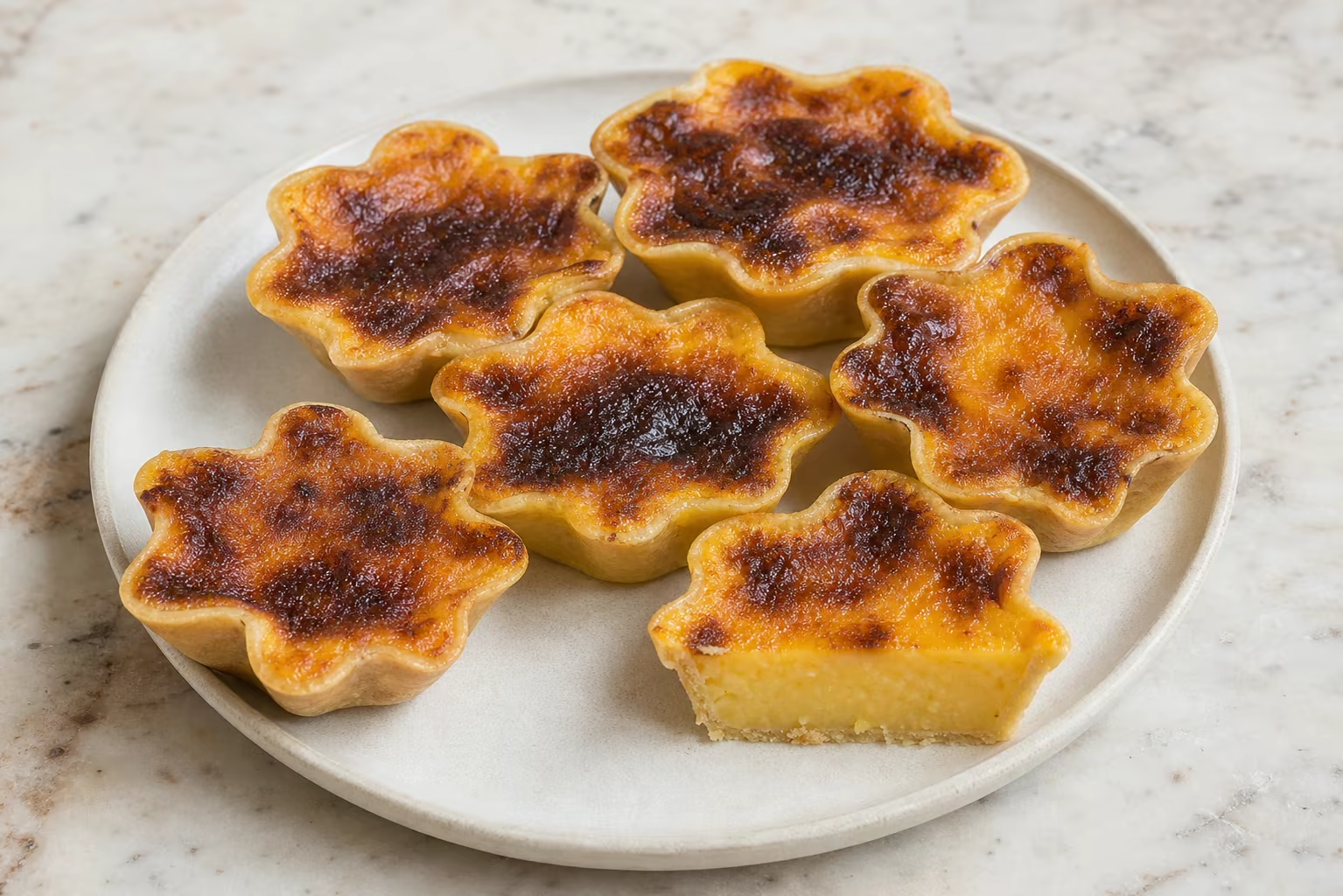
Queijada de Tentúgal is a small open tart moulded as a star. A thin shell of flour, butter and water holds a moist filling of fresh cheese, yolks, sugar, butter and milk, toasted on top in a hot oven.
The points of its mould create the characteristic flower-like silhouette; in the centre, the custard remains golden, soft and faintly textured by the cheese.
- fresh cheese
- wheat flour
- egg yolks
- sugar
- butter
- milk
- water
Sweet dairy-and-yolk filling with a caramelised top and a delicate pastry shell.
Not to be confused with Pastel de Tentúgal, which encloses egg jam in an almost transparent pastry.
At bakeries in Tentúgal and Montemor-o-Velho; look for the traditional star-shaped mould.
Tea, coffee or a dry Bairrada sparkling wine.
DGADR associates it with the recipes of the Convent of Our Lady of the Nativity, also known as Tentúgal's Carmelite convent. Montemor-o-Velho municipality includes Tentúgal queijadas and pastéis in the local convent-sweet tradition and documents the Carmelite house, founded in the sixteenth century. These sources support the conventual context but give no creation date and do not prove that today's formula originated inside the convent.
Well documented
Identity supported by institutional, specialist or corroborating sources.
- tradicional.dgadr.gov.pt/pt/cat/doces-e-produtos-de-pastelaria/725-queijadas-de-tentugal (opens in a new tab)
- cm-montemorvelho.pt/index.php/residentes/o-concelho/conheca-a-nossa-terra (opens in a new tab)
- cm-montemorvelho.pt/index.php/component/k2/item/191-convento-de-nossa-senhora-do-carmo (opens in a new tab)
Pastries from here — The Centre
 Catalogue image
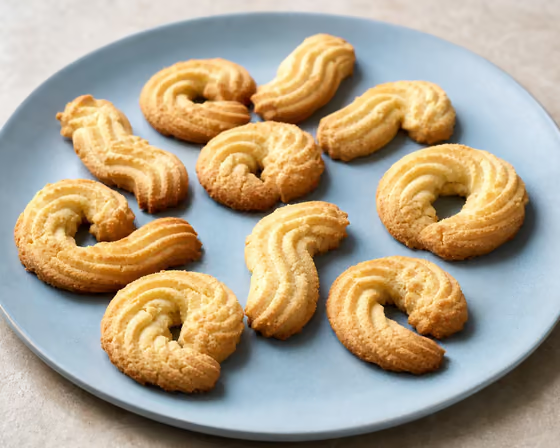
 Ílhavo Piped Butter Biscuits
Regional buttery biscuits piped into deeply ridged rings and curves.
The Centre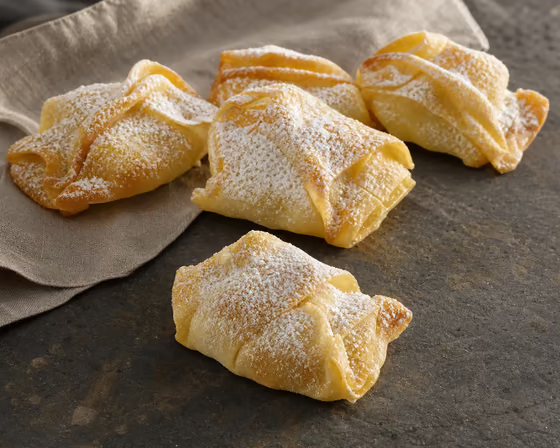 Catalogue image
 Saint Friar Gil’s Saddlebags
The small saddlebag-shaped pastry created at Vouzela’s vocational school and recognised as an innovative sweet.
The Centre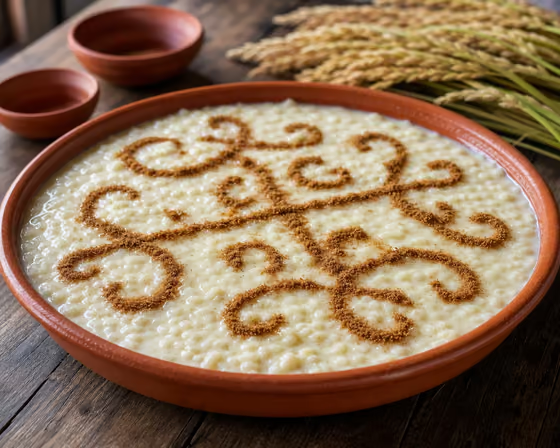 Catalogue image
 Baixo Mondego Rice Pudding
Mondego Carolino rice and Gândara milk, traced with cinnamon.
The Centre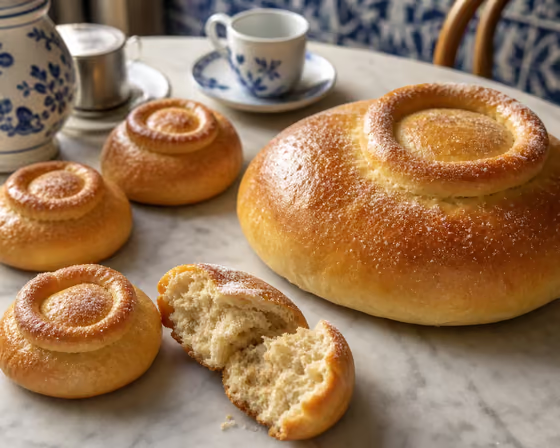 Catalogue image
 Arrufada de Coimbra
Coimbra's light, fragrant sweet bread, given by godparents at Easter.
The Centre