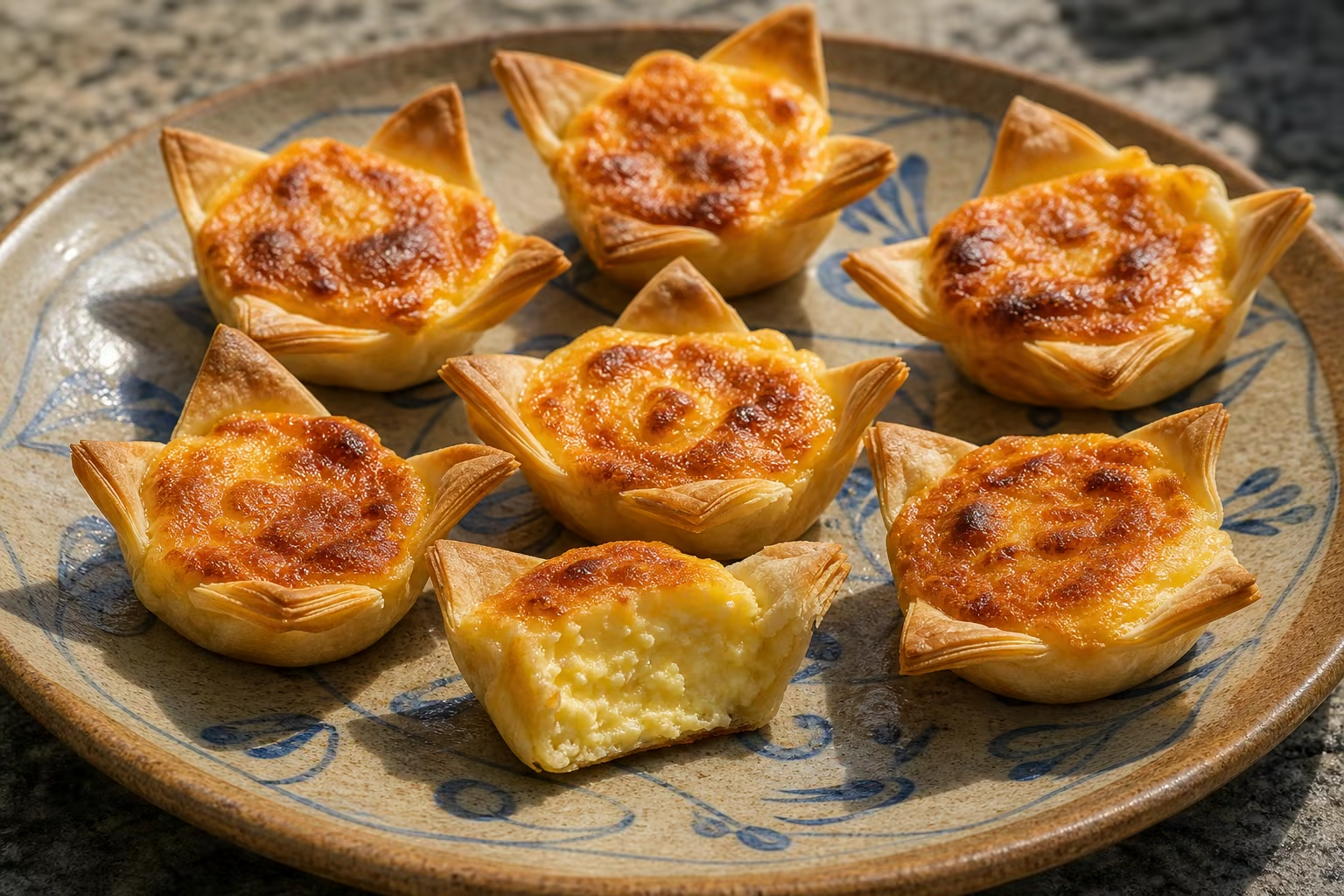
Madeira Queijada
Also known as: Madeira Queijadas · Funchal Queijadas
Curd cheese, eggs and wafer-thin pastry in a historic Funchal queijada.
- Origin
- Funchal, Madeira; documented in convent records of 1813-1815
- Place
- Funchal
- Region
- Madeira
- Category
- Cakes & Sweet Breads
- Season
- Year-round
- Evidence
- Well documented
The queijada da Madeira is a small, flattened cake, some seven to eight centimetres across, with wafer-thin pastry folded inward around a creamy filling of curd cheese, sugar and eggs. The sources document an important evolution: DGADR's 2001 inventory describes goat's-milk curd, while the current Requeijão da Madeira PGI specification defines a cow's-milk product and identifies it as the queijada's principal ingredient since at least the early twentieth century.
This is a sweet of the home and celebration, bought by the dozen in Funchal's old confeitarias and eaten at any hour. Small and unassuming, it depends entirely on the quality of the curd and the hand that rolls and folds its pastry.
- Curd cheese — historically goat's milk; now also cow's-milk Requeijão da Madeira PGI
- Sugar
- Eggs
- Wheat flour
- Butter
- Water
Contrast is everything: a thin, buttery rim of pastry, almost biscuit-like, around a soft, creamy filling. The curd lends a milky, faintly tangy backbone that balances the sugar.
DGADR's 2001 record includes flour in the filling and goat's-milk curd. A Madeiran recipe published in 1904, discussed by Funchal Notícias, omits flour from the filling; today's Requeijão da Madeira PGI is made from cow's milk. These documented differences should be presented as evolution and variants, not one immutable formula. Queijada de milho is another distinct Madeiran sweet.
Look for it in Funchal's traditional pastelarias, confeitarias and markets, where artisanal production survives. Look for very thin pastry folded over a filling in which the curd remains recognisable.
It calls for a strong coffee or an espresso, or, in true Madeiran fashion, a glass of drier Madeira wine such as Sercial or Verdelho, whose bite cuts through the sweetness of the curd.
The queijada already featured in Madeira's convent pastry-making at the start of the nineteenth century: a manuscript codex from the Convent of Our Lady of the Incarnation in Funchal lists "a Queijada" among the sweets prepared in 1813-1815 to mark religious solemnities and their octaves, a document published in the Madeira Historical Archive in 1937. Alongside the bolo de mel, it was always a touchstone of the island's confectionery.
For over a century, houses such as Confeitaria Felisberta, Mimo and the old Penha d'Águia made their queijadas famous. The industrialisation of the product has all but driven the true goat's-curd queijada from the regional market, which makes finding one made the traditional way all the more worthwhile.
Well documented
Identity supported by institutional, specialist or corroborating sources.
- tradicional.dgadr.gov.pt/pt/cat/doces-e-produtos-de-pastelaria/211-queijadas-da-madeira (opens in a new tab)
- tradicional.dgadr.gov.pt/en/categories/desserts-and-pastry/211-queijadas-da-madeira (opens in a new tab)
- visitmadeira.com/en/what-to-do/food-and-wine-enthusiasts/traditional-madeira-food/sweets-and-desserts/ (opens in a new tab)
- funchal.pt/confeitaria-felisberta-de-novo-reaberta-e-inclui-museu-do-bolo-de-mel/ (opens in a new tab)
- madeira.gov.pt/portals/9/documentos/requeijaomadeiraigp_ce_abril2023.pdf (opens in a new tab)
- funchalnoticias.net/2020/08/05/queijadas-da-madeira/ (opens in a new tab)
Pastries from here — Madeira
 Catalogue image
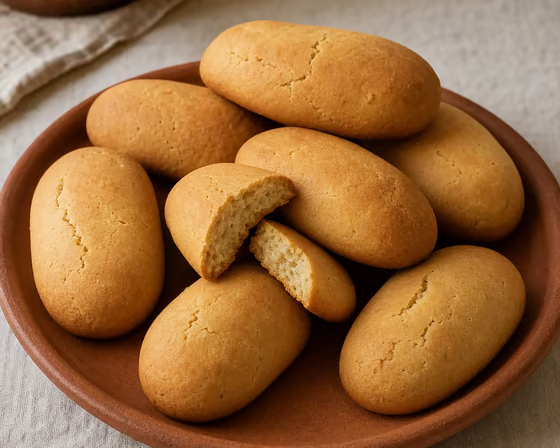
 Porto Santo Toasted Biscuits
Porto Santo's savoury biscuit, baked and then slowly toasted for hours.
Madeira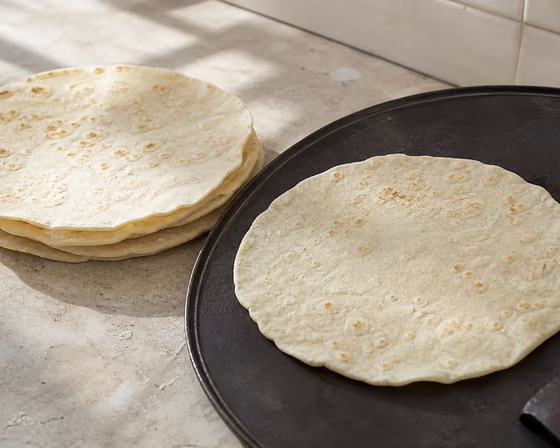 Catalogue image
 Porto Santo Jewish Unleavened Bread
A Porto Santo unleavened bread that one local source describes as barley, water and salt cooked on a griddle.
Madeira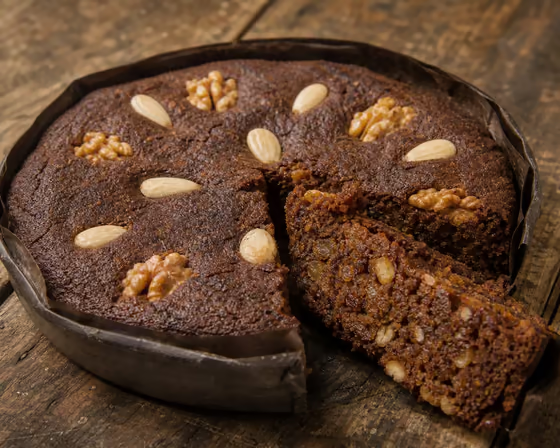 Catalogue image
 Madeira Honey Cake
Madeira's dark Christmas cake, broken by hand and good for months.
Madeira Catalogue image
 Madeira Bolo de Noiva
A spiced festive and wedding sweet bread baked as round portions on plant leaves.
Madeira