Porto Santo Jewish Unleavened Bread
Also known as: Porto Santo Jewish Unleavened Bread · Porto Santo Unleavened Bread
A Porto Santo unleavened bread that one local source describes as barley, water and salt cooked on a griddle.
- Origin
- Porto Santo Island · Madeira
- Place
- Porto Santo
- Region
- Madeira
- Category
- Cakes & Sweet Breads
- Season
- Current seasonality and continuity undocumented
- Evidence
- Limited documentation
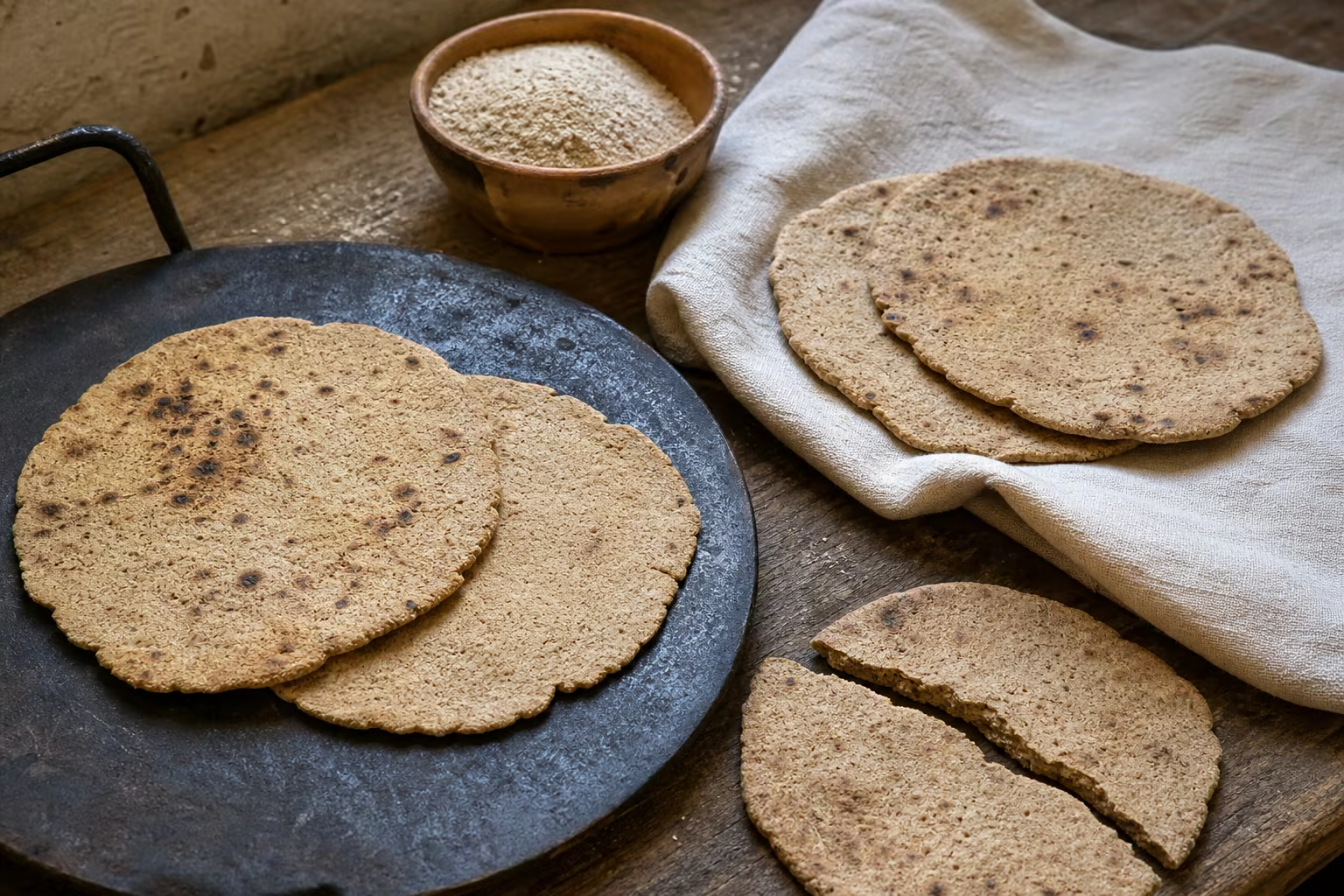
‘Bolo Ázimo dos Judeus (Porto Santo)’ is the name recorded in an indicative national list of traditional products. A local tourism page calls it pão ázimo and describes barley flour kneaded with water and salt, then cooked on a griddle. This is the only open Porto Santo formula found in this review; it gives no quantities, thickness, timing, temperature or shaping method.
The photograph on that page shows pale, thin, round flatbreads with scattered griddle marks. This catalogue image is an original editorial interpretation of those visible elements and keeps every piece intact; it is neither a historical photograph nor authentication of a specific method.
The phrase ‘dos Judeus’ (‘of the Jews’) belongs to the inventory name, while the local page describes the bread as ‘typically’ Jewish in origin. None of the consulted sources, however, documents who introduced it to Porto Santo, when, in what context, or whether it was associated with a Jewish community, family or ritual practice on the island. The association must therefore be read as an unproven traditional attribution, not a demonstrated genealogy.
- Barley flour
- Water
- Salt
The sources support an expectation of grain, salt and griddle browning, but publish no direct sensory description and do not establish whether the texture is dry, soft or crisp.
Other Madeiran recipes called bolo ázimo, bolo asmo or bolo frito may use wheat, rye, eggs, milk, sugar, yeast or frying. The sources do not show that they are variants of Porto Santo's barley bread; they should be treated as distinct traditions until a connection is evidenced.
No current source identifying a maker, establishment, demonstration or sales point was found. Availability on Porto Santo should be confirmed locally rather than assuming regular commercial supply.
No traditional accompaniment is documented; any serving suggestion would be editorial.
The 19th edition of Portugal's indicative traditional-products list, dated 12 March 2012, includes ‘Bolo Ázimo dos Judeus (Porto Santo)’ in the bakery, pastry, confectionery and biscuit class. An appendix published by DGADR later reproduces the same name. These inventories prove administrative recognition of the designation but provide no description, recipe, chronology or evidence for the attributed origin.
The Porto Santo Experience page, published in 2018, supplies the currently citable culinary description: barley, water, salt and a griddle. By contrast, an academic study of agrobiodiversity in Santa Cruz on Madeira Island mentions a bolo ázimo among several historic cereal uses, but it neither identifies the Porto Santo product nor confirms its formula or Jewish association. It is retained only to delimit that difference, not as evidence for the island recipe.
No documentation of continuous production or present-day sale was found either. The responsible record stops here: an inventoried name, a secondary local formula and a contemporary photograph; the history of transmission remains unknown.
Limited documentation
The identity is documented, but its origin, composition or availability has limited sourcing.
- eubrdialogues.com/sites/default/files/acoes/documentos/049xlix_lista_de_produtos_tradicionais_portugueses_v_19_0.pdf (opens in a new tab)
- dgadr.gov.pt/images/docs/val/dop_igp_etg/Valor/CE_pao_de_Ul_pada_de_Ul.pdf (opens in a new tab)
- portosantoexperience.wordpress.com/gastronomia/ (opens in a new tab)
- scielo.pt/scielo.php (opens in a new tab)
Pastries from here — Madeira
 Catalogue image
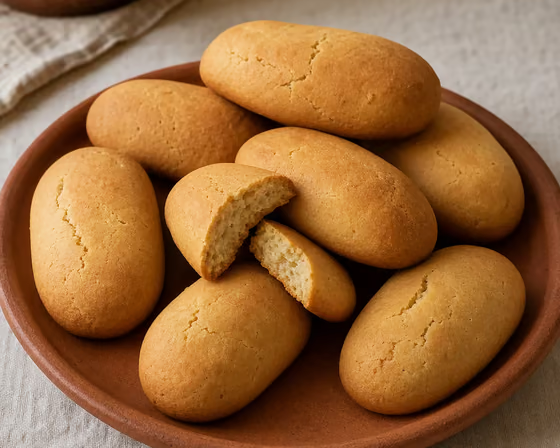
 Porto Santo Toasted Biscuits
Porto Santo's savoury biscuit, baked and then slowly toasted for hours.
Madeira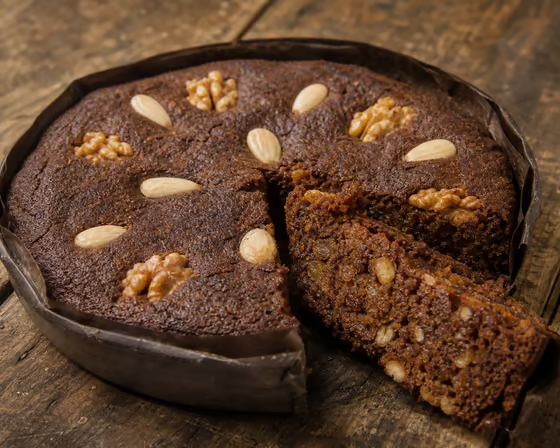 Catalogue image
 Madeira Honey Cake
Madeira's dark Christmas cake, broken by hand and good for months.
Madeira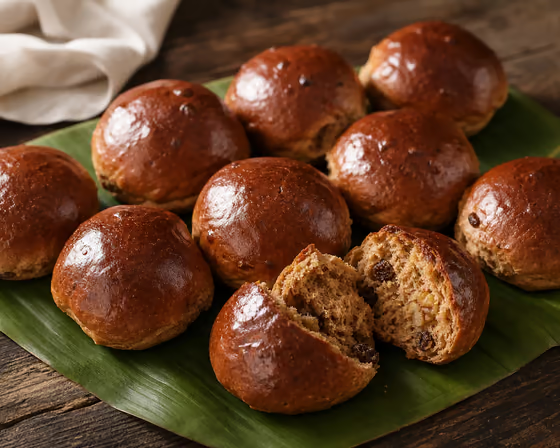 Catalogue image
 Madeira Bolo de Noiva
A spiced festive and wedding sweet bread baked as round portions on plant leaves.
Madeira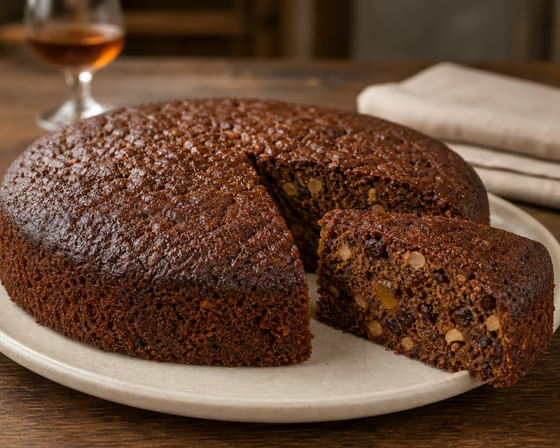 Catalogue image
 Madeira Family Cake
A large Madeiran sharing cake, moist with cane honey and threaded with fruit, walnuts and spice.
Madeira