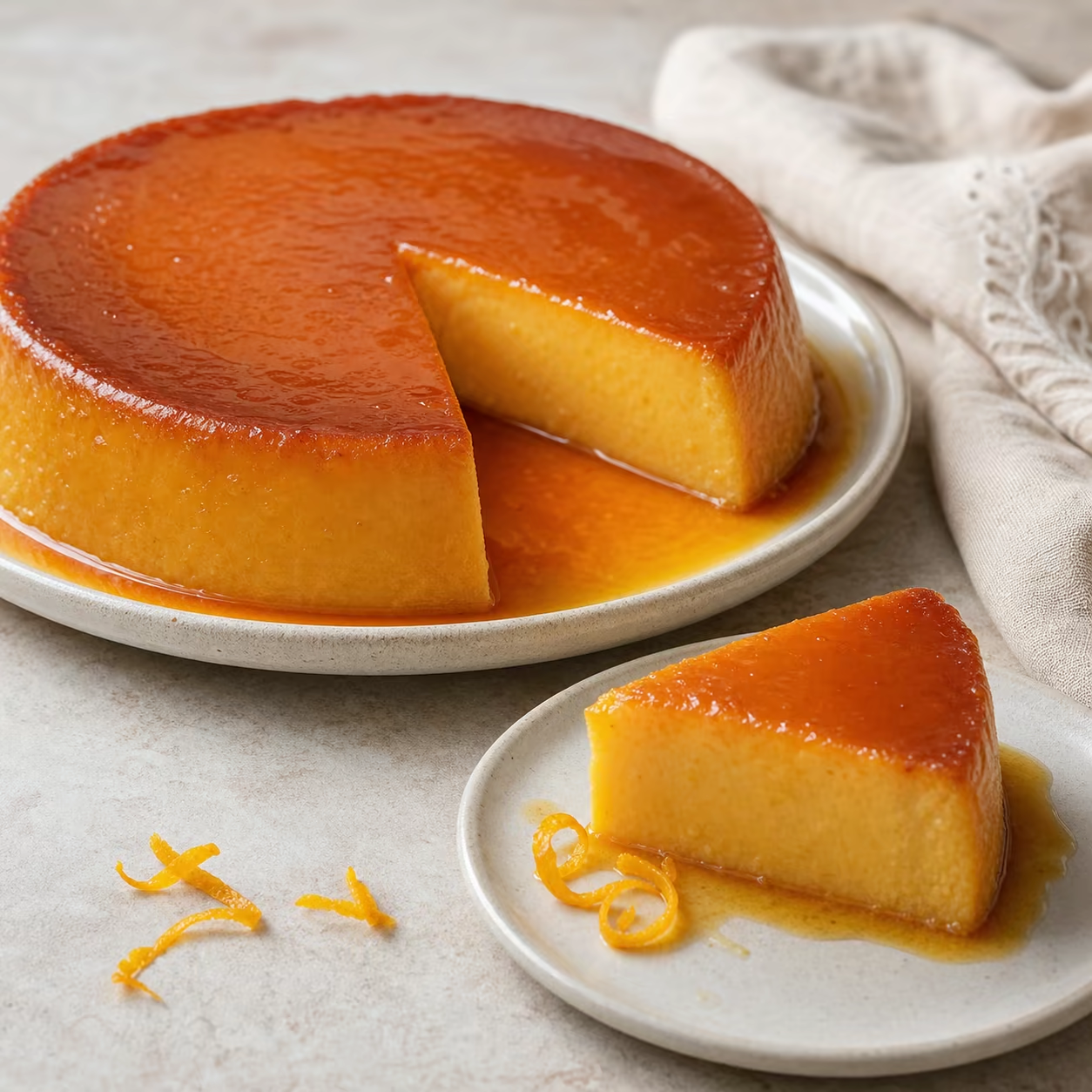
Ponte de Lima Franciscan Pudding
Also known as: Ponte de Lima Tangerine Pudding · Saint Francis Convent Pudding
Eggs, sugar and tangerine juice in a convent pudding baked in a water bath.
- Origin
- Ponte de Lima · Alto Minho · exact chronology and convent provenance unknown
- Place
- Ponte de Lima
- Region
- The North
- Category
- Puddings & Spoon Sweets
- Season
- Autumn and winter · tangerine season
- Evidence
- Well documented
Ponte de Lima’s Pudim Franciscano is also presented as tangerine pudding. A contemporary formula attributed to the Convent of Saint Francis mixes fifteen eggs with sugar and tangerine juice before one hour of baking in a caramel-lined mould set in a water bath.
Once unmoulded, it is smooth, firm and rich beneath cinnamon caramel. The institutional guide confirms the local speciality but neither publishes the formula nor establishes convent transmission.
- Eggs
- Sugar
- Tangerine juice
- Caramel
- Cinnamon, depending on the recipe
Dense silky custard, richly sweet, with toasted caramel and a tangerine-citrus aroma.
Some versions also perfume the caramel with cinnamon. The names Franciscan pudding and tangerine pudding appear as alternative designations for the speciality.
It is associated with Ponte de Lima’s convent and regional sweet traditions; check availability at local restaurants and sweet shops.
A short espresso or a small glass of fortified wine.
The Lima Valley guide cites Franciscan or tangerine pudding among Ponte de Lima’s specialities. A recipe page identifies its formula directly with the town’s Convent of Saint Francis, but the institutional guide does not repeat that attribution. Its date of entry into the local repertoire and exact convent provenance are unknown.
Well documented
Identity supported by institutional, specialist or corroborating sources.
- alimentacao.altominho.pt/fotos/editor2/cimaltominho/gca/coresaborestrad.pdf (opens in a new tab)
- cozinharsemstress.pt/cozinhar/receitas/pudim-franciscano/ (opens in a new tab)
Pastries from here — The North
 Catalogue image
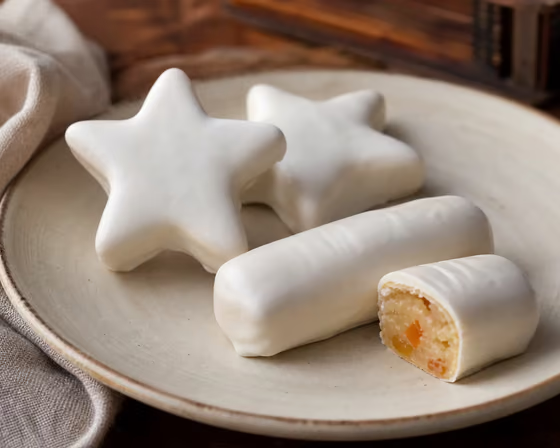
 A Bella Queijadinha de Barcelos
A white star of almond, preserved fruit and family memory.
The North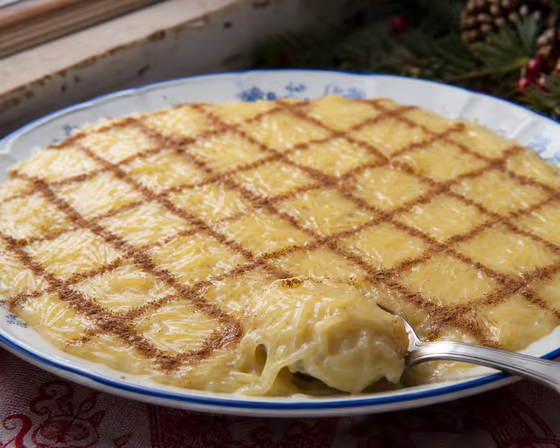 Catalogue image
 Sweet Vermicelli
Fine wheat threads simmered in milk and yolk, scored with cinnamon.
The North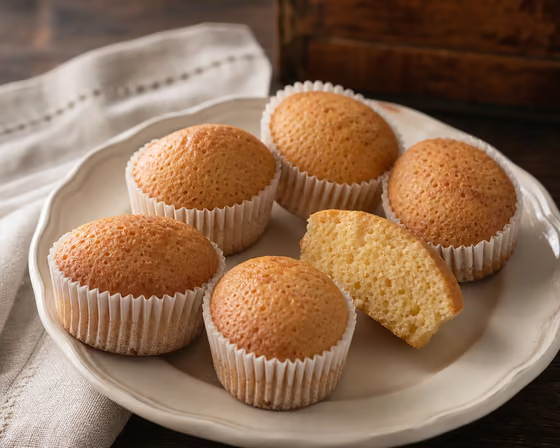 Catalogue image
 Amarantinos
Small egg, lemon and cinnamon cakes whose historical identity is not told consistently by the sources.
The North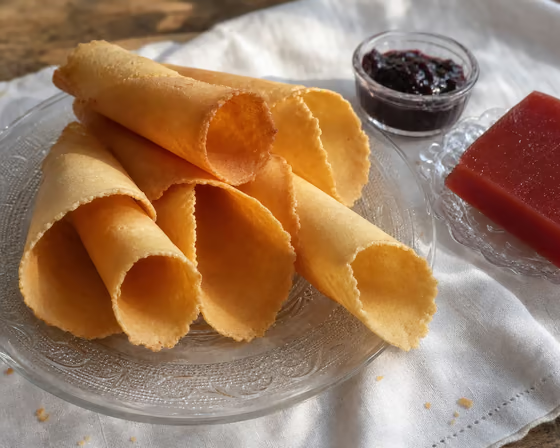 Catalogue image
 Vieira do Minho Cone Wafers
Paper-thin crisp wafers, iron-baked and rolled by hand while still hot.
The North