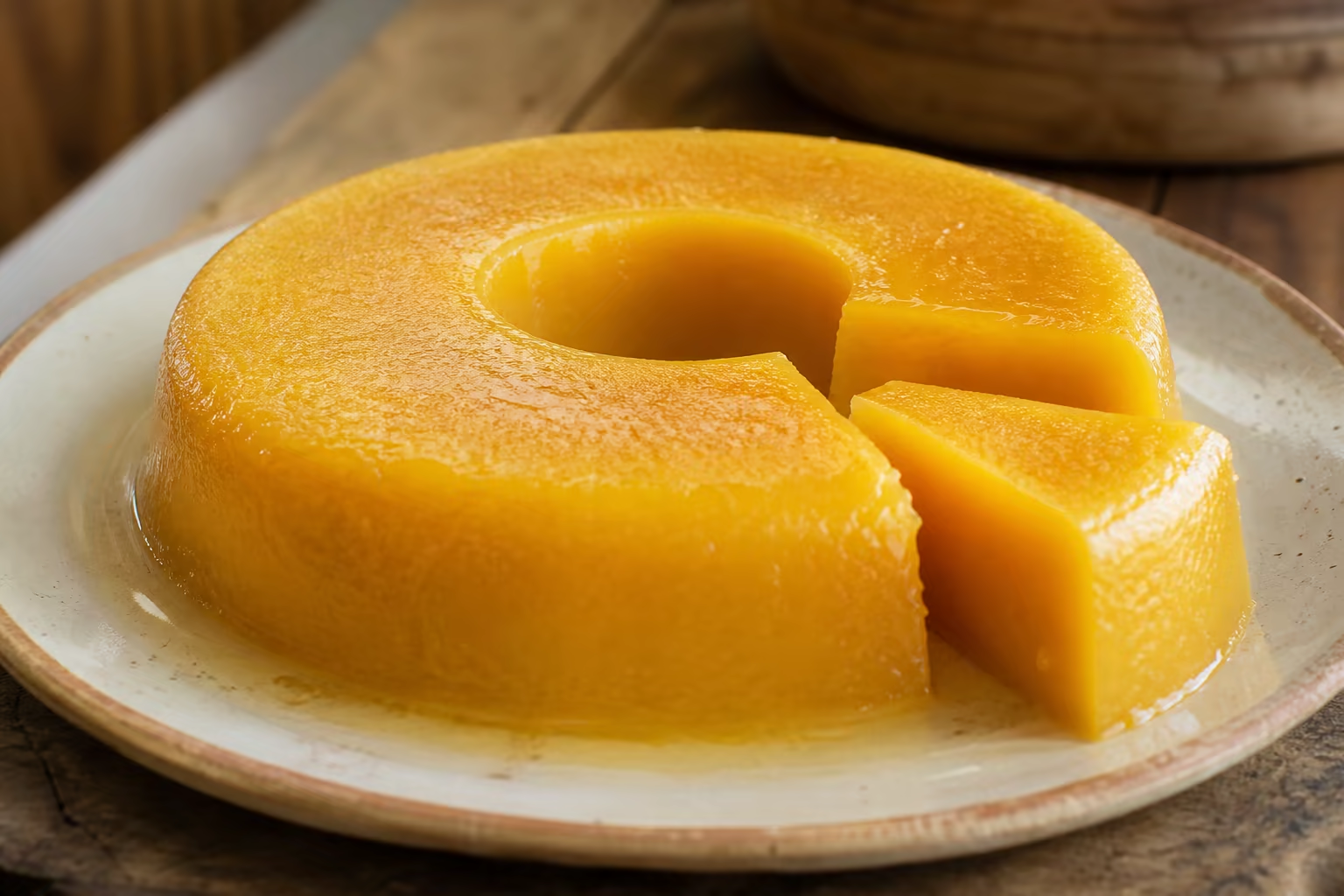
Alcobaça Monks' Egg Pudding
Also known as: Egg Pudding of the Friars of Alcobaça Convent · Alcobaça Monastery Egg Pudding
The small egg-and-sugar pudding preserved by Alcobaça confectioners.
- Origin
- Alcobaça · confectionery tradition attributed to the Monastery’s friars; creation date unknown
- Place
- Alcobaça
- Region
- The West
- Category
- Puddings & Spoon Sweets
- Season
- No documented seasonality; confirmed at confectionery exhibitions and through a specialist producer
- Evidence
- Well documented
Pudim dos Frades de Alcobaça is a yolk-yellow, very high-sugar egg pudding. A Polytechnic Institute of Santarém dissertation followed three batches made at two Alcobaça businesses in 2010 and collected 75 g / 2.6 oz units. In that commercial process, the principal ingredients were eggs, sugar, margarine and water; the syrup reached the high ponto a voar stage and the pudding baked in a bain-marie for about 50 minutes at 150°C / 300°F. Analysis found mean values of 56.96% sugars and 26.97% moisture.
A different formula, attributed to Maria de Lourdes Modesto’s Cozinha Tradicional Portuguesa and reproduced by Globo/GNT, uses 1 kg / 2.2 lb sugar, 250 ml / 8.5 fl oz water, four whole eggs and fourteen yolks. The syrup reaches paste stage, given as 102°C / 216°F, and the covered mixture bakes in a bain-marie for one hour or slightly longer in a mould greased only with butter. This is a publishable home transcription; it should not be conflated with the commercial process studied in Santarém.
- Egg yolks and whole eggs
- Sugar
- Water for the syrup
- Butter for greasing in the formula attributed to Maria de Lourdes Modesto
- Margarine in the commercial process observed in 2010
Laboratory analysis confirms a very high-sugar, relatively moist profile. The sources publish no comparative sensory panel and do not measure yolk intensity, richness or firmness.
The transcription attributed to Maria de Lourdes Modesto uses four whole eggs, fourteen yolks and butter only for greasing. Lifecooler publishes two eggs, fourteen yolks and 50 g / 1.8 oz butter in the mixture. The commercial process observed in 2010 used margarine and the high ponto a voar sugar stage. Egg count, fat and sugar stage are therefore not uniform across public sources.
Casa dos Doces Conventuais, on Praça D. Afonso Henriques in Alcobaça, presented it at Coimbra’s 2025 Convent Confectionery Exhibition. The municipality also includes the pudding in the local confectionery offer and at its International Convent Sweets and Liqueurs Exhibition; confirm opening times and availability before visiting.
Not documented in the sources reviewed.
The traditional name attributes the pudding to the friars of Alcobaça Monastery, and the municipality currently lists it among the area’s convent sweets. The sources reviewed, however, provide neither a dated monastic manuscript nor a documentary chain showing when the recipe left the Monastery. Its attribution should therefore be presented as recognised regional tradition, not archivally proven authorship; its early chronology remains unknown.
Modern continuity is verifiable. In 2010, a master’s dissertation collected batches of Pudim dos Frades made by two specialist Alcobaça businesses; the resulting scientific study was published in 2013. In 2025, the official catalogue of Coimbra’s Convent Confectionery Exhibition identified Graça Ferreira of Casa dos Doces Conventuais as a maker of the pudding with more than three decades in the craft. Alcobaça also continues to promote the sweet through its annual convent-sweets exhibition.
Well documented
Identity supported by institutional, specialist or corroborating sources.
- cm-alcobaca.pt/50062/doces-conventuais (opens in a new tab)
- repositorio.ipsantarem.pt/entities/publication/a842d84c-6396-449a-8445-e2ab51717aa6 (opens in a new tab)
- repositorio.ipsantarem.pt/server/api/core/bitstreams/d04ae6f9-9131-49b2-b1da-9dce7fa6f668/content (opens in a new tab)
- coimbra.pt/wp-content/uploads/2025/03/CATALOGO_MOSTRA-DOCARIA.pdf (opens in a new tab)
- publico.pt/2011/02/06/jornal/pudim-de-ovos-dos-frades-do-convento-de-alcobaca-21221723 (opens in a new tab)
- receitas.globo.com/tipos-de-prato/doces-e-sobremesas/receita-pudim-de-ovos-dos-frades-do-convento-de-alcobaca-gnt.ghtml (opens in a new tab)
- lifecooler.com/artigo/atividades/pudim-de-ovos-dos-frades-do-convento-de-alcobaa/329409 (opens in a new tab)
Pastries from here — The West
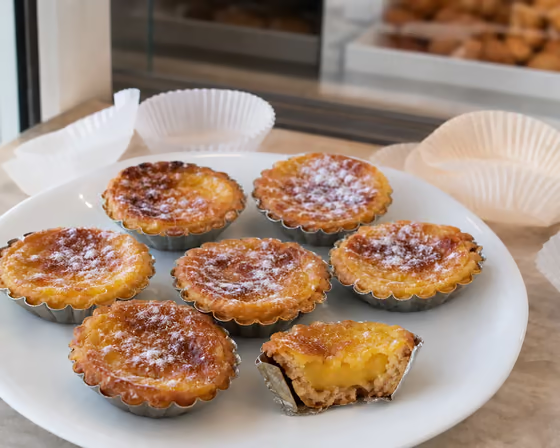 Catalogue image
 Friends of Peniche
The sweet named after friends you should not trust.
The West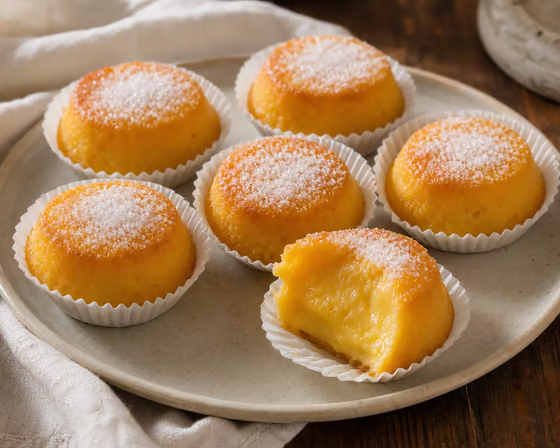 Catalogue image
 Areias Brancas
Small yolk-and-almond pudding cakes, named by the coast and covered with white sugar.
The West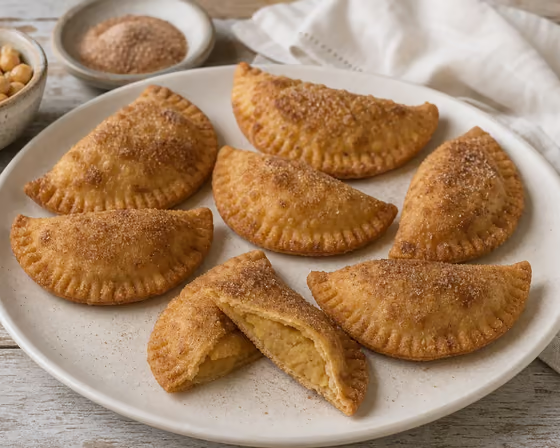 Catalogue image
 Peniche Chickpea Azevias
Thin fried half-moons with a sweet, creamy chickpea, almond and egg-yolk filling.
The West Catalogue image
 Lourinhã DOC Brandy Bonbon
A dark-chocolate bonbon with a Lourinhã DOC brandy heart.
The West