Pitos de Santa Luzia
Also known as: Pito de Santa Luzia · Pitos
The little dough bundle of pumpkin jam that you give on Saint Lucy's Day.
- Origin
- Vila Real, Trás-os-Montes; sweet of convent tradition
- Place
- Vila Real
- Region
- Trás-os-Montes
- Category
- Fried Sweets
- Season
- December (Saint Lucy's Day, 13 December)
- Evidence
- Well documented
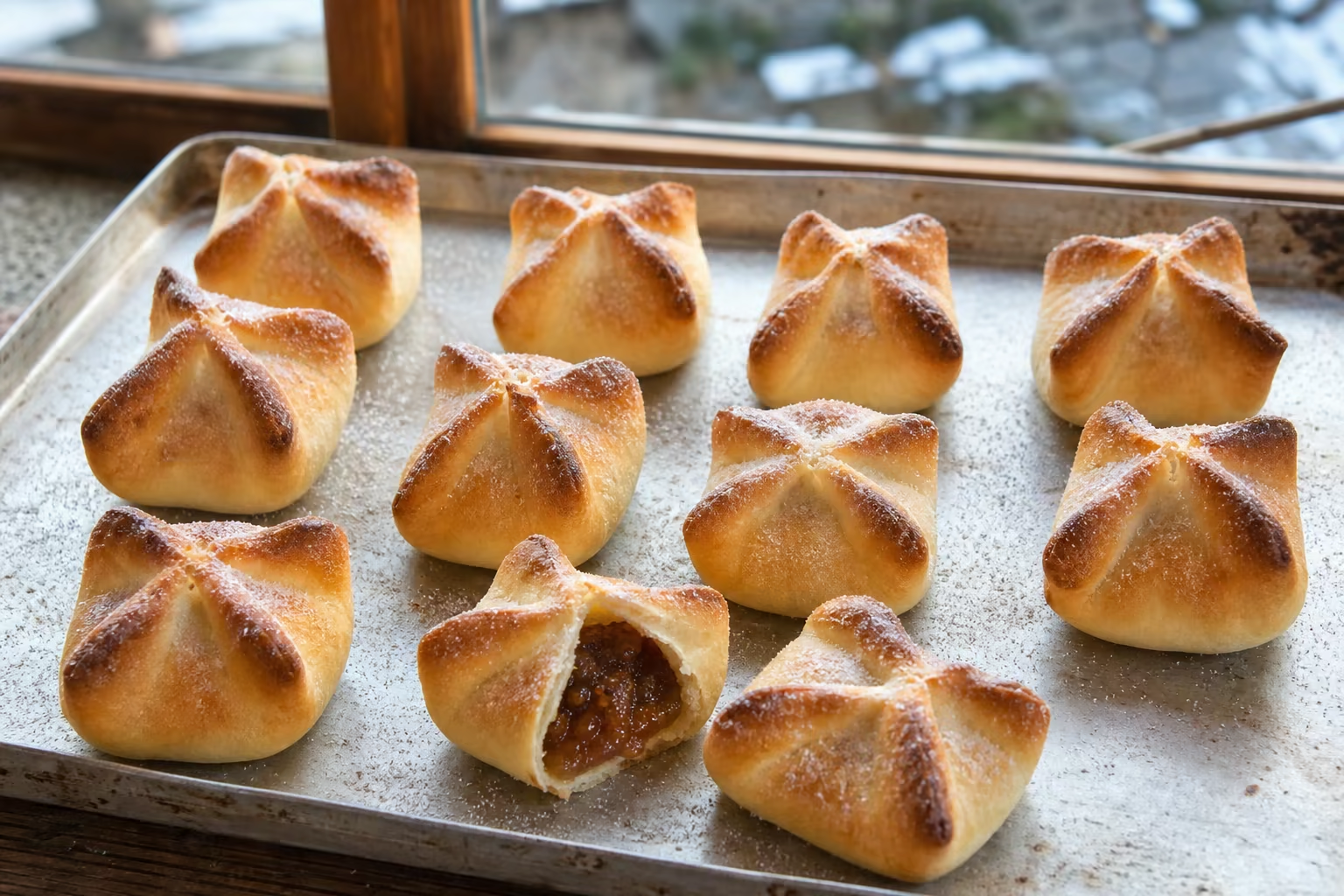
Pitos de Santa Luzia are the signature sweet of Vila Real: a square of tender dough filled with pumpkin-and-cinnamon jam, its four corners pulled up and inward to make a small quadrangular-pyramid bundle.
Despite being filed here among the fritos, pitos are not fried — they go into a very hot oven until the dough takes colour and turns lightly crisp outside while staying soft within. It is a seasonal sweet, made only in the closing months of the year and inseparable from 13 December.
More than a cake, it is a gesture: on Saint Lucy's Day it is the girls who offer the pito to the boys they fancy.
- Flour
- Lard
- Egg
- Sugar
- Salt
- Pumpkin jam
- Cinnamon
The dough is tender and lightly crisp at the pulled corners, with the comforting savour of lard; the filling of pumpkin cooked down with sugar and cinnamon is sweet, silky and fragrant, with a warm undertow of spice. The contrast between the thin crust and the moist centre is what makes pitos so easy to eat one after another.
Dough and filling ratios vary from house to house, and the traditional pumpkin jam is seasoned with cinnamon and a pinch of pepper. Some versions enrich the dough with milk or a little yeast. The four-cornered bundle shape, however, stays constant as the hallmark of the sweet.
The essential address is Casa Lapão in Vila Real, a century-old house of convent pastry, though in December pitos turn up across the city's bakeries and pastry shops. To taste the real thing, look for them between October and December, and above all on the 13th.
It calls for a strong coffee or a hot tea; to stay in the Trás-os-Montes spirit, pair it with a glass of Port or Moscatel.
Pitos are linked to the baking of the old Convent of Santa Clara in Vila Real, and their origin is wrapped in legend. One of the most repeated versions credits a gluttonous young woman sent to the convent, where she is said to have become a nun devoted to Saint Lucy. The shape itself feeds the tradition: it recalls the cloth dressings once laid over the eyes — and Saint Lucy is the patron of sight. As with much Trás-os-Montes baking the details shift from one telling to another, and some even question the convent origin, so they are best treated with caution.
What is certain is the ritual: on 13 December, Saint Lucy's Day, the girls give the pito to the boys; on 3 February, Saint Blaise's Day, the boys repay them with ganchas. Pitos are listed in the inventory of Portugal's traditional products, and the custom of "giving the pito" remains very much alive in the city's streets and bakeries.
Well documented
Identity supported by institutional, specialist or corroborating sources.
- tradicional.dgadr.gov.pt/pt/cat/doces-e-produtos-de-pastelaria/209-pitos-de-santa-luzia (opens in a new tab)
- cm-vilareal.pt/index.php/component/content/article/pito-de-santa-luzia-e-ganchas-de-sao-bras (opens in a new tab)
- publico.pt/2019/12/13/fugas/noticia/vila-real-cumpre-tradicao-dar-pito-doce-atrai-novos-velhos-1897237 (opens in a new tab)
- casalapao.pt/Produtos/pitos-sta-luzia (opens in a new tab)
- atlasobscura.com/foods/pitos-e-ganchas (opens in a new tab)
- teleculinaria.pt/receitas/pitos-de-santa-luzia/ (opens in a new tab)
Pastries from here — Trás-os-Montes
 Catalogue image
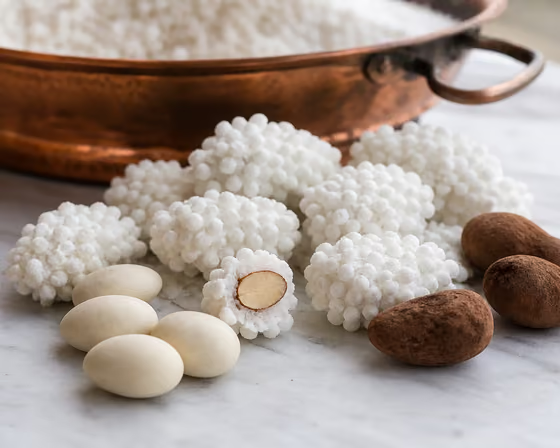
 Moncorvo Sugar-Coated Almonds
The queen of Trás-os-Montes sweets, spun from sugar and patience in copper.
Trás-os-Montes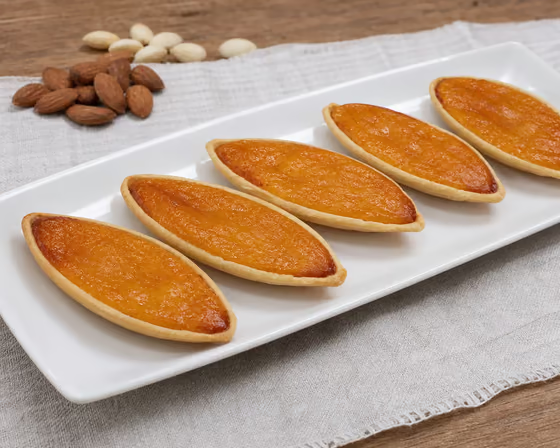 Catalogue image
 Alfândega da Fé Almond Boats
Pale pastry boats with a glossy filling of yolk and Trás-os-Montes almonds.
Trás-os-Montes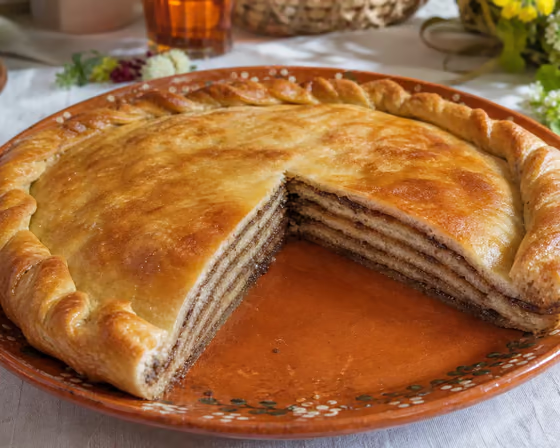 Catalogue image
 Mirandese Sweet Bola
The Easter bola that unravels in layers of sugar and cinnamon.
Trás-os-Montes Catalogue image
 Douro Port-Soaked Cake
A rich egg-and-butter cake soaked while hot in a generous Port-wine syrup.
Trás-os-Montes