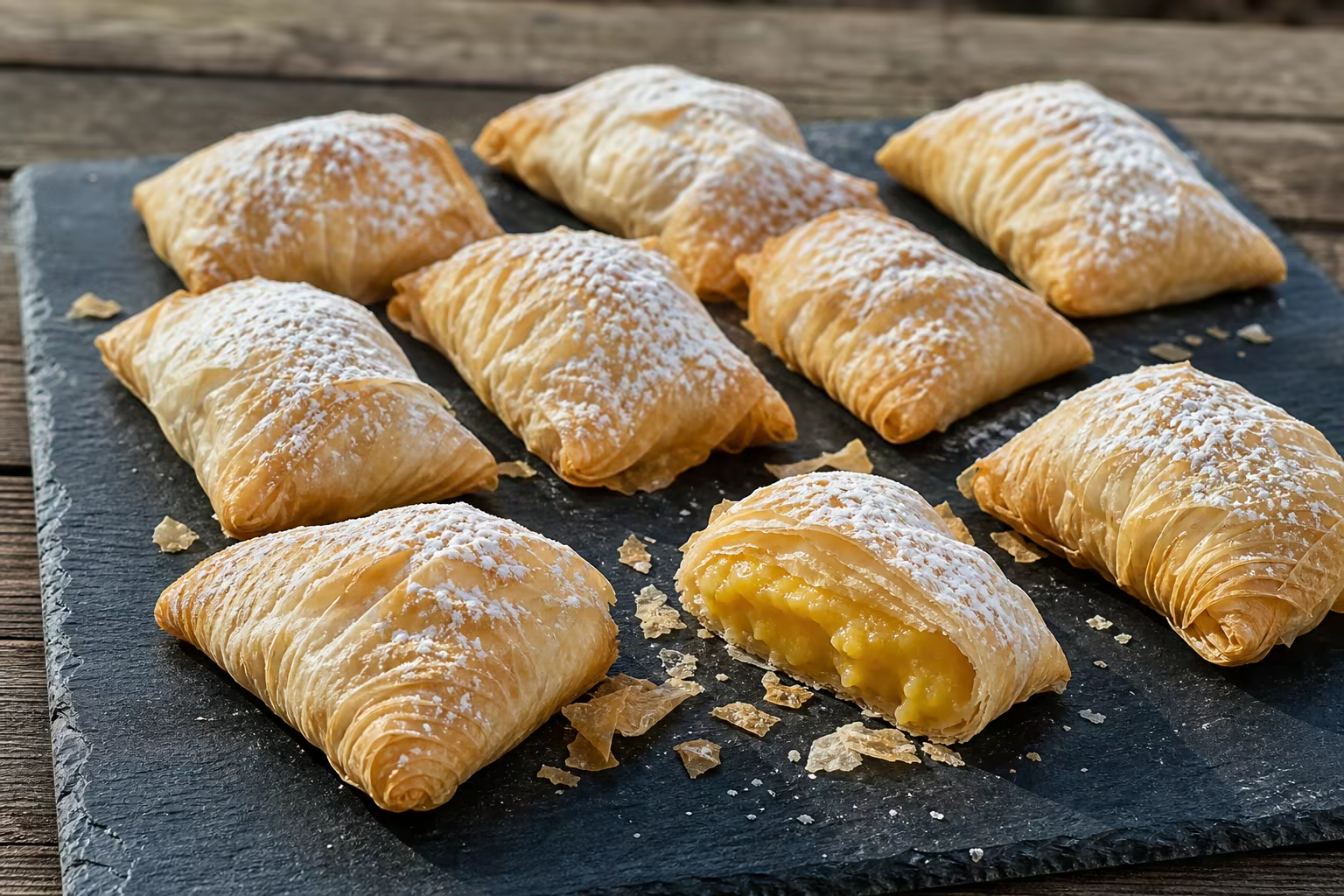
Pastel de Vouzela
Also known as: Pastéis de Vouzela
Wafer-thin, hand-stretched pastry with egg cream, folded by hand in Vouzela.
- Origin
- Vouzela · Lafões; local tradition of 19th-century convent origin
- Place
- Vouzela
- Region
- The Centre
- Category
- Laminated & Fine Pastries
- Season
- Year-round
- Dough family
- Stretched thin dough Dough pulled or rolled into exceptionally thin sheets without classic lamination.
- Evidence
- Well documented
Pastel de Vouzela is rectangular, measuring about 13-15 cm / 5.1-5.9 in long by 3-4 cm / 1.2-1.6 in wide and high according to the PTPT record, with its ends folded over. The outer dough is stretched by hand and dried on a special cloth until extremely thin, then folded into several sheets around an egg-yolk filling and dusted with icing sugar.
Although often called folhado, it is not classical puff pastry laminated through fat-and-dough turns. It belongs to the family of doughs stretched to transparency, close to the Tentúgal technique but with its own form, fold and local tradition. The documented result is friable and crisp outside, with a yellow, soft, melting filling carrying a slight caramel note.
- Wheat flour
- Water
- Fresh egg yolks
- Sugar
- Butter
- Icing sugar to finish
First the crackle: the dough breaks into a thousand wafer-thin flakes, ethereal and buttery, almost dissolving on the tongue. Then comes the egg cream, dense and silky, frankly sweet and carrying the deep richness of the yolks. The icing sugar rounds it all off. It is light in the hand yet generous in flavour — the contrast between the airy pastry and the unctuous filling is its charm.
The documented product retains a rectangular form, folded ends, several sheets of stretched dough, egg-yolk filling and icing sugar. Household recipes using commercial filo are useful approximations but do not reproduce the artisanal dough stretched and dried on cloth. Pastel de Tentúgal belongs to the same technical family of stretched dough without being a variant of Pastel de Vouzela.
In Vouzela, at producers and the locations presented by local authorities. The Pastel Route starts at Largo do Convento and visits historic production locations; current opening and tasting information should be confirmed with local tourism.
DGADR records it at breakfast, as a snack or dessert, accompanied by tea. Additional editorial suggestion: a short espresso.
Vouzela municipality presents a local 19th-century origin tradition: two women who had been nuns at Porto's Convent of Santa Clara are said to have taught the recipe to a young orphan adopted by the family; later, with fourteen mouths to feed, she supposedly turned that knowledge into a business. DGADR is more cautious: its 2001 source states with confidence only that two traditional families were already producing the pastry at the beginning of the 20th century and records convent antiquity as a hypothesis.
The same DGADR record said in 2001 that four Vouzela families made it artisanally. That number is a historical snapshot from the source, not a current count. The documented continuity lies in family transmission and in dough stretched and dried on a special cloth.
Well documented
Identity supported by institutional, specialist or corroborating sources.
- tradicional.dgadr.gov.pt/pt/cat/doces-e-produtos-de-pastelaria/750-pasteis-de-vouzela (opens in a new tab)
- cm-vouzela.pt/visitar/saborear/docaria-tradicional/ (opens in a new tab)
- visitvouzela.com/rotapastel (opens in a new tab)
- ptpt.pt/produtos/pastel-de-vouzela (opens in a new tab)
- minhaterra.pt/wst/files/I12086-MT-MGP-WEB.PDF (opens in a new tab)
Pastries from here — The Centre
 Catalogue image
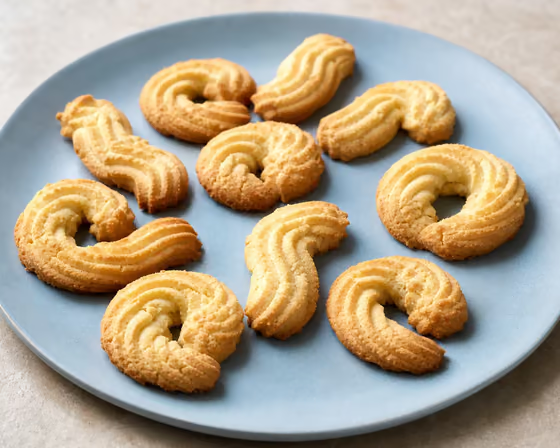
 Ílhavo Piped Butter Biscuits
Regional buttery biscuits piped into deeply ridged rings and curves.
The Centre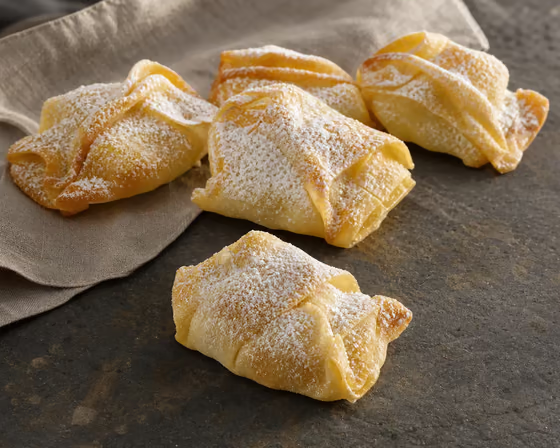 Catalogue image
 Saint Friar Gil’s Saddlebags
The small saddlebag-shaped pastry created at Vouzela’s vocational school and recognised as an innovative sweet.
The Centre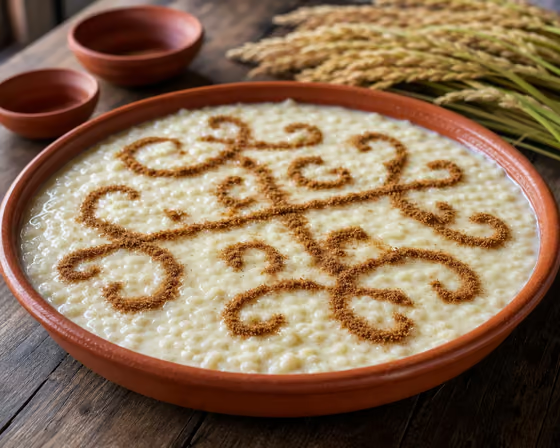 Catalogue image
 Baixo Mondego Rice Pudding
Mondego Carolino rice and Gândara milk, traced with cinnamon.
The Centre Catalogue image
 Arrufada de Coimbra
Coimbra's light, fragrant sweet bread, given by godparents at Easter.
The Centre