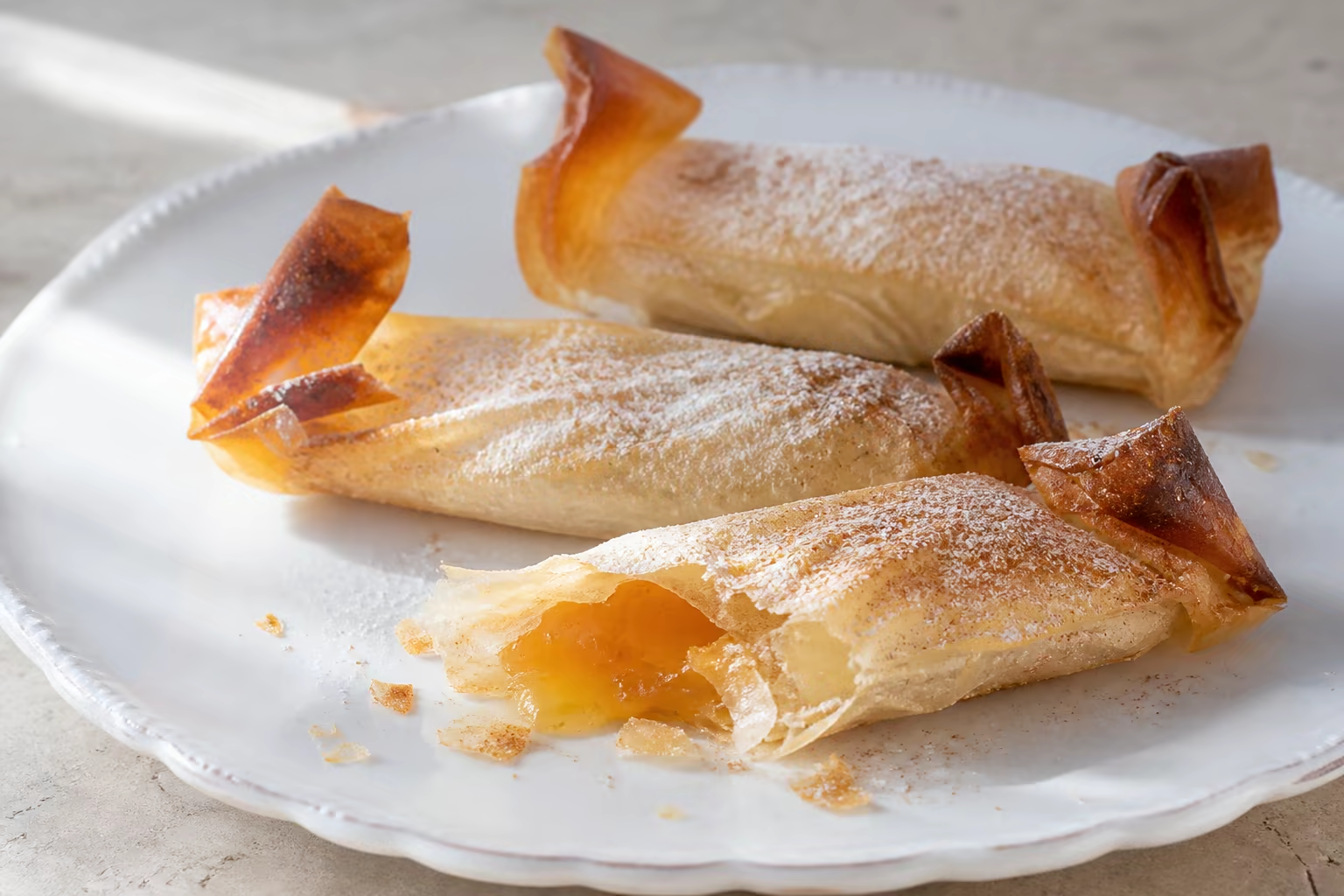
Pastel de Tentúgal
Also known as: Pastéis de Tentúgal
An almost-transparent, shatteringly crisp pastry filled with egg sweet — a feat of hand.
- Origin
- Carmelite Convent of Tentúgal (Nossa Senhora do Carmo / Nossa Senhora da Natividade) · convent confectionery
- Place
- Tentúgal
- Region
- The Centre
- Category
- Laminated & Fine Pastries
- Season
- Year-round
- Dough family
- Stretched thin dough Dough pulled or rolled into exceptionally thin sheets without classic lamination.
- Evidence
- Well documented
The pastel de Tentúgal is, above all, a dough: wafer-thin sheets of water and flour, stretched by hand by the local pastry women until almost transparent — tradition says you should be able to read a newspaper through them. Layered, brushed and rolled around an egg-sweet filling, they bake until golden into a feather-light pastry that crumbles into a thousand shards.
It comes as a palito (an elongated cylinder) or a meia-lua (half-moon), always dusted with sugar and cinnamon. It is the emblematic sweet of the village of Tentúgal, in the municipality of Montemor-o-Velho (Centro region), and has held Protected Geographical Indication status since 2013 — one of the few Portuguese pastries with the European seal.
For all its delicacy, it is not a heavy sweet: it lives above all off the tension between the fragility of the dough and the silky sweetness of the filling.
- flour
- water
- egg yolks
- whole egg
- sugar
- cinnamon
The first sensation is the crunch: the pastry breaks into light, dry flakes that all but vanish on the tongue. Then comes the filling — a soft, glossy egg sweet, sweet but never cloying, scented with the warm cinnamon and sugar that coat it.
The classic shapes are the palito (stick) and the meia-lua (half-moon), with a miniature version (palito miniatura) as well. The original recipe is said to have carried almond in the filling alongside the egg sweet, later dropped.
In the village of Tentúgal itself, where several pastry houses keep up the artisanal production under the IGP rules, overseen by the Associação dos Pasteleiros de Tentúgal and the local conventual-confectionery confraternity. Look for the Protected Geographical Indication seal and choose pastries made fresh that day, when the dough is at its crispest.
A long black coffee or a short espresso; on a festive occasion, a glass of Moscatel or Port.
Its origin is attributed to the Carmelite sisters of the Tentúgal convent — known as the Convent of Nossa Senhora do Carmo, or of Nossa Senhora da Natividade — where the order lived between 1565 and 1898. Like so many convent sweets, it lives off the abundant use of egg yolks, the whites left over being used to starch linen and clarify wine. The original recipe is said to have included almond, later dropped as too costly, and is held to have passed from the nuns to the women of the village before the convent closed.
It was that hand-to-hand transmission that kept alive a technique no book can teach: the stretching of the dough across a table, or traditionally over a cloth, until it reaches an infinitesimal thinness. Today the pastel de Tentúgal is protected by a Protected Geographical Indication (IGP), recognised by the European Union in 2013, which fixes its production zone and the know-how of its pastry makers.
Well documented
Identity supported by institutional, specialist or corroborating sources.
- tradicional.dgadr.gov.pt/pt/cat/doces-e-produtos-de-pastelaria/601-pastel-de-tentugal-igp (opens in a new tab)
- ccdrc.pt/en/pastel-de-tentugal-igp/ (opens in a new tab)
- en.wikipedia.org/wiki/Pastel_de_Tent%C3%BAgal (opens in a new tab)
- freguesiatentugal.pt/freguesia/2-pastel-de-tentugal/0 (opens in a new tab)
- commons.wikimedia.org/wiki/Category:Convento_de_Nossa_Senhora_do_Carmo_de_Tent%C3%BAgal_ou_Convento_de_Nossa_Senhora_da_Natividade (opens in a new tab)
Pastries from here — The Centre
 Catalogue image
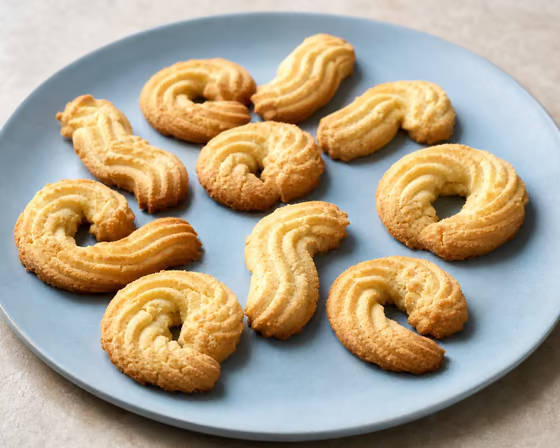
 Ílhavo Piped Butter Biscuits
Regional buttery biscuits piped into deeply ridged rings and curves.
The Centre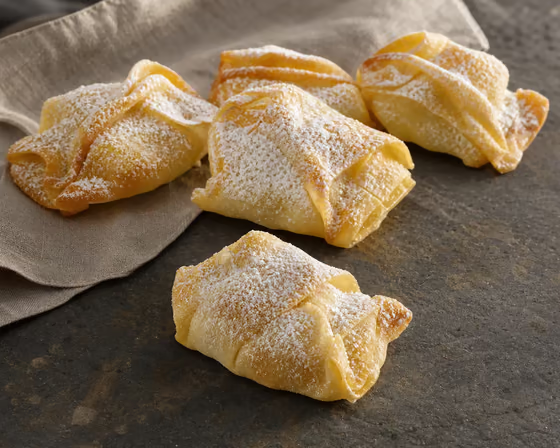 Catalogue image
 Saint Friar Gil’s Saddlebags
The small saddlebag-shaped pastry created at Vouzela’s vocational school and recognised as an innovative sweet.
The Centre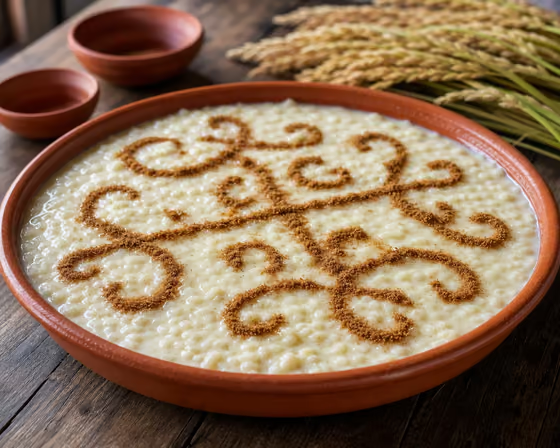 Catalogue image
 Baixo Mondego Rice Pudding
Mondego Carolino rice and Gândara milk, traced with cinnamon.
The Centre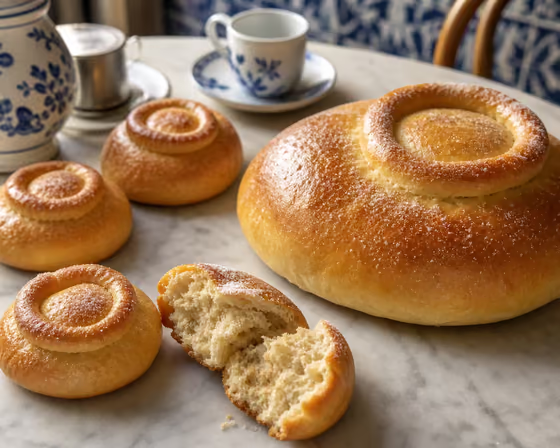 Catalogue image
 Arrufada de Coimbra
Coimbra's light, fragrant sweet bread, given by godparents at Easter.
The Centre