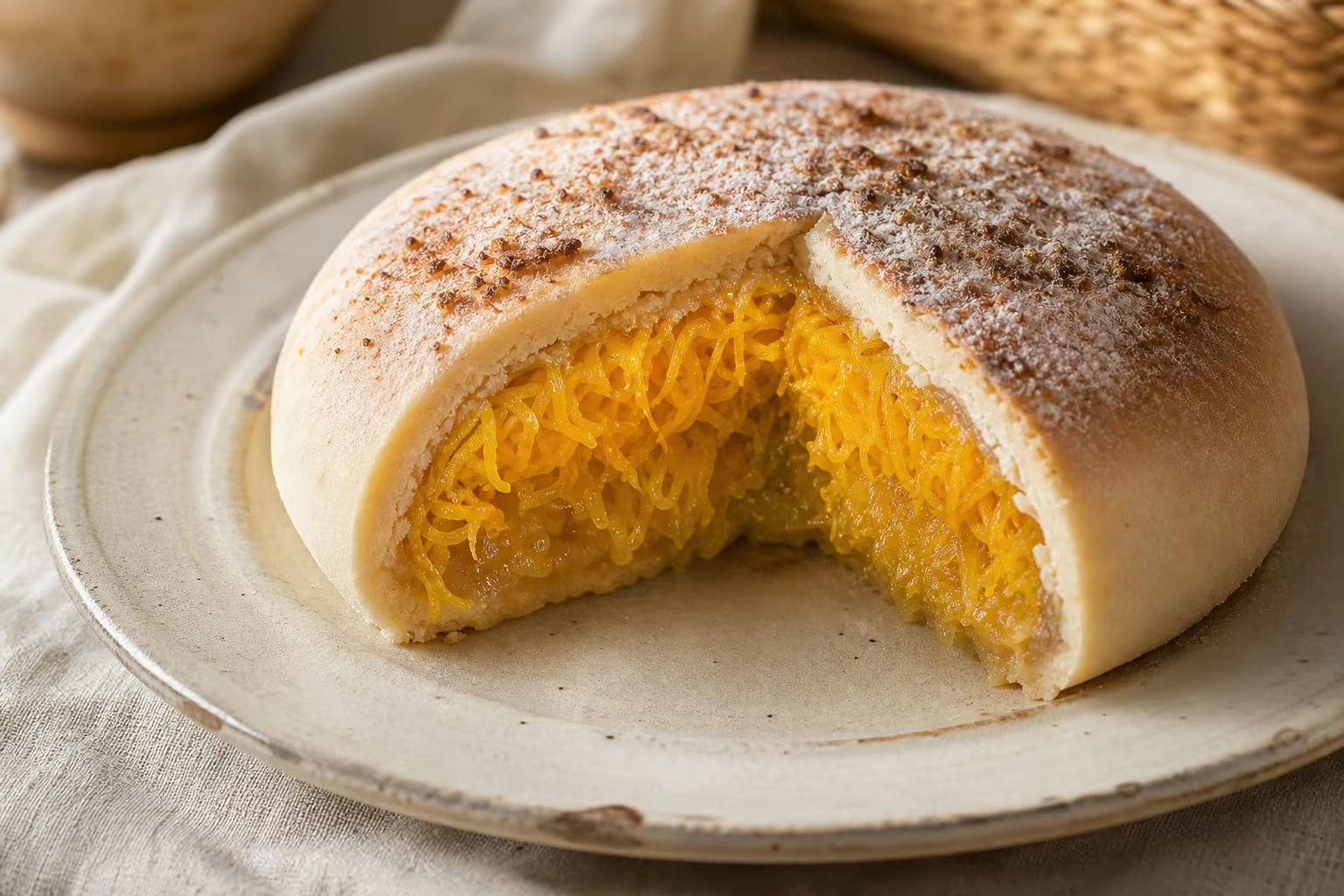
Pão de Rala Convent Cake
A convent marzipan loaf filled with egg threads, sweet yolk cream and gila preserve.
- Origin
- Évora · Alentejo
- Place
- Évora
- Region
- The Alentejo
- Category
- Convent Sweets
- Season
- Year-round; traditional at major celebrations
- Evidence
- Well documented
Pão de Rala is an Évora convent cake made to resemble a small loaf. Its casing, called espécie, is a cooked paste of almonds, sugar, yolks, water and lemon zest; inside are layers of egg threads, sweet yolk cream and gila squash preserve.
The paste is rolled into a disc, filled and closed to resemble wheat or cornbread. It bakes on a bed of flour used only as support and may include chocolate in the casing, making the surface darker.
- almonds
- sugar
- egg yolks
- water
- lemon zest
- egg threads
- sweet yolk cream
- gila squash preserve
- optional chocolate
- flour for handling
Very rich and sweet, with soft almond paste, silky yolk, egg threads and the fresh vegetal note of gila.
Versions may be pale or chocolate-coloured; the filling can add trouxas de ovos to egg threads, yolk cream and gila.
At convent-sweet shops and confectioners in Évora and elsewhere in the Alentejo.
Espresso, lemon tea or an Alentejo dessert wine.
The recipe appears in an 18th-century manuscript of cakes made by the sisters of Évora's Monastery of Santa Clara. It says the Poor Clares received it from the nuns of the Convent of Saint Helena of Calvary. In May 2026, Évora municipality announced registration of the 'Pão de Rala – Évora' visual identity and a subsequent certification process with the Alentejo Gastronomic Brotherhood. A registered identity should not be mistaken for completed certification.
Well documented
Identity supported by institutional, specialist or corroborating sources.
- tradicional.dgadr.gov.pt/pt/cat/doces-e-produtos-de-pastelaria/203-pao-de-rala (opens in a new tab)
- cm-evora.pt/en/imagem-do-pao-de-rala-evora-foi-registada-segue-se-o-processo-de-certificacao/ (opens in a new tab)
- confrariagastronomicadoalentejo.pt/wp-content/uploads/2018/05/carta-gastronomica-do-alentejo.pdf (opens in a new tab)
Pastries from here — The Alentejo
 Catalogue image
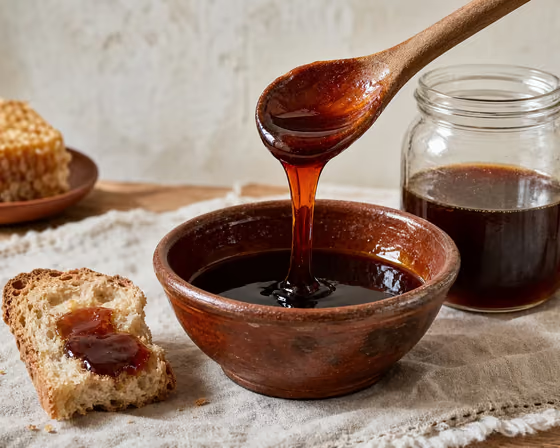
 Portuguese Água-mel Syrup
Water that recovers honey from combs after extraction, filtered and reduced for hours to 70–77° Brix.
The Alentejo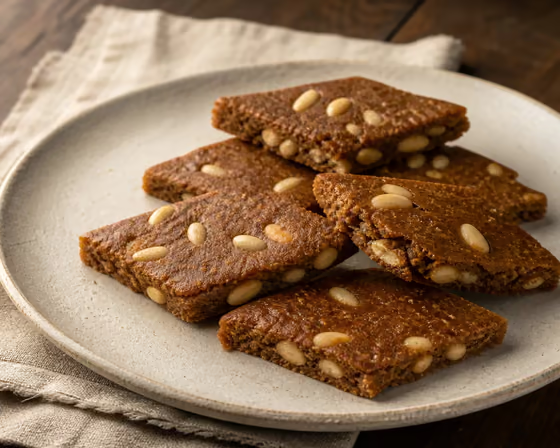 Catalogue image
 Alcomonias
Toasted coarse wheat flour, honey and pine nuts spread and cut into diamonds.
The Alentejo Catalogue image
 Amoreiras-Gare Alcôncoras
A large circular honey-and-olive-oil biscuit born from Amoreiras-Gare's promise-pole tradition.
The Alentejo Catalogue image
 Elvas Plums
Protected Rainha Cláudia Verde greengages sold fresh, dried or candied—the sweet form requires at least seven days of slow candying.
The Alentejo