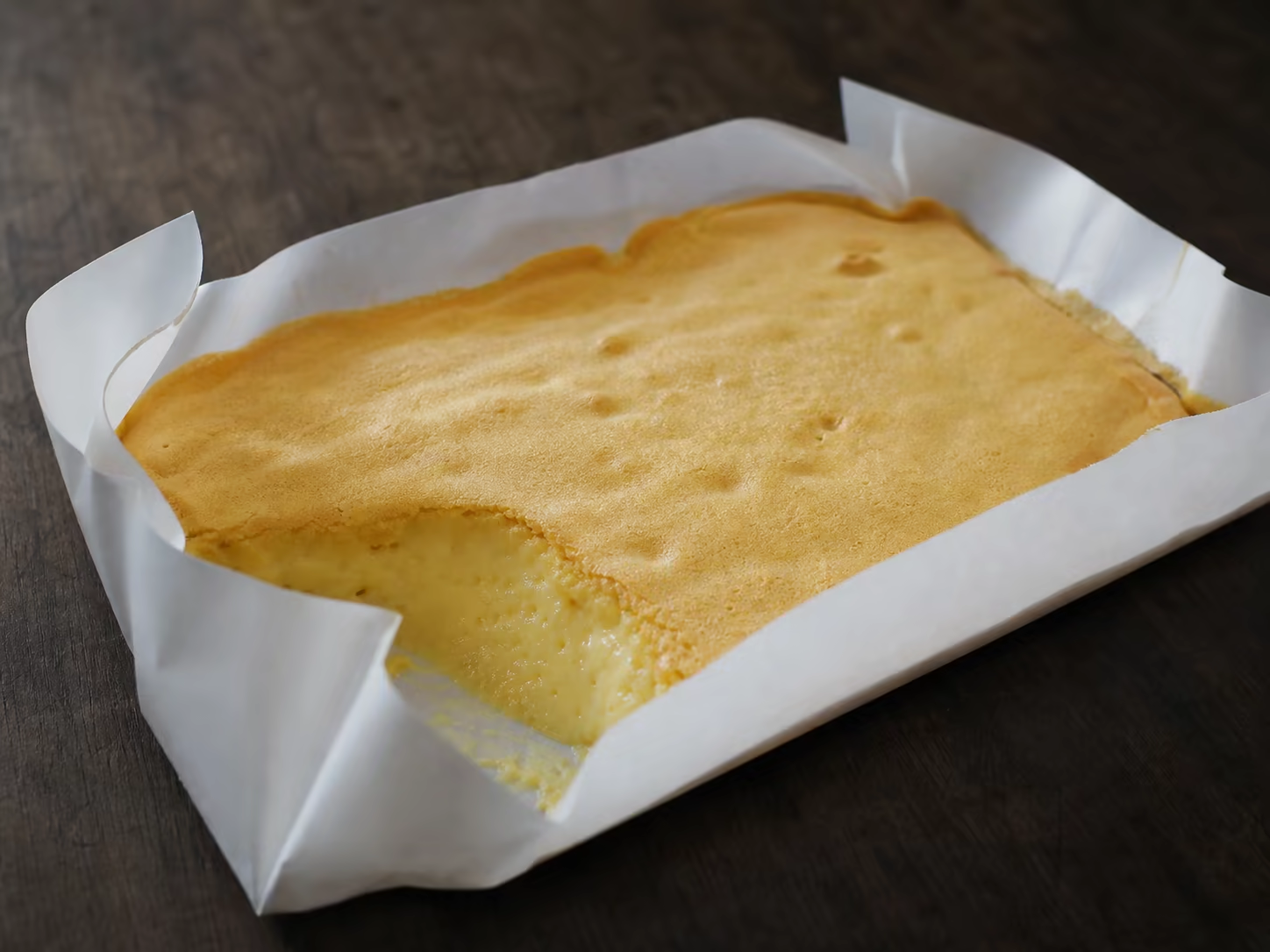
Vale de São Domingos Sponge Cake
Also known as: Vale de São Domingos Sponge Cake · Best Sponge Cake in the Universe
A rectangular, exceptionally soft and creamy sponge cake made individually with eggs, sugar and flour.
- Origin
- Folgoso · Raiva · Castelo de Paiva
- Place
- Folgoso · Castelo de Paiva
- Region
- The North
- Category
- Cakes & Sweet Breads
- Season
- Year-round; especially sought at Christmas and Easter
- Evidence
- Well documented
Pão-de-ló do Vale de São Domingos is low and rectangular, baked inside a folded white-paper frame. A thin golden skin covers an exceptionally moist batter: near the centre the sponge retains a creamy, almost egg-custard consistency, while the edges are lighter and more structured.
The recipe rests on pão-de-ló's essential ingredients—eggs, sugar and flour—and every cake is mixed separately. Its shape and degree of baking clearly distinguish it from the ring-shaped Pão de Ló de Serradelo, another tradition from the same municipality.
- eggs
- sugar
- wheat flour
Intensely eggy and sweet, with a delicately baked top, fluffy edges and a rich, moist, creamy centre.
The documented bakery makes both the classic cake and a chocolate version. The centre may be slightly more or less fluid; the rectangular format and creamy middle define the speciality.
At the Casa de Pão de Ló do Vale de São Domingos in Folgoso and at retailers and restaurants supplied by the producer.
Brut sparkling wine, black tea or unsweetened espresso.
In the village of Folgoso, in the Vale de São Domingos, António Fernandes Oliveira developed the recipe through continued refinement of a sponge cake he already made. ADRIMAG documented the small artisan workshop, Eulália Gonçalves's role in production and output that could reach 1,500 cakes per month around Christmas and Easter. Its bold trade name, ‘O Melhor Pão de Ló do Universo’, carried the Castelo de Paiva product to restaurants and retailers in several regions.
Well documented
Identity supported by institutional, specialist or corroborating sources.
- adrimag.com.pt/downloads/PROVERE/MAGazine/MAGazine_-_No8_-_Inverno2013.pdf (opens in a new tab)
- cm-castelo-paiva.pt/pt/onde-comer (opens in a new tab)
- continente.pt/produto/melhor-pao-de-lo-do-universo-vale-de-s.-domingos-7745826.html (opens in a new tab)
- nutripedia.pt/produtos/40567 (opens in a new tab)
- cm-terrasdebouro.pt/images/noticias/2023/3/12/fdsg23.pdf (opens in a new tab)
Pastries from here — The North
 Catalogue image
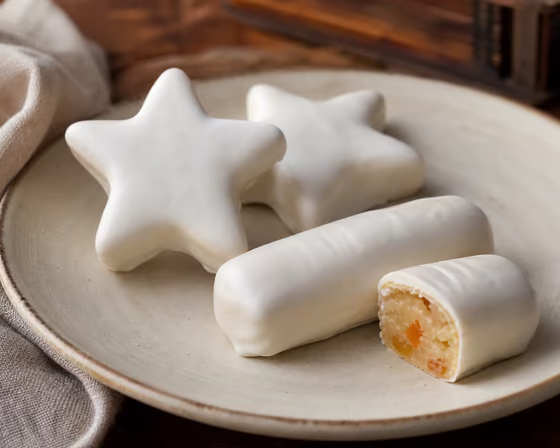
 A Bella Queijadinha de Barcelos
A white star of almond, preserved fruit and family memory.
The North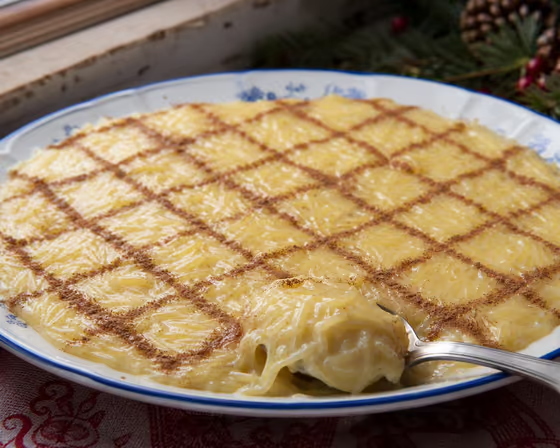 Catalogue image
 Sweet Vermicelli
Fine wheat threads simmered in milk and yolk, scored with cinnamon.
The North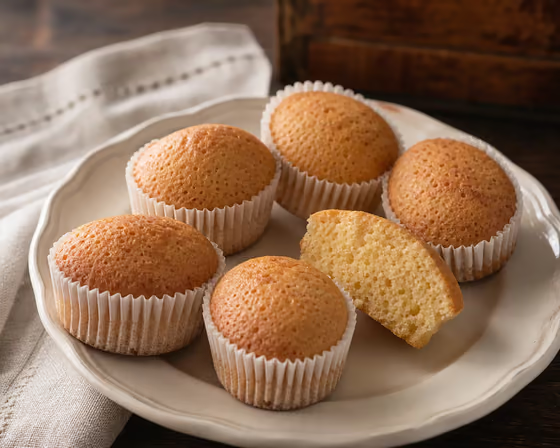 Catalogue image
 Amarantinos
Small egg, lemon and cinnamon cakes whose historical identity is not told consistently by the sources.
The North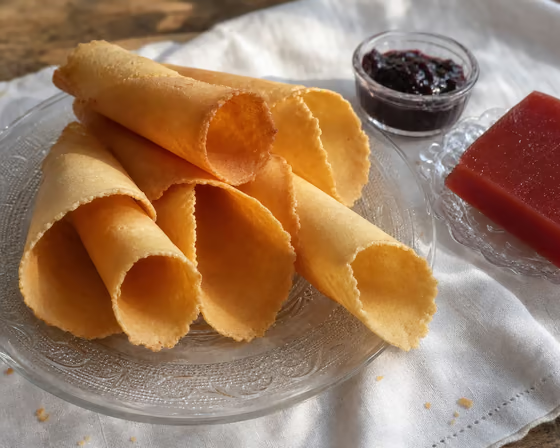 Catalogue image
 Vieira do Minho Cone Wafers
Paper-thin crisp wafers, iron-baked and rolled by hand while still hot.
The North