Celorico de Basto Pão-de-ló
Also known as: Celorico de Basto Sponge Cake · Basto Pão-de-ló
A large ring-shaped sponge with a dark crust and a very moist golden centre.
- Origin
- Celorico de Basto · Basto country · Minho
- Place
- Celorico de Basto
- Region
- The North
- Category
- Cakes & Sweet Breads
- Season
- Year-round, especially festivals and family celebrations
- Evidence
- Well documented
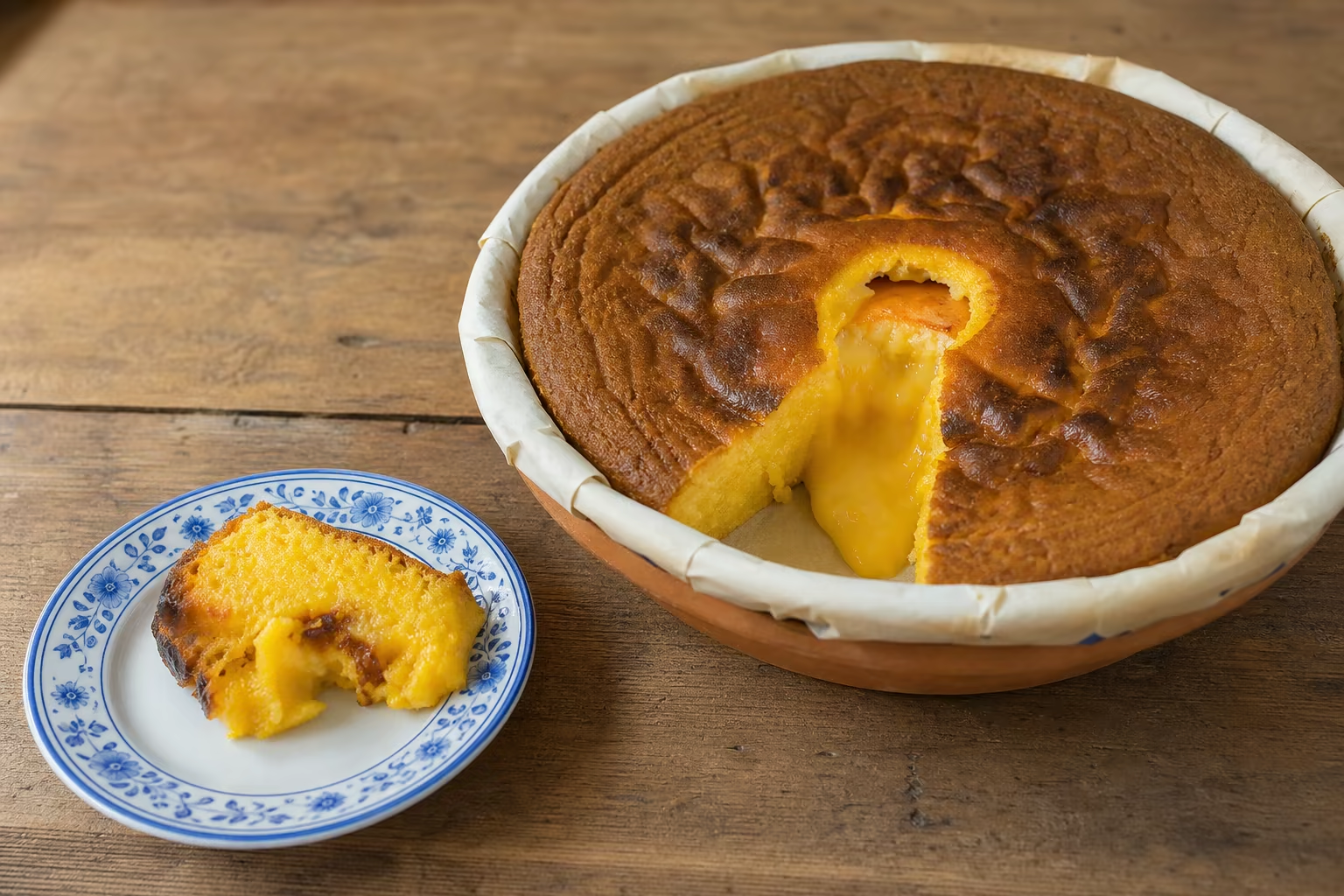
Pão-de-ló de Celorico de Basto is a large, low cake baked on paper in a round earthenware form. Its broad, slightly wrinkled surface turns brown around a central opening. When cut, the crust reveals an intensely yellow crumb: airy near the outer edge and deliberately very moist at the centre.
The Rota da Doçaria Tradicional Portuguesa publication describes it as a point of balance—neither dry nor excessively wet—and photographs a version whose creamy batter flows from the cut. This morphology separates it from Fafe's tall, fully baked sponge and from rectangular sugar-coated versions.
- eggs
- sugar
- wheat flour
Very sweet and egg-rich, with a toasted crust and a soft, moist, creamy centre.
The regional agri-food plan explicitly records dry and moist versions. Some contemporary presentations add camellia preserve, connecting the cake with the municipality's emblematic flower, but that application does not define the underlying traditional recipe.
At sweet shops and food fairs in Celorico de Basto; look for the version baked in paper and an earthenware form.
Vinho Verde from Basto, black tea or espresso.
The documented local tradition reaches back at least to 1870. At that time Doçaria Oliveira already wrapped the cake in fine paper printed with verses; a 2015 publication records that those verses continued to form part of the product's identity. Tourism sources and the Baixo Tâmega agri-food plan list both dry and moist pão-de-ló among Celorico de Basto's specialities.
Well documented
Identity supported by institutional, specialist or corroborating sources.
- pt.slideshare.net/slideshow/pastel-de-gueda-rota-da-doaria-tradicional-portuguesa/46374310 (opens in a new tab)
- aeamarante.pt/wp-content/uploads/2018/04/2018_04_06_plano_desenvolvimento_do_setor_agroalimentar_baixo_tamega_final_1.pdf (opens in a new tab)
- acp.pt/viagens-e-lazer/estrada-fora/conhecer-portugal/norte/detalhe/celorico-de-basto (opens in a new tab)
- cm-terrasdebouro.pt/images/noticias/2023/3/12/fdsg23.pdf (opens in a new tab)
Pastries from here — The North
 Catalogue image
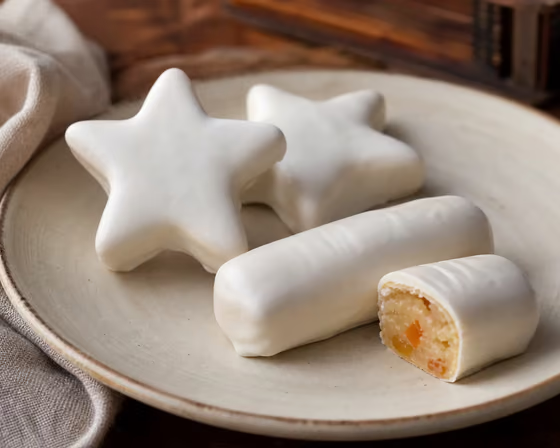
 A Bella Queijadinha de Barcelos
A white star of almond, preserved fruit and family memory.
The North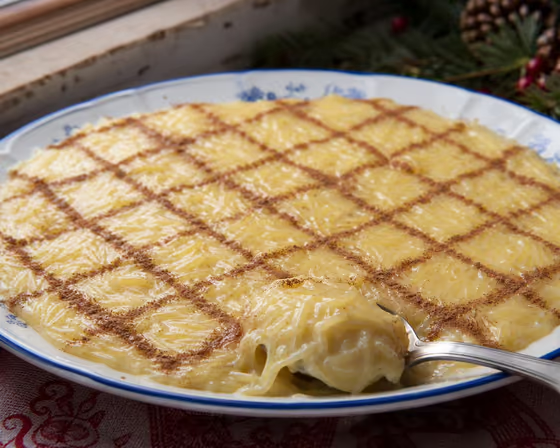 Catalogue image
 Sweet Vermicelli
Fine wheat threads simmered in milk and yolk, scored with cinnamon.
The North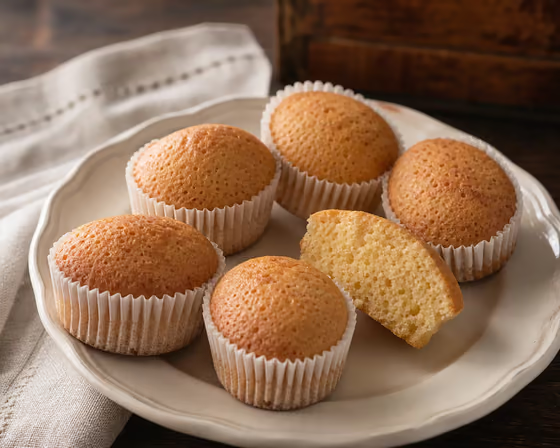 Catalogue image
 Amarantinos
Small egg, lemon and cinnamon cakes whose historical identity is not told consistently by the sources.
The North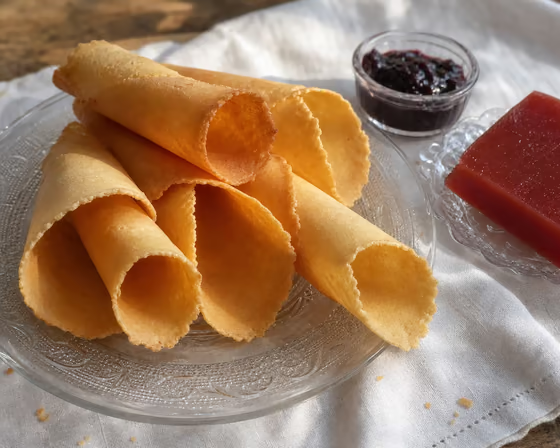 Catalogue image
 Vieira do Minho Cone Wafers
Paper-thin crisp wafers, iron-baked and rolled by hand while still hot.
The North