
Pampilhos
Also known as: Pampilho · Pampilho de Santarém
The herdsman's staff, rolled in pastry and brimming with ovos moles.
- Origin
- Santarém, Ribatejo (Tagus Valley) — a modern pastry-shop creation (20th century)
- Place
- Santarém
- Region
- The Alentejo
- Category
- Egg-Yolk Sweets
- Season
- Year-round
- Evidence
- Well documented
The pampilho is Santarém's signature sweet: a long, slender cylinder of buttery pastry wrapped around a filling of ovos moles dusted with cinnamon. Neither the name nor the shape is incidental — both mimic the pampilho, the long pole that Ribatejo's campinos (cattle herders) use to drive bulls across the floodplains of the Tagus.
It is a pastry-counter sweet, sold by the piece and eaten by hand, the golden crust crackling faintly before giving way to the cream inside. It has become one of the most sought-after edible souvenirs for anyone passing through the capital of the Ribatejo — to the point that, in many shop windows, it has overtaken the city's older convent sweets.
- Egg yolks
- Sugar
- Flour
- Butter
- Whole eggs
- Cinnamon
- Egg yolk for glazing
The first bite gives the golden, faintly crisp pastry; right behind it comes the ovos moles filling — silky, sweet and creamy, with the warmth of cinnamon balancing the richness of the yolks. It is a full, comforting sweet that calls for a short coffee to cut through it.
The outer dough differs from house to house: some bakeries use a dense, buttery cake batter, others a thin sheet rolled almost like a pancake. The ovos moles and cinnamon filling stays constant, though the sweetness and the thickness of the cream layer are matters of individual taste.
To taste the real pampilho you should go to Santarém, where it is found in the traditional pastry shops of the old town — Pastelaria Bijou is the house most associated with the sweet. Look for it sold by the piece and fresh that day. It has since spread nationwide, so you will also come across it in many other pastry shops.
A full coffee or a short espresso cut its sweetness perfectly. For a more festive turn, pair it with a small glass of Moscatel or a fortified wine.
Unlike Santarém's celebrated convent sweets — the celestes and arrepiados, tied to the convents of Santa Clara and Almoster — the pampilho is a recent invention. Its creation is attributed to pastry chef Diamantino Veloso, at what was then Pastelaria Acides in Santarém, around the 1970s, as a tribute to the Ribatejo campinos: he gave the cake the shape of the long pole they use to drive bulls.
Modern though it is, the pampilho inherits the grammar of Portugal's old egg-yolk confectionery: the ovos moles filling that defines it is the same cream of yolks and syrup-stage sugar that made the country's convents famous for centuries. The recipe caught on quickly, and the sweet is today inseparable from Santarém's identity, closely associated with Pastelaria Bijou, which popularised it in the city.
Well documented
Identity supported by institutional, specialist or corroborating sources.
- tradicional.dgadr.gov.pt/pt/cat/doces-e-produtos-de-pastelaria/200-pampilho (opens in a new tab)
- cm-santarem.pt/descobrir-santarem/gastronomia/docaria-tradicional/item/1105-pampilhos (opens in a new tab)
- jornaldenegocios.pt/negocios-iniciativas/negocios-e-portugal/santarem/detalhe/pampilho_um_sucesso_criado_por_brincadeira (opens in a new tab)
- sobremesasdeportugal.pt/pampilhos-santarem/ (opens in a new tab)
- tradicoesdeportugal.blogspot.com/2019/05/o-pampilho-de-santarem.html (opens in a new tab)
Pastries from here — The Alentejo
 Catalogue image
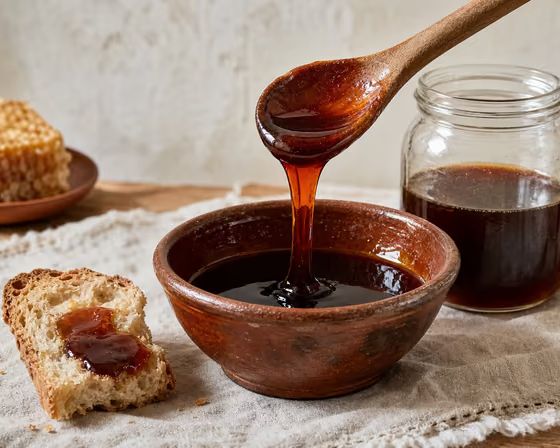
 Portuguese Água-mel Syrup
Water that recovers honey from combs after extraction, filtered and reduced for hours to 70–77° Brix.
The Alentejo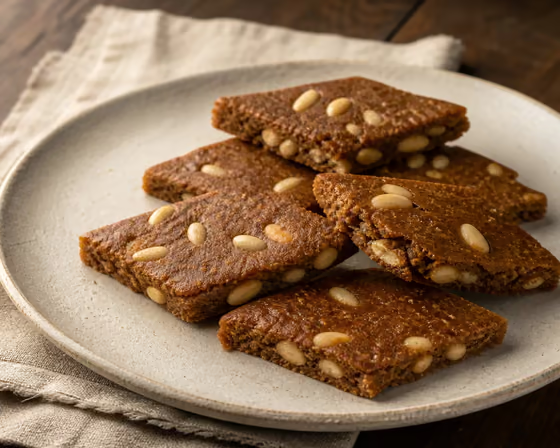 Catalogue image
 Alcomonias
Toasted coarse wheat flour, honey and pine nuts spread and cut into diamonds.
The Alentejo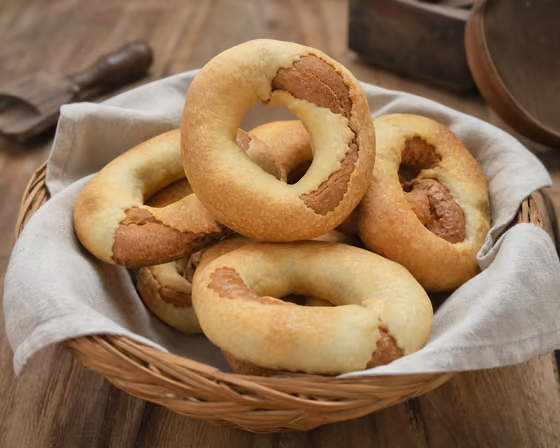 Catalogue image
 Amoreiras-Gare Alcôncoras
A large circular honey-and-olive-oil biscuit born from Amoreiras-Gare's promise-pole tradition.
The Alentejo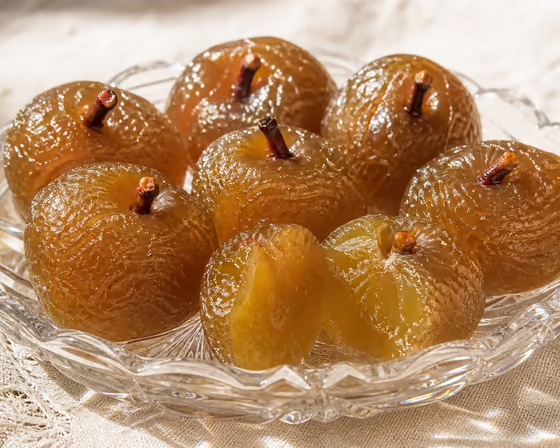 Catalogue image
 Elvas Plums
Protected Rainha Cláudia Verde greengages sold fresh, dried or candied—the sweet form requires at least seven days of slow candying.
The Alentejo