Ovos Moles de Aveiro
Also known as: Ovos moles · Aveiro soft eggs
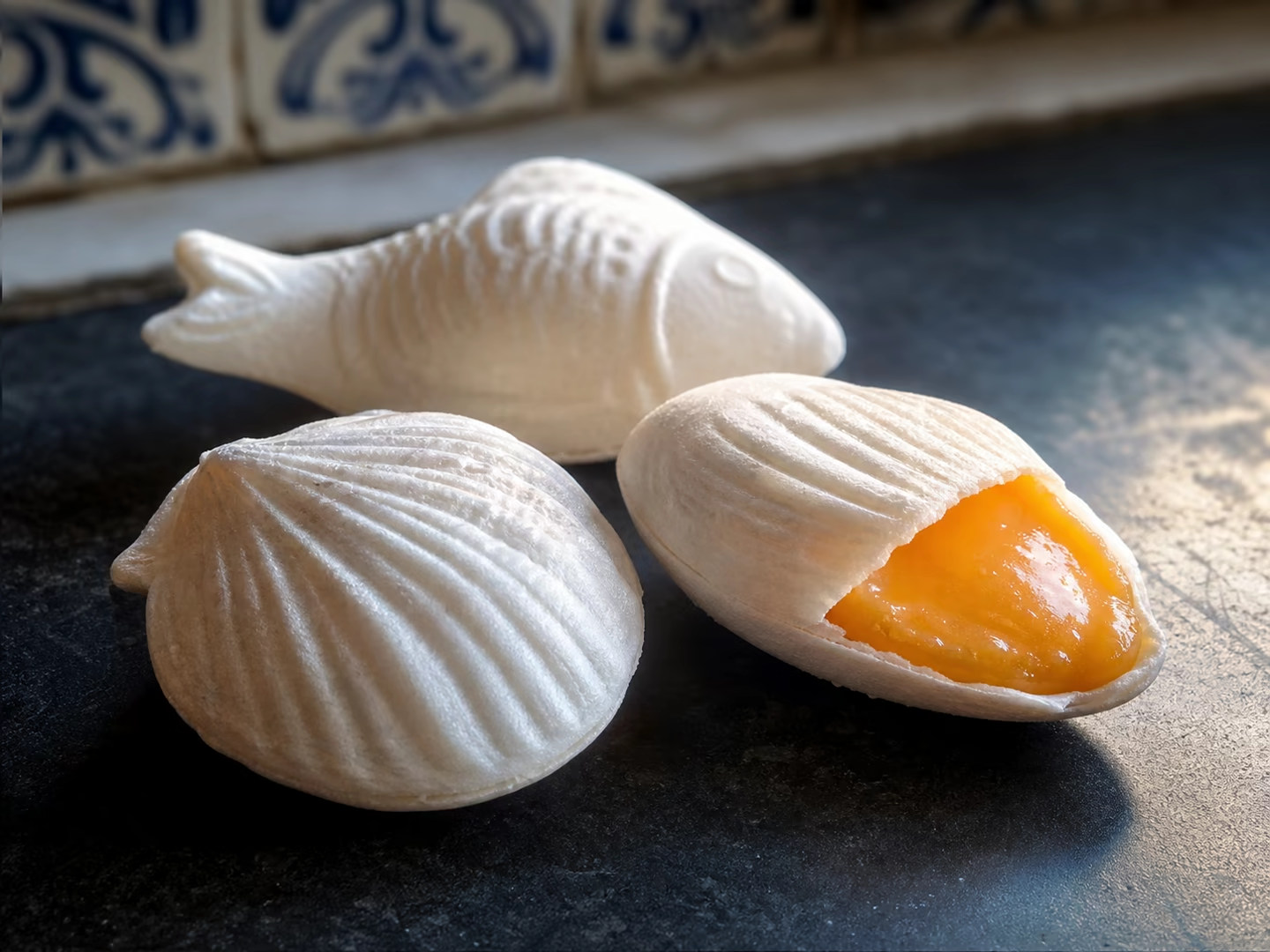
Egg yolks in sugar syrup, sealed in wafer and moulded into shells, fish and the lagoon's barrels.
- Origin
- Convents of Aveiro, 16th c. · PGI since 2009
- Place
- Aveiro
- Region
- The Centre
- Category
- Egg-Yolk Sweets
- Season
- Year-round
- Evidence
- Well documented
Ovos moles de Aveiro are one of the purest expressions of Portuguese convent confectionery: egg yolks cooked slowly in a sugar syrup until they thicken into a glossy, silken cream of deep golden yellow. That cream is then sealed inside paper-thin wafer cases — the same neutral paste as a communion wafer — moulded into the motifs of the Aveiro lagoon: whelks, shells, fish, mussels and little barrels.
The first bite is all about contrast. The wafer crackles faintly and is almost flavourless; then the creamy yolk floods the mouth with a full, rounded sweetness. They are small, glossy and often sold by the dozen, in boxes or in hand-painted wooden barrels.
It was the first Portuguese convent sweet to be granted a Protected Geographical Indication by the European Union, a status that fixes its origin, its ingredients and even its traditional shapes in law.
- fresh egg yolks
- sugar
- water
- wafer (wheat flour, water and vegetable fat)
The filling is intensely sweet, creamy and almost melting, with the full, faintly buttery flavour of yolk cooked in syrup. The wafer around it is dry and neutral, cracks as you bite and mostly serves to give shape and contrast. It is a small sweet but a very concentrated one: half a dozen is plenty.
The most classic form is the wafer moulded into lagoon motifs — whelks, shells, fish, mussels, boats and barrels. The same cream is also sold loose, in hand-painted wooden barrels, to spread or eat with a spoon. The ovos moles cream also fills much other Portuguese pastry.
Always look for the PGI seal "Ovos Moles de Aveiro", which guarantees they were made in the region and to the certified recipe. You'll find them in the historic confectioners of Aveiro — Confeitaria Peixinho, founded in 1856, is the oldest ovos moles house — and in painted barrels sold all over town.
They call for a short espresso or a cup of tea to cut the sweetness. For something more festive, they sit well with Port, a Moscatel, or a Bairrada sparkling wine from the same region.
Ovos moles were born in the convents of Aveiro, above all the Monastery (Convent) of Jesus, where the nuns used the egg whites to starch their habits and were left with a surplus of yolks. As in so much convent baking, those yolks were married to sugar — and Aveiro had sugar: in 1502, King Manuel I granted the convent an annual allowance of Madeira sugar, meant for sweets and for the convalescence of the sick.
When the religious orders were dissolved in the 19th century, the recipes passed from the cloisters into the hands of the town's confectioners and former convent pupils and servants, who sold and handed them down. The tradition of moulded wafer and painted barrels took firm shape across the 19th and 20th centuries, and in 2009 ovos moles de Aveiro became the first Portuguese convent sweet to earn a Protected Geographical Indication (PGI).
Well documented
Identity supported by institutional, specialist or corroborating sources.
- en.wikipedia.org/wiki/Ovos_moles (opens in a new tab)
- pt.wikipedia.org/wiki/Ovos_moles_de_Aveiro (opens in a new tab)
- ec.europa.eu/agriculture/eambrosia/geographical-indications-register/details/EUGI00000013759 (opens in a new tab)
- qualigeo.eu/en/product/ovos-moles-de-aveiro-pgi/ (opens in a new tab)
- tradicional.dgadr.gov.pt/pt/ (opens in a new tab)
- confeitariapeixinho.pt/historia/ (opens in a new tab)
- publico.pt/2018/08/23/fugas/noticia/esta-casa-ovos-moles-de-aveiro-virou-tres-chic-1841511 (opens in a new tab)
- pt.wikisource.org/wiki/Os_Maias/Livro_II/I (opens in a new tab)
Pastries from here — The Centre
 Catalogue image
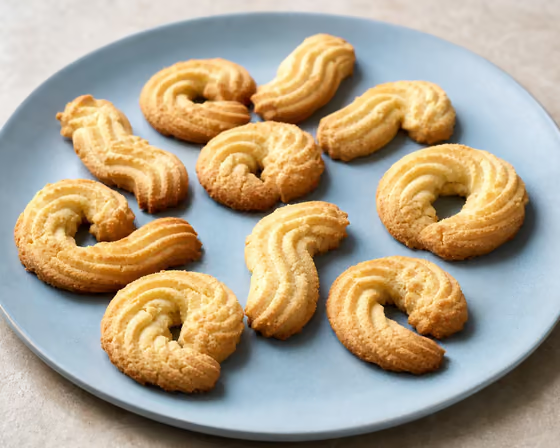
 Ílhavo Piped Butter Biscuits
Regional buttery biscuits piped into deeply ridged rings and curves.
The Centre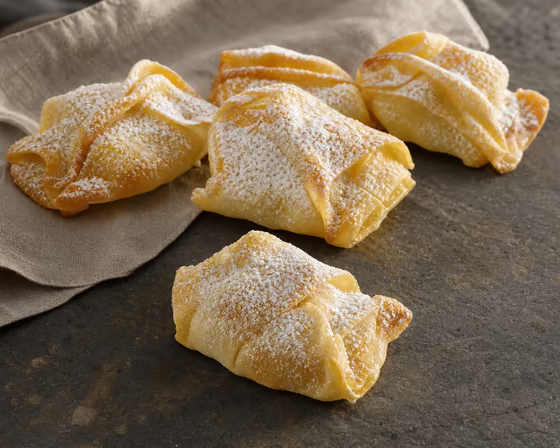 Catalogue image
 Saint Friar Gil’s Saddlebags
The small saddlebag-shaped pastry created at Vouzela’s vocational school and recognised as an innovative sweet.
The Centre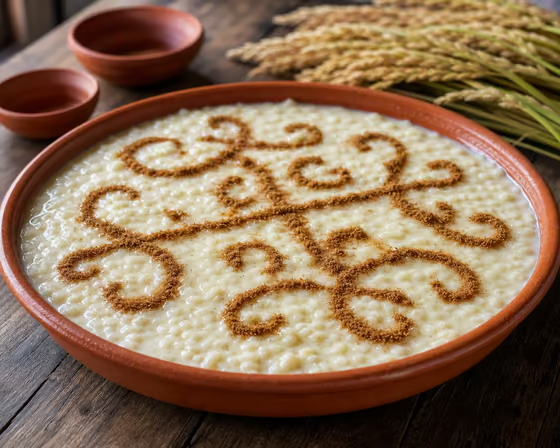 Catalogue image
 Baixo Mondego Rice Pudding
Mondego Carolino rice and Gândara milk, traced with cinnamon.
The Centre Catalogue image
 Arrufada de Coimbra
Coimbra's light, fragrant sweet bread, given by godparents at Easter.
The Centre