Coruche Pine-Nut and Honey Nógado
Also known as: Coruche pine-nut and honey nógado
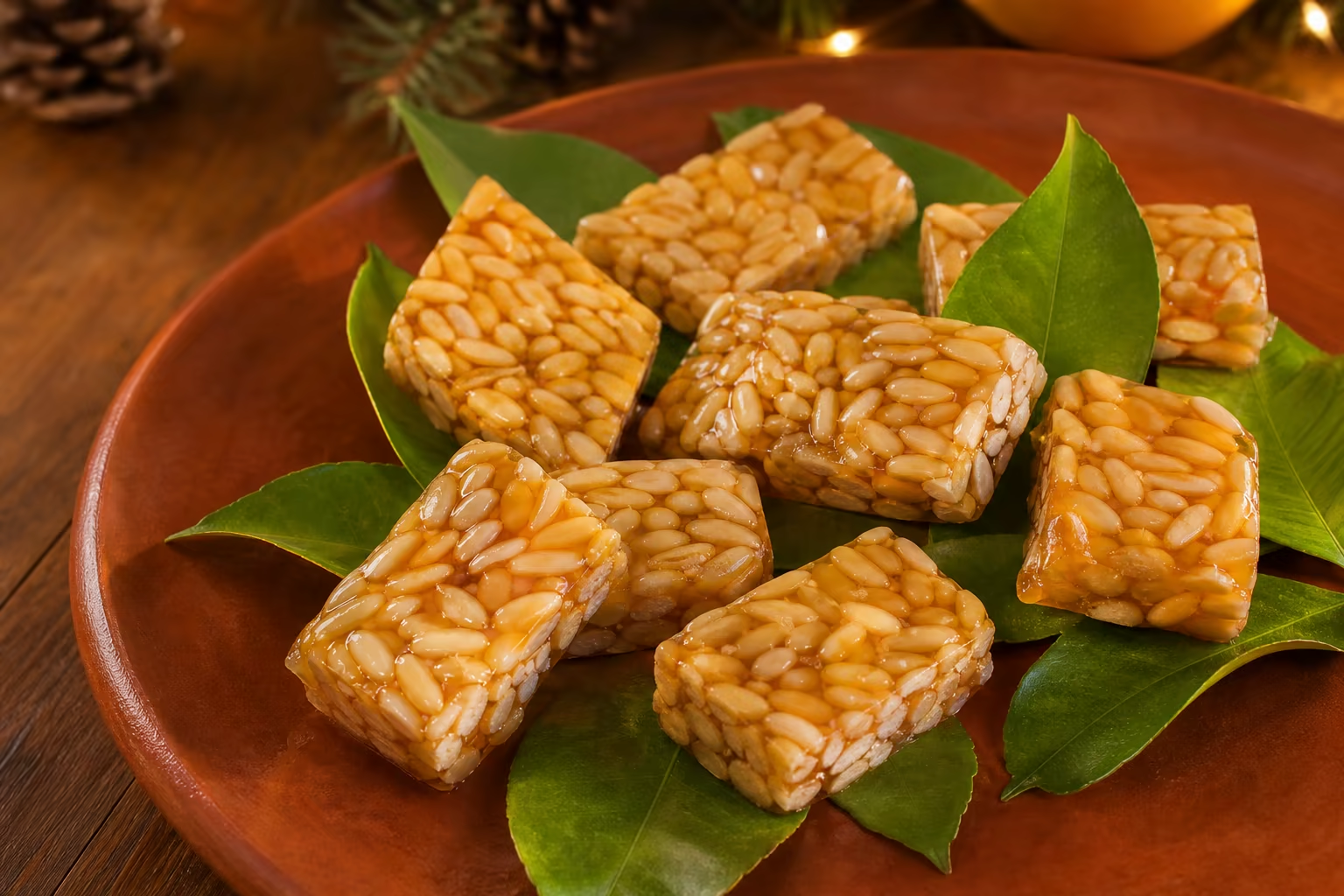
Pine nuts and honey in a traditional Coruche speciality.
- Origin
- Coruche · Ribatejo
- Place
- Coruche · Ribatejo
- Region
- The Alentejo
- Category
- Festive & Seasonal
- Season
- Seasonality not documented
- Evidence
- Limited documentation
Coruche's tourism portal includes Nógado de Pinhão e Mel in the municipality's list of traditional sweets. Its documented name identifies the two elements that define the local speciality: pine nuts and honey.
The consulted municipal source does not publish a recipe, proportions, cutting shape or preparation method. The image on this page is therefore an editorial representation of pine nuts and honey, not a certified reproduction of an identified example or producer.
- Pine nuts
- Honey
The consulted local source does not describe its sensory profile; pine-nut and honey notes can reasonably be expected without inferring texture or cooking stage.
No Coruche variations are documented in the consulted sources. Nógado Alentejano and Pinhoada de Alcácer do Sal are distinct sweets with their own pages.
The tourism source identifies it as a traditional Coruche sweet but names no maker or point of sale. Confirm local availability before visiting.
Not documented in the consulted sources.
The sweet's Coruche identity is documented by the local tourism portal, but the consulted sources establish no date, author, Arab or convent origin, or specific link to Christmas or Carnival. Coruche has an important stone-pine landscape and pine nuts are a significant forest product, but that regional context alone does not prove the recipe's chronology.
This sweet should not be confused with the Nógado Alentejano recorded by DGADR, which is made from small pieces of fried dough bound with honey and is explicitly described as containing neither walnuts nor pine nuts. Nor should it be assumed to be identical to Pinhoada de Alcácer do Sal, which has its own specification and catalogue page.
Limited documentation
The identity is documented, but its origin, composition or availability has limited sourcing.
- visitcoruche.com/gastronomia.php (opens in a new tab)
- florestas.pt/descobrir/pinhao-o-ouro-branco-que-e-um-luxo-da-floresta/ (opens in a new tab)
Pastries from here — The Alentejo
 Catalogue image
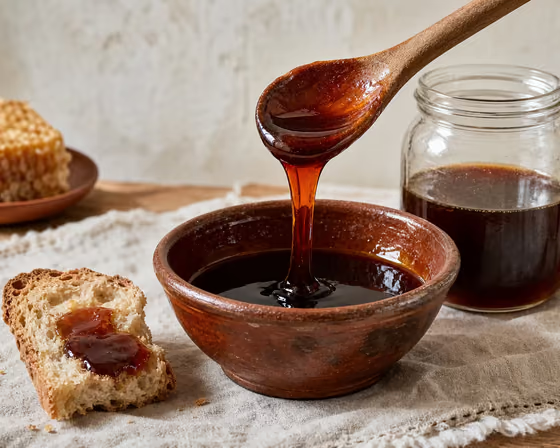
 Portuguese Água-mel Syrup
Water that recovers honey from combs after extraction, filtered and reduced for hours to 70–77° Brix.
The Alentejo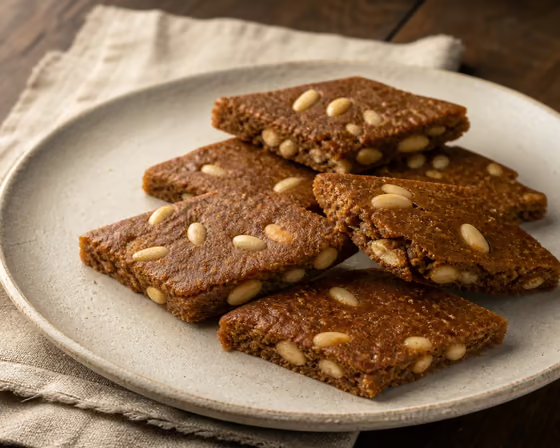 Catalogue image
 Alcomonias
Toasted coarse wheat flour, honey and pine nuts spread and cut into diamonds.
The Alentejo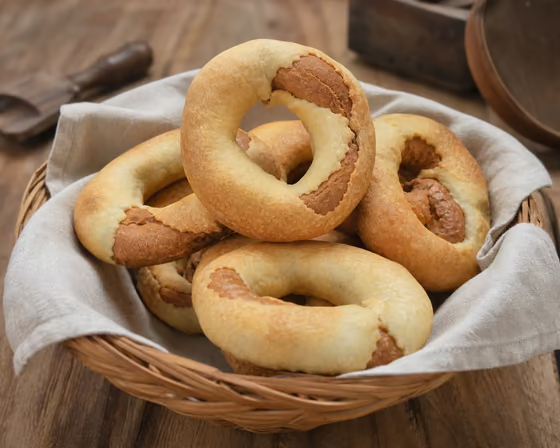 Catalogue image
 Amoreiras-Gare Alcôncoras
A large circular honey-and-olive-oil biscuit born from Amoreiras-Gare's promise-pole tradition.
The Alentejo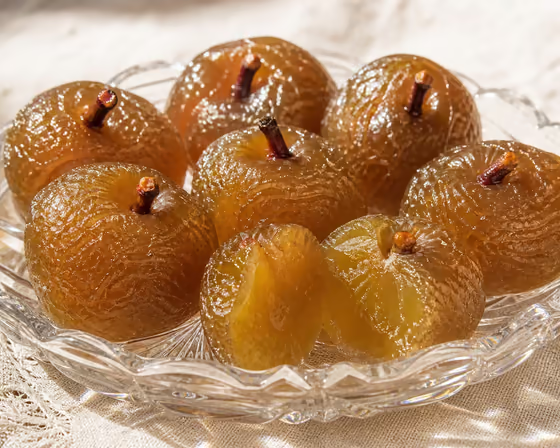 Catalogue image
 Elvas Plums
Protected Rainha Cláudia Verde greengages sold fresh, dried or candied—the sweet form requires at least seven days of slow candying.
The Alentejo