Cabeceiras de Basto Miguelitos
Also known as: Cabeceiras Miguelitos · Yellow-bean Miguelitos
Crisp yellow-bean and Vinho Verde rolls filled with egg and honey.
- Origin
- Cabeceiras de Basto · Braga district · created in 2019
- Place
- Cabeceiras de Basto · Braga
- Region
- The North
- Category
- Cakes & Sweet Breads
- Season
- Year-round; especially promoted during gastronomic weekends
- Evidence
- Well documented
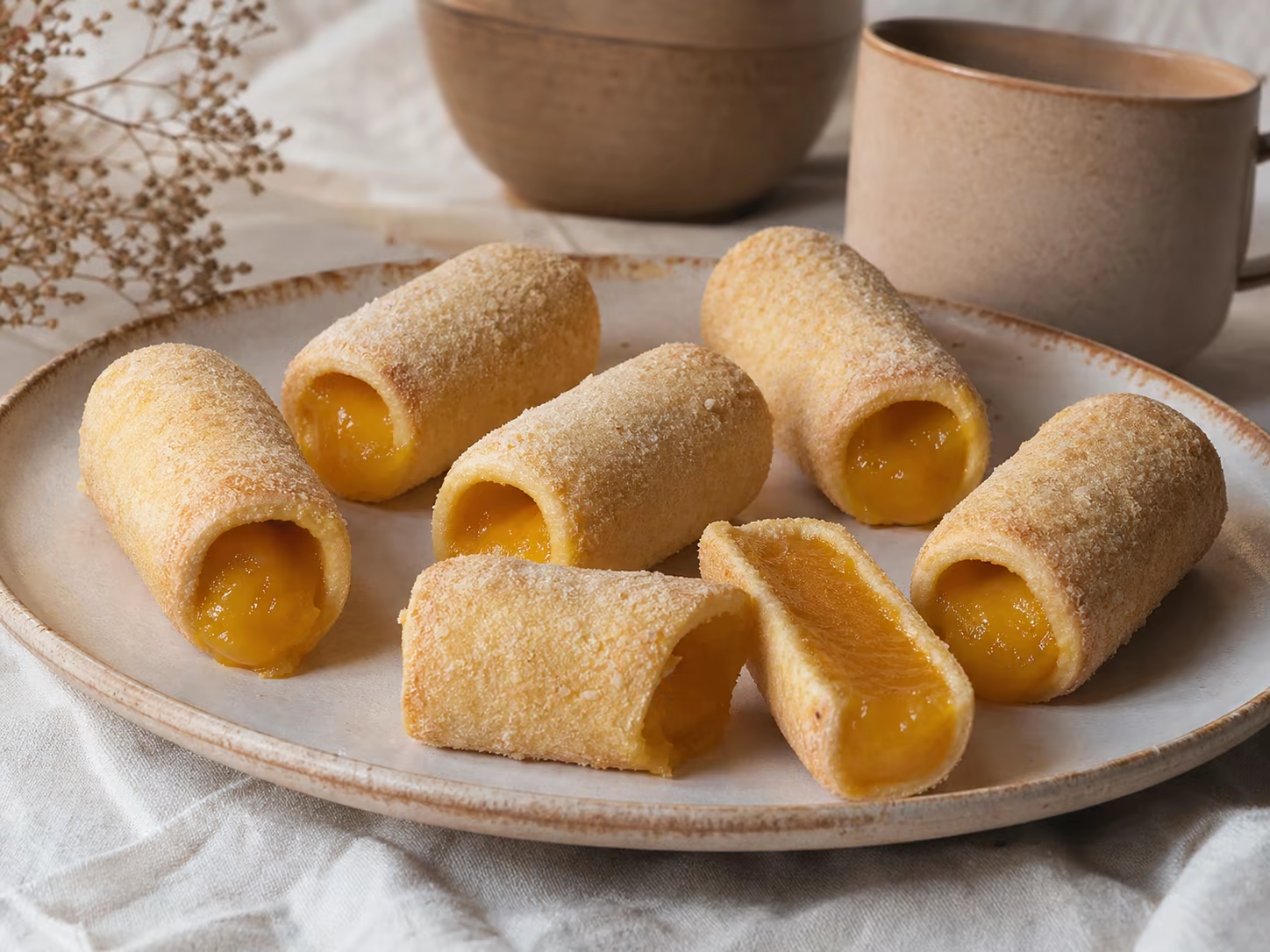
Miguelitos de Cabeceiras de Basto are small crisp cylindrical rolls made with flour, yellow beans and Vinho Verde. Their pale, finely textured shell encloses a thick glossy yellow filling of egg and honey, visible at both ends.
Their construction makes them recognisable: these are not the Spanish puff-pastry squares of the same name, but short tubes with a dry, delicately toasted exterior and a creamy centre combining two products tied to the Basto landscape—honey and Vinho Verde.
- yellow beans
- wheat flour
- Vinho Verde
- eggs
- honey
A dry crisp shell, rich egg-and-honey filling, rounded sweetness and a subtle wine note.
The winning recipe establishes yellow beans, flour, Vinho Verde, eggs and honey; exact proportions and finishing details belong to the product specification and authorised makers.
At participating restaurants, pastry shops and gastronomic events across Cabeceiras de Basto.
Coffee or a glass of white Vinho Verde from the Basto area.
Alice da Conceição de Magalhães Alves created and named Miguelitos for the 2019 Doce Cabeceirense competition. Her proposal won among eleven finalists assessed for originality, authenticity, presentation and commercial viability. The verse accompanying the recipe summarised its bean, Vinho Verde and honey ingredients.
The municipality subsequently incorporated the sweet into local gastronomic promotion, presented it during its Gastronomic Weekends and began a trademark and certification process with a product specification and producer training. It is therefore an openly contemporary tradition whose creation is documented rather than disguised behind a false claim of antiquity.
Well documented
Identity supported by institutional, specialist or corroborating sources.
- cabeceirasdebasto.pt/20955 (opens in a new tab)
- cabeceirasdebasto.pt/24415 (opens in a new tab)
- ruris.pt/portfolio/miguelitos-doce-regional/ (opens in a new tab)
- cm-vilareal.pt/images/noticias/2020/fdsg.pdf (opens in a new tab)
Pastries from here — The North
 Catalogue image
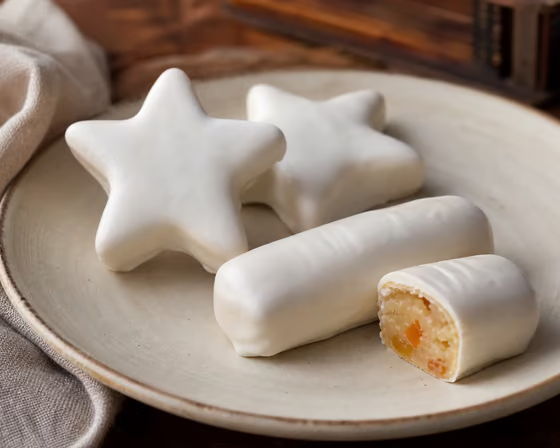
 A Bella Queijadinha de Barcelos
A white star of almond, preserved fruit and family memory.
The North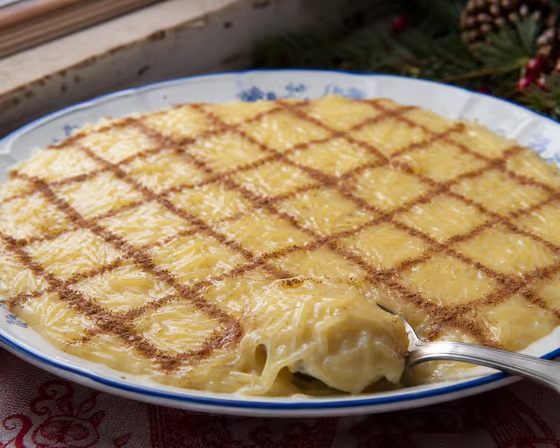 Catalogue image
 Sweet Vermicelli
Fine wheat threads simmered in milk and yolk, scored with cinnamon.
The North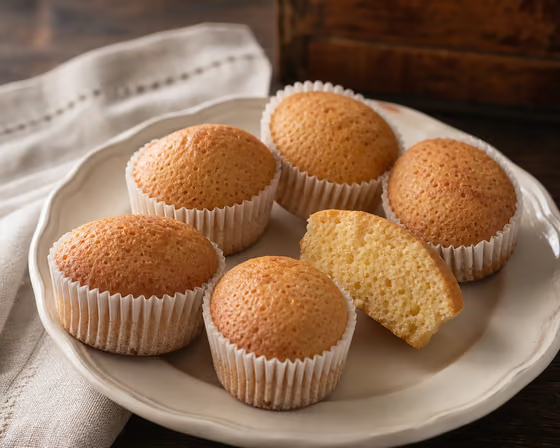 Catalogue image
 Amarantinos
Small egg, lemon and cinnamon cakes whose historical identity is not told consistently by the sources.
The North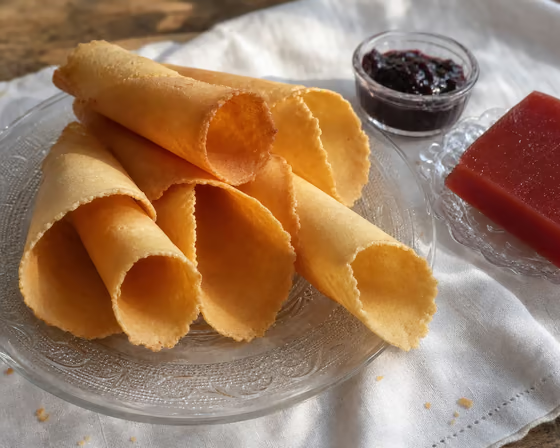 Catalogue image
 Vieira do Minho Cone Wafers
Paper-thin crisp wafers, iron-baked and rolled by hand while still hot.
The North