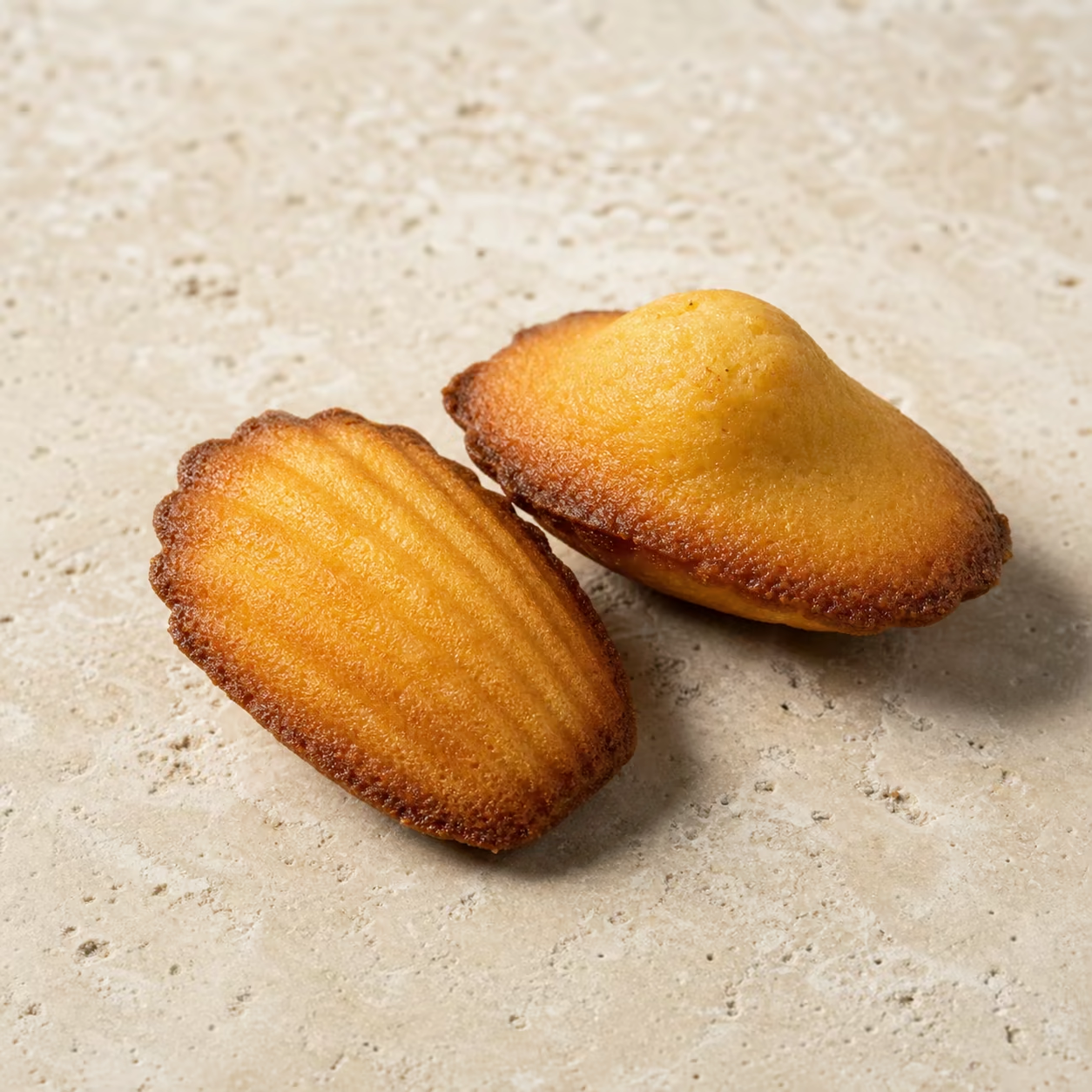
Portuguese Madeleine
Also known as: Portuguese Madeleine · Shell Cake
A small buttery shell cake scented with citrus.
- Origin
- French Commercy tradition adopted by Portuguese pastry shops
- Place
- Portugal
- Region
- Nationwide
- Category
- Cakes & Sweet Breads
- Season
- Year-round
- Evidence
- Well documented
Madalena is a small cake made from beaten batter, golden outside and soft within. Its classic mould gives one side fluted shell ridges and the other a small hump; lemon, orange or vanilla perfumes the crumb.
Portuguese pastry shops also sell round or rectangular versions. It differs from Queque through its historic shell form, more delicate crumb and aromatic profile, although industrial versions can blur the boundary.
- Wheat flour
- Eggs
- Sugar
- Butter
- Lemon, orange or vanilla
- Raising agent depending on recipe
A light buttery crumb, golden edges and a fresh citrus or vanilla fragrance.
Beyond the classic shell, round and rectangular forms occur; flavours include lemon, orange and vanilla. Some recipes use turmeric to deepen the colour.
Gleba currently sells a shell-shaped Madalena. It is also common in bakeries, cafés and pastry assortments throughout Portugal.
Tea, milky coffee or espresso.
The most repeated story places the madeleine’s birth in eighteenth-century Commercy in Lorraine: a young woman named Madeleine Paumier is said to have prepared the cakes for former Polish king Stanisław Leszczyński. It is a traditional origin story, not a conclusively documented authorship.
The recipe and shape travelled far beyond France and entered the Portuguese pastry repertoire. Its continuity is visible among present-day producers: Gleba sells a shell-shaped Madalena made with Alentejo flour and citrus aromas, while pastry suppliers retain their own formats.
Well documented
Identity supported by institutional, specialist or corroborating sources.
- fabricoproprio.net/enciclopedia/madalena/ (opens in a new tab)
- mygleba.com/pt/loja/madalena (opens in a new tab)
- europortal.europastry.com/euro.fichastecnicas/ui/ExportPdf (opens in a new tab)
Pastries from here — Nationwide
 Catalogue image
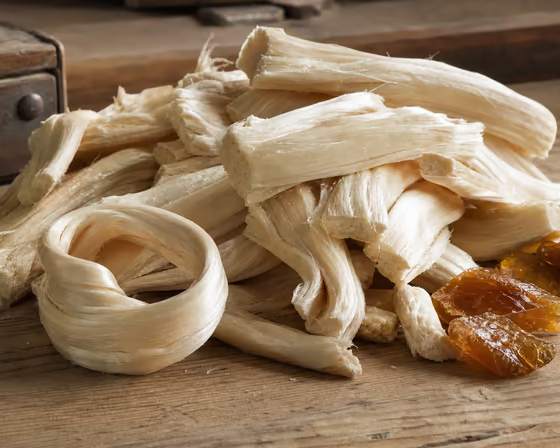
 Alféloa
Sugar or molasses cooked to a hard stage and worked until pale.
Nationwide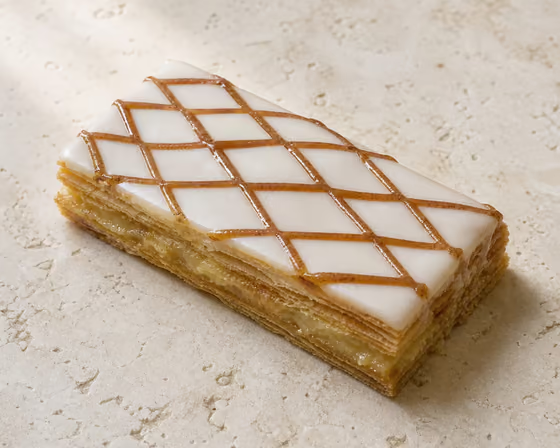 Catalogue image
 Portuguese Gila Allumette
A rectangular puff pastry with cream, gila and cinnamon beneath diamond-patterned royal icing.
Nationwide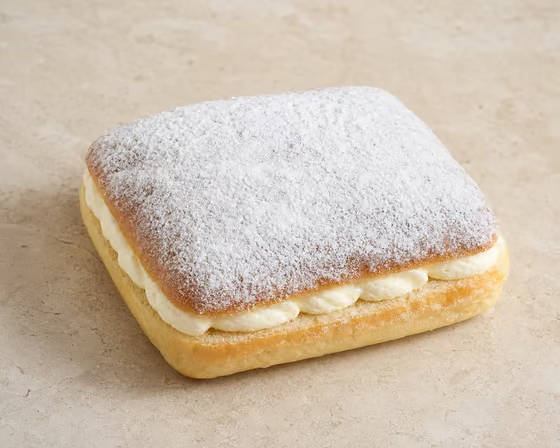 Catalogue image
 Portuguese Brioche Almofada
Light brioche dough, fresh buttercream and icing sugar.
Nationwide Catalogue image
 Portuguese Puff-Pastry Almofada
Puff pastry with white cream, egg sweet and icing sugar—the laminated Almofada variant.
Nationwide