Portuguese Baked Apples
Also known as: Baked Apples · Oven-Baked Apples
Cored apples baked whole with sugar and an aromatic liquid.
- Origin
- Portugal · fruit dessert with no documented exclusive region
- Place
- Nationwide
- Region
- Nationwide
- Category
- Fruit & Honey Sweets
- Season
- No specific season documented in the sources reviewed
- Evidence
- Well documented
Maçãs Assadas are a fruit dessert in which apples are washed, cored without being cut into pieces, and baked whole. A Teleculinária recipe places sugar in the cavity and bakes them with water, orange juice and cinnamon sticks. A technical specification from the University of Trás-os-Montes and Alto Douro's Social Welfare Services documents a food-service formula using apples, sugar, water and Port.
The verified common core is therefore simpler than many popular descriptions: a whole cored apple, sugar, liquid and an oven. Orange and cinnamon belong to one published version; Port belongs to another. Neither source demonstrates that one formula is the sole correct Portuguese recipe.
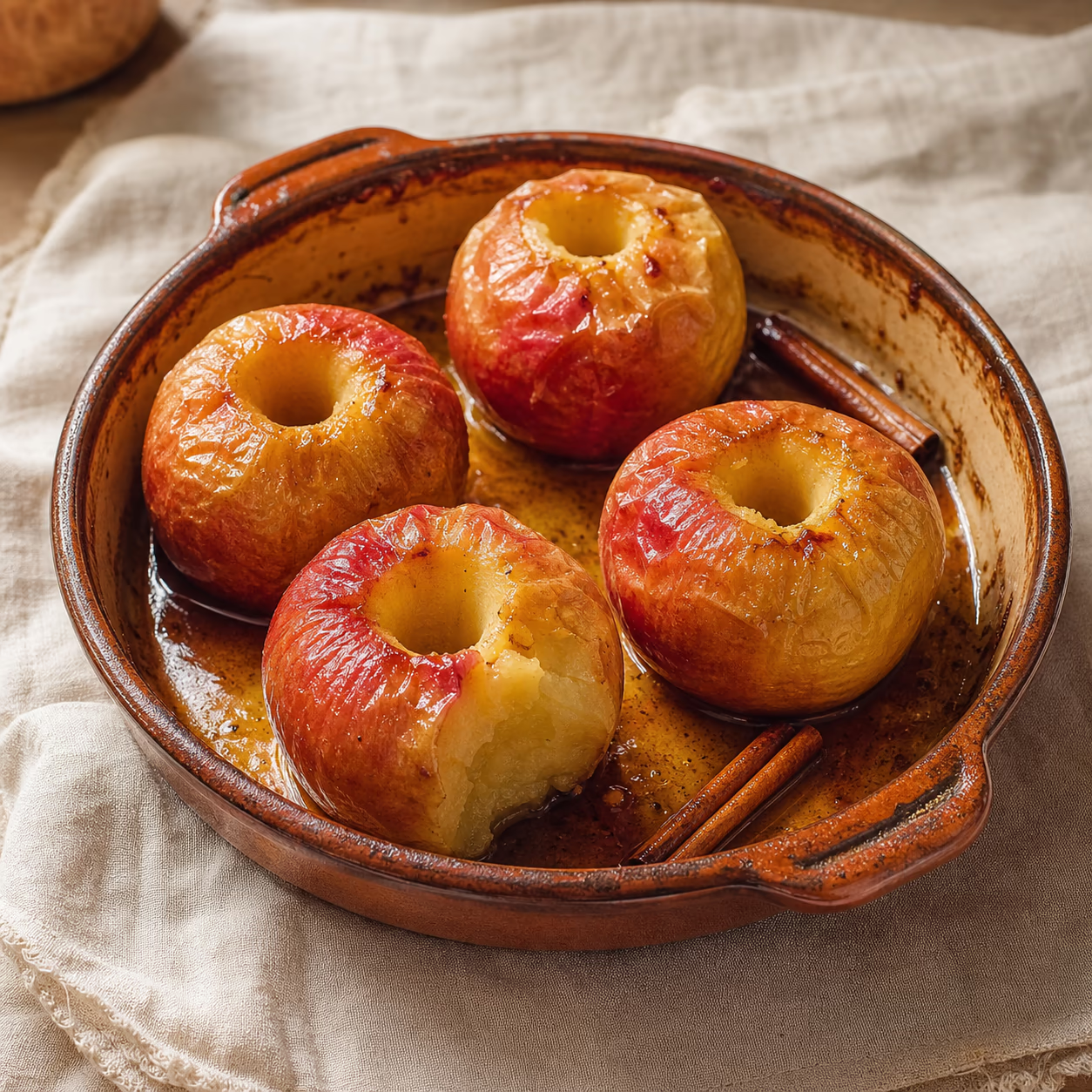
The image shows whole baked apples, open at the centre and served with the juices from the baking dish. It is an editorial representation rather than a photograph of either Teleculinária's recipe or UTAD's food-service product.
- Whole apples
- Sugar
- Water
- Orange juice and cinnamon in one published version
- Port in another documented version
Baking softens the apple and concentrates the liquid in the dish. The additional profile depends on the formula: citrus and cinnamon in Teleculinária's version, or Port in UTAD's specification. The sources publish no comparative sensory assessment.
Teleculinária documents six apples with six teaspoons of sugar, water, the juice of one orange and two cinnamon sticks, baked at 160°C. UTAD documents apples, sugar, water and Port without publishing quantities in the reviewed sheet. Another Teleculinária recipe uses Reineta apples, Port and cinnamon and suggests nuts as an option.
UTAD's specification establishes the dessert in Portuguese institutional food service, while the published recipes also document home preparation. The reviewed sources do not support a nationwide restaurant list or daily availability claims.
Not documented in the sources reviewed.
The reviewed sources document baked apples in contemporary Portuguese domestic-recipe and institutional food-service contexts. They provide no creation date, author, region of origin, proof of ancient nationwide continuity or evidence that baking whole apples is an exclusively Portuguese practice.
UTAD's technical sheet is especially specific: it classifies “Maçã Assada” as a food-service product, describes preparation with Port, and sets refrigerated storage and a 24-hour life under that service's conditions. It also warns of possible sulphites, relevant when wine is used.
Teleculinária's domestic recipe uses a different, alcohol-free composition. Lightly scoring the skin is part of its published instructions, but the source offers no validated technical explanation for that step.
Well documented
Identity supported by institutional, specialist or corroborating sources.
- teleculinaria.pt/receitas/maca-assada-no-forno/ (opens in a new tab)
- teleculinaria.pt/receitas/maca-assada/ (opens in a new tab)
- comunicacao.sas.utad.pt/Media/Default/Alimentacao/Fichas-tecnicas/Sobremesas/Ma%C3%A7a%20assada%20-%2001.17.320.pdf (opens in a new tab)
- foodfromportugal.com/pt-pt/receitas/maca-assada/ (opens in a new tab)
Pastries from here — Nationwide
 Catalogue image
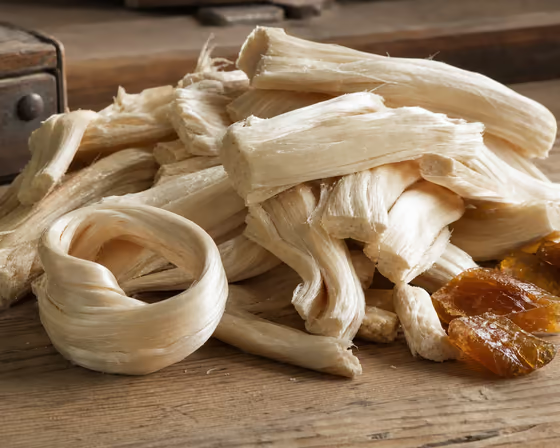
 Alféloa
Sugar or molasses cooked to a hard stage and worked until pale.
Nationwide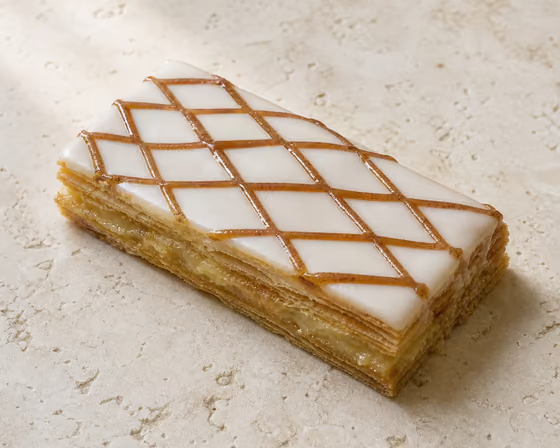 Catalogue image
 Portuguese Gila Allumette
A rectangular puff pastry with cream, gila and cinnamon beneath diamond-patterned royal icing.
Nationwide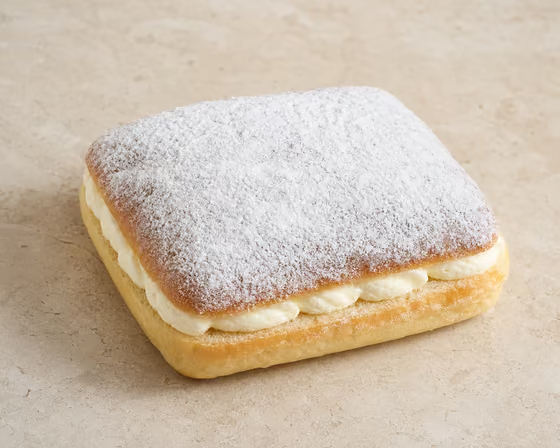 Catalogue image
 Portuguese Brioche Almofada
Light brioche dough, fresh buttercream and icing sugar.
Nationwide Catalogue image
 Portuguese Puff-Pastry Almofada
Puff pastry with white cream, egg sweet and icing sugar—the laminated Almofada variant.
Nationwide