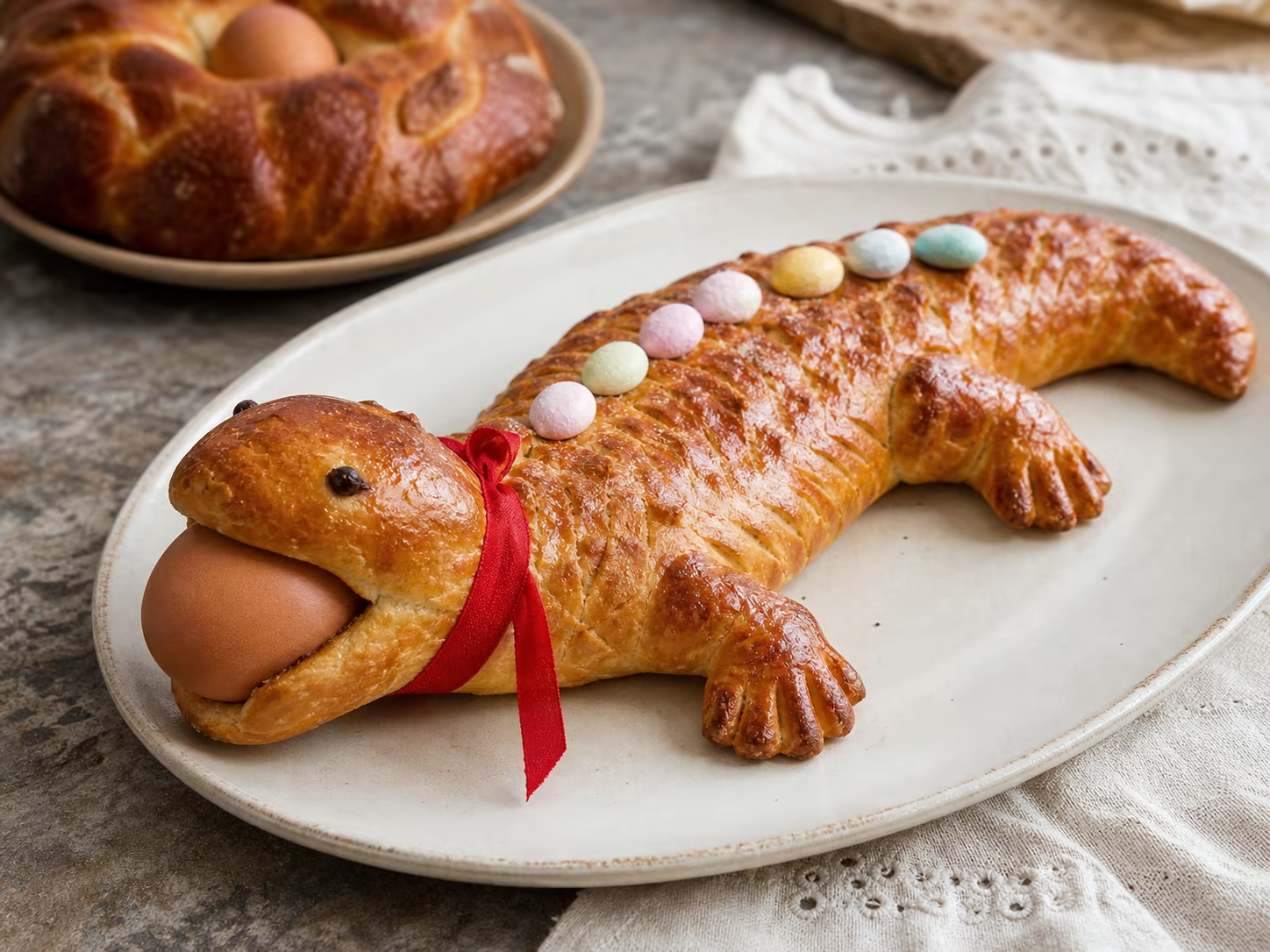
Castelo de Vide Easter Lizards
Also known as: Easter Lizard Folar · Castelo de Vide Easter Lizard · Portalegre Folar
The figurative folar carrying an egg in its mouth and Easter to godchildren.
- Origin
- Castelo de Vide · Upper Alentejo
- Place
- Castelo de Vide · Upper Alentejo
- Region
- The Alentejo
- Category
- Festive & Seasonal
- Season
- Easter, especially Holy Week
- Evidence
- Well documented
Castelo de Vide's Lagartos da Páscoa are sweet folares shaped by hand as reptiles. The firm enriched dough contains flour, eggs, milk, sugar, yeast, fennel and butter and/or lard; some published formulas add cinnamon. Each lizard receives black-eyed-pea eyes, sugared almonds along its back, a coloured ribbon around its neck and a boiled egg—traditionally dyed brown with onion skins—held in its mouth.
Brushed with egg before baking and a light syrup afterwards, the folar emerges glossy, aromatic and compact enough to preserve the sculpture. The same dough also makes round folares, doves, lambs, girls and boys, but the lizard is Castelo de Vide's most recognisable figure.
- wheat flour
- eggs
- milk
- sugar
- butter and/or lard
- baker's yeast
- fennel
- cinnamon in some formulas
- boiled egg
- sugared almonds
- black-eyed peas
A firm, rich sweet bread scented with fennel and, in some formulas, cinnamon, with a glossy crust and crunchy sugared almonds.
Beyond the lizard, the dough becomes round folares, double hearts, doves, chicks, lambs, dolls, girls or boys. The number of eggs and decorations varied with the recipient and the godparent's generosity.
At Castelo de Vide bakeries and sweet shops during Holy Week; the tradition also appears elsewhere in Portalegre district, including Marvão, Alegrete, Monforte and Barbacena.
Coffee, tea or an Upper Alentejo liqueur; on the Easter table it accompanies sugared almonds and other regional sweet breads.
Figurative folares belong to the old Easter cycle of ceremonial gifts. In Castelo de Vide, godmothers and godfathers gave lizards to their godchildren on Maundy Thursday; they could also pass between co-parents. The egg symbolises fertility, abundance and renewal after the Lenten fast, while the playful shape made the gift especially suitable for children.
Ernesto Veiga de Oliveira's ethnographic survey records both Castelo de Vide's large lizard with a red silk collar and a double-heart folar covered with eggs and dough ornaments. Such zoomorphic cakes were once common in parts of Alentejo but have become rare; Castelo de Vide remains one of the places where the tradition is still visible in Easter bakes and celebrations.
Well documented
Identity supported by institutional, specialist or corroborating sources.
- books.openedition.org/etnograficapress/10374 (opens in a new tab)
- memoriamedia.net/index.php/lagartos (opens in a new tab)
- aeg.com.pt/local/aeg-cooking-sessions/folares-lagartos-cs/ (opens in a new tab)
- noticiasdecastelodevide.blogspot.com/2018/03/ (opens in a new tab)
- aosabordeportugal.pt/site/2020/05/a-mesa-com-portugal-paes-doces/ (opens in a new tab)
- portugal-aptece.com/wp-content/uploads/2014/12/Arca-dos-Sabores-APTECE-1.compressed.pdf (opens in a new tab)
- cm-portalegre.pt/blog/eventos/mercadinho-do-folar-alegrete/ (opens in a new tab)
Pastries from here — The Alentejo
 Catalogue image
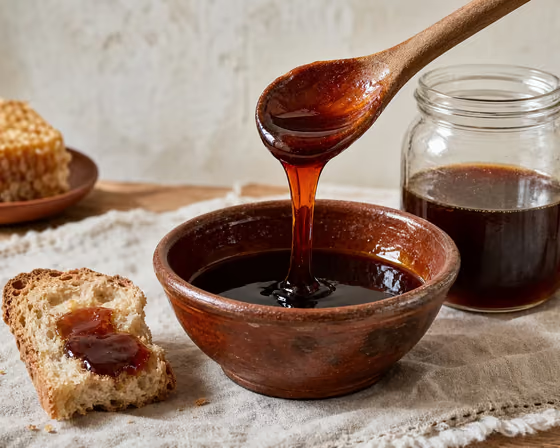
 Portuguese Água-mel Syrup
Water that recovers honey from combs after extraction, filtered and reduced for hours to 70–77° Brix.
The Alentejo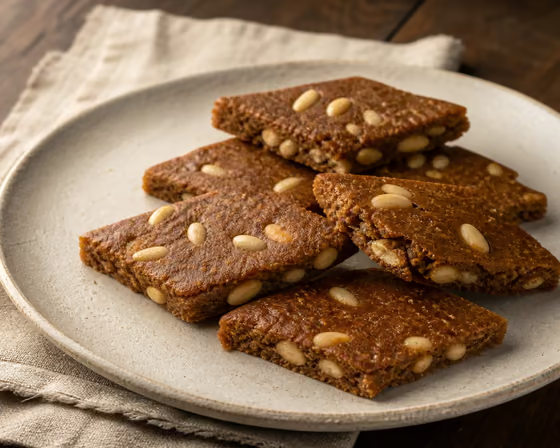 Catalogue image
 Alcomonias
Toasted coarse wheat flour, honey and pine nuts spread and cut into diamonds.
The Alentejo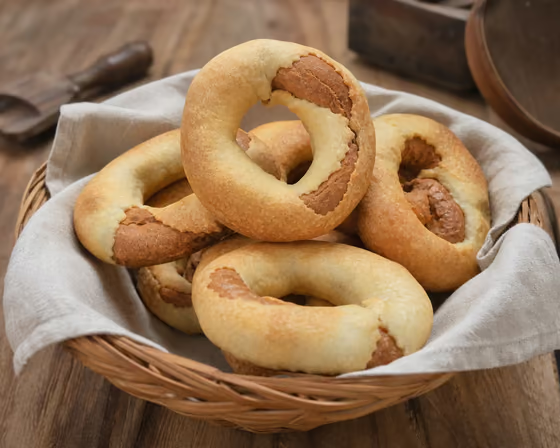 Catalogue image
 Amoreiras-Gare Alcôncoras
A large circular honey-and-olive-oil biscuit born from Amoreiras-Gare's promise-pole tradition.
The Alentejo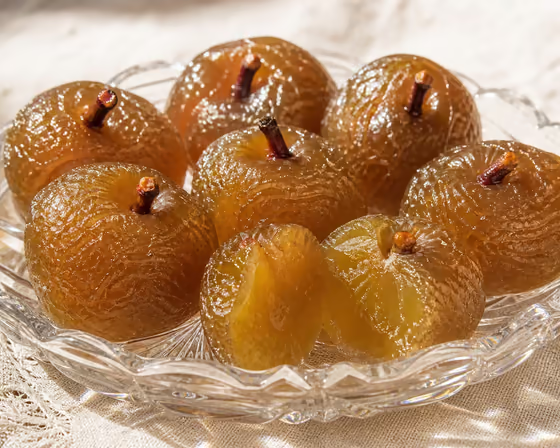 Catalogue image
 Elvas Plums
Protected Rainha Cláudia Verde greengages sold fresh, dried or candied—the sweet form requires at least seven days of slow candying.
The Alentejo