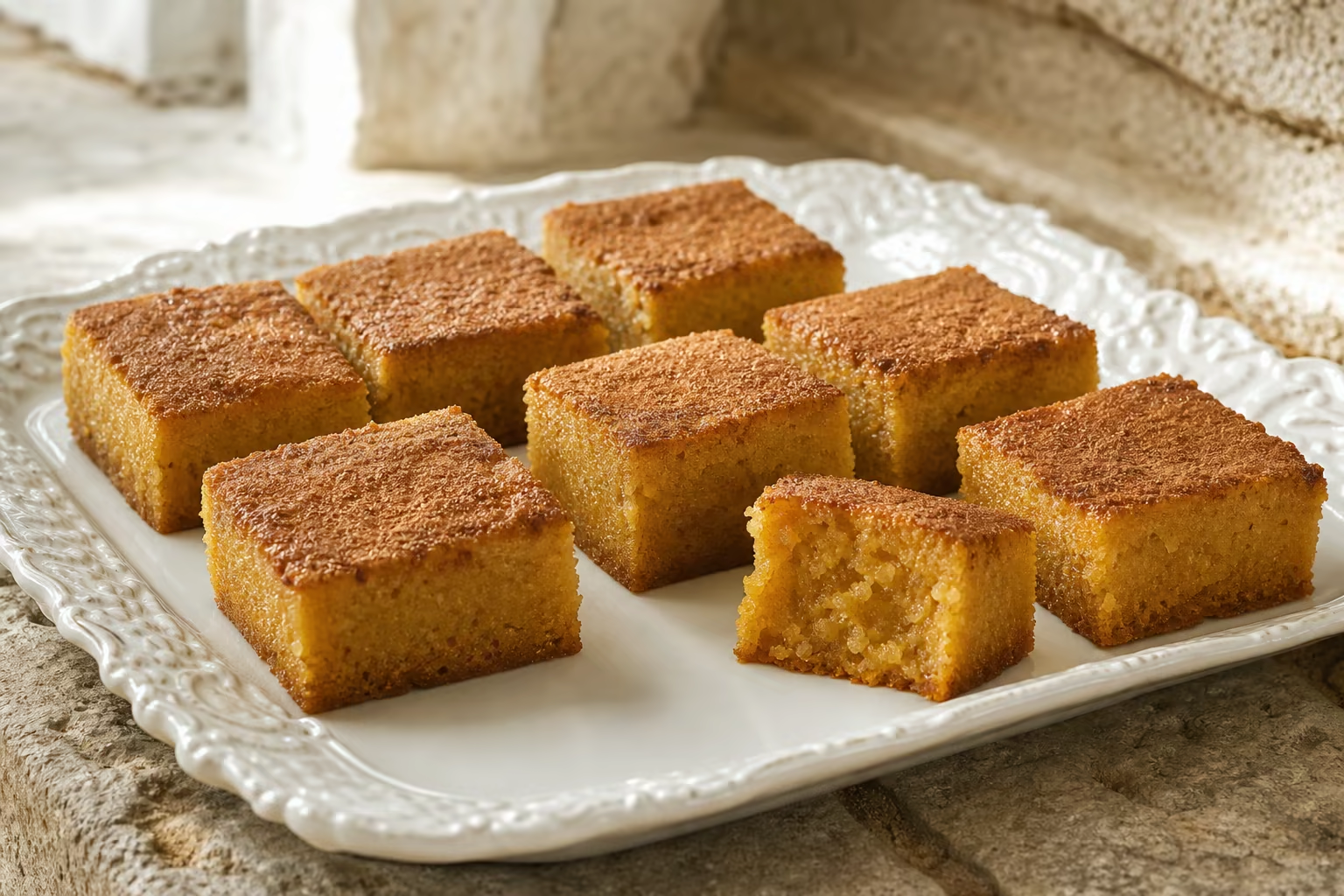
Alcobaça Gradinhas
Also known as: Gradinhas
A regional Alcobaça sweet whose published formula remains to be located.
- Origin
- Alcobaça · Oeste
- Place
- Alcobaça
- Region
- The West
- Category
- Convent Sweets
- Season
- Seasonality not documented
- Evidence
- Limited documentation
Gradinhas de Alcobaça are documented by Turismo Centro de Portugal among the sweets associated with the town, alongside Pudim de Ovos dos Frades, Queijadas do Bárrio and Tachinhos à Dom Abade. The official magazine of the 2022 International Convent Sweets and Liqueurs Fair repeats the name in its survey of Alcobaça specialities.
These sources confirm the product's identity and territorial association, but they do not describe ingredients, method, shape or texture. No verifiable historical or contemporary recipe was located, nor a current producer publishing its composition. This entry therefore does not assign Gradinhas a yolk-and-almond mixture, a square form or a specific monastic origin without evidence.
- Recipe not published in the sources reviewed
Flavour and texture are not documented in the sources reviewed.
No documented variants were located. Despite the similar name, there is no evidence that this is the same product as Grades de Lamego, grille-shaped biscuits with a published formula.
The official 2022 Fair magazine presented Gradinhas among Alcobaça specialities, but the reviewed sources identify no current producer and do not confirm regular availability. Check directly with the Fair organisers or local confectioners before travelling.
Not documented in the sources reviewed.
Alcobaça presents its confectionery in the context of Cistercian heritage and hosts the International Convent Sweets and Liqueurs Fair. Within that regional setting, two institutional or event-related sources explicitly include Gradinhas de Alcobaça by name.
Inclusion in a list of local sweets does not by itself demonstrate that the recipe originated at Alcobaça or Cós monastery, was preserved for centuries or left the convents after 1834. No document supporting those specific narratives was found. The recipe's age, authorship and chain of transmission remain undocumented.
Limited documentation
The identity is documented, but its origin, composition or availability has limited sourcing.
- turismodocentro.pt/artigo/docaria-regional-do-centro-de-portugal/ (opens in a new tab)
- regiaodecister.pt/wp-content/uploads/2022/11/doces.pdf (opens in a new tab)
- cm-alcobaca.pt/50062/doces-conventuais (opens in a new tab)
Pastries from here — The West
 Catalogue image
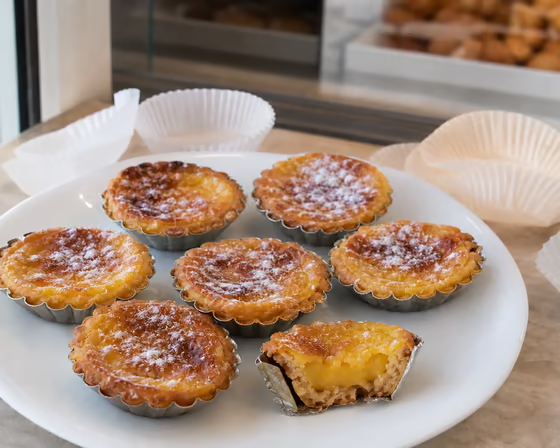
 Friends of Peniche
The sweet named after friends you should not trust.
The West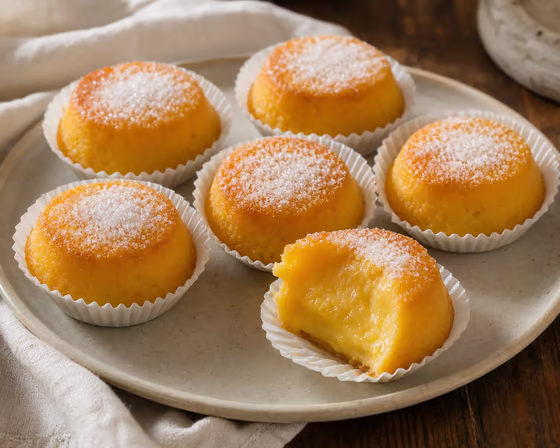 Catalogue image
 Areias Brancas
Small yolk-and-almond pudding cakes, named by the coast and covered with white sugar.
The West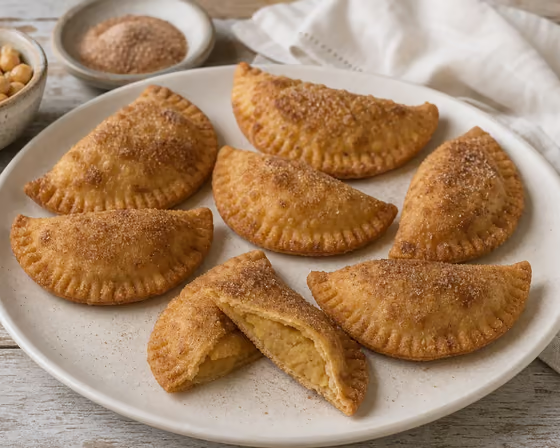 Catalogue image
 Peniche Chickpea Azevias
Thin fried half-moons with a sweet, creamy chickpea, almond and egg-yolk filling.
The West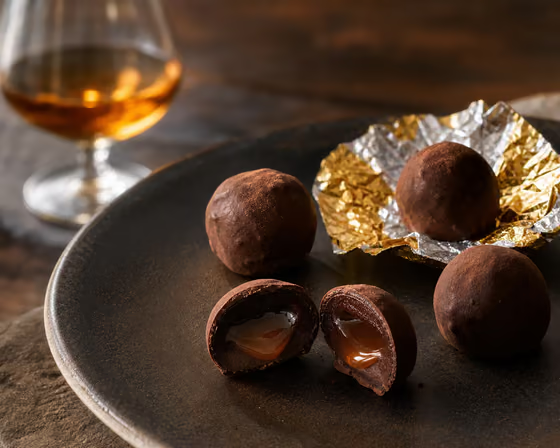 Catalogue image
 Lourinhã DOC Brandy Bonbon
A dark-chocolate bonbon with a Lourinhã DOC brandy heart.
The West