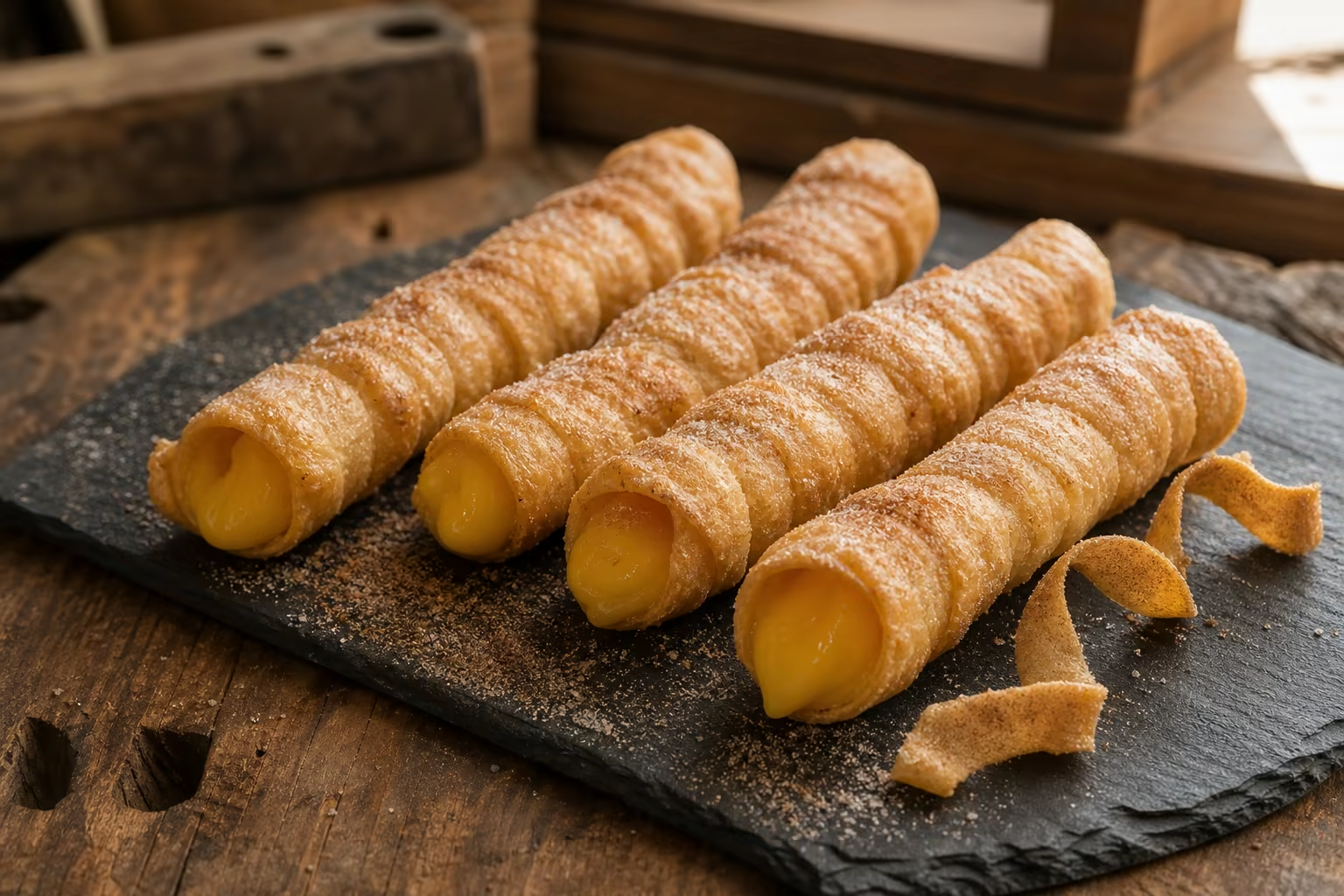
Cesar Carpenter's Ribbon Pastries
Also known as: Carpenter's Ribbon Pastries · Cesar Wood-Shaving Pastries
A spiral ribbon of fried pastry, crisp as a plane shaving and filled with egg-yolk cream.
- Origin
- Cesar · Oliveira de Azeméis
- Place
- Cesar · Oliveira de Azeméis
- Region
- The North
- Category
- Fried Sweets
- Season
- Year-round with egg filling; traditionally autumnal with quince
- Evidence
- Well documented
Fitas de Carpinteiro are long hollow tubes made by winding a narrow ribbon of dough helically around a cane. Once fried and removed from the mould, the pastry preserves the overlaps and curls of a wood shaving produced by a carpenter's plane. Its shell is golden, thin and extremely crisp; today the hollow centre is filled with silky yellow egg-yolk cream.
The traditional dough contains flour, fat, water and salt and was fried in olive oil or lard, later often replaced by neutral oil. Sugar and cinnamon finish the sweet. The family's earliest documented version was filled with soft, not-yet-set quince paste, but egg cream allowed production to continue beyond quince season.
- wheat flour
- fat
- water
- salt
- oil, olive oil or lard for frying
- egg yolks
- sugar
- cinnamon
- soft quince paste in the old version
Very crisp and light outside, rich and creamy within, with sweet yolk and cinnamon fragrance.
The older seasonal version uses soft quince paste, while the best-known version today contains egg cream. Maize canes have given way to bamboo or purpose-made moulds, but the ribbon winding remains essential.
From Lindolfo Ribeiro and at food events across Terras de Santa Maria, especially the Medieval Journey; also look for them at initiatives in Oliveira de Azeméis and Cesar.
Espresso, black tea or a dry Bairrada sparkling wine.
Family tradition connects the sweet with Brazalina of Cesar, who made quince paste in autumn while neighbouring women waited for sunset before gathering maize drying on the threshing floors. Lacking a rolling pin, she rolled the dough with a bottle, cut it into strips, wound them around pieces of maize cane and fried them before offering the filled tubes to her companions. The name came from their resemblance to wood ribbons left by a carpenter's plane. The recipe passed through Laurinda da Viúva and Alda da Tenda and is now preserved by descendant and cook Lindolfo Ribeiro, who presents it at events including Santa Maria da Feira's Medieval Journey.
Well documented
Identity supported by institutional, specialist or corroborating sources.
- lindolfo.pt/fitas-de-carpinteiro/ (opens in a new tab)
- viagemmedieval.com/o-mestre-lindolfo-e-as-fitas-de-carpinteiro/ (opens in a new tab)
- ufoaz.pt/gastronomia/ (opens in a new tab)
- cm-valongo.pt/cmvalongo/uploads/writer_file/document/5708/brochura___fdsg_24.pdf (opens in a new tab)
Pastries from here — The North
 Catalogue image
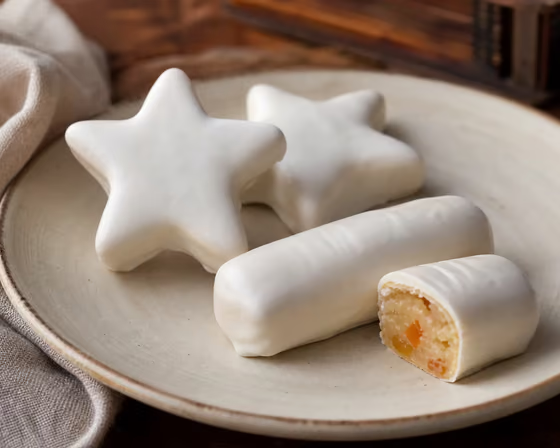
 A Bella Queijadinha de Barcelos
A white star of almond, preserved fruit and family memory.
The North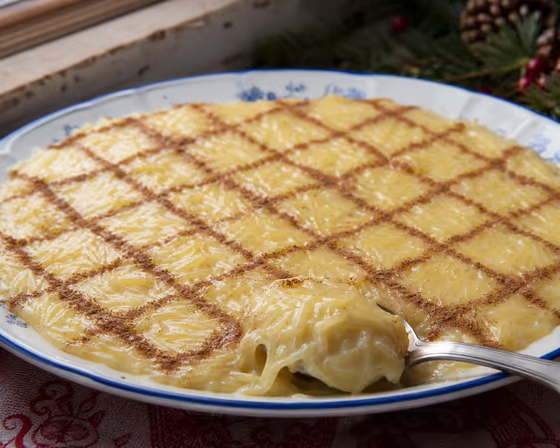 Catalogue image
 Sweet Vermicelli
Fine wheat threads simmered in milk and yolk, scored with cinnamon.
The North Catalogue image
 Amarantinos
Small egg, lemon and cinnamon cakes whose historical identity is not told consistently by the sources.
The North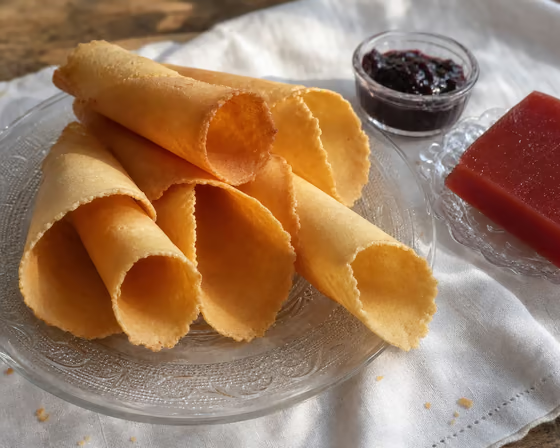 Catalogue image
 Vieira do Minho Cone Wafers
Paper-thin crisp wafers, iron-baked and rolled by hand while still hot.
The North