Filhós
Also known as: Filhoses · Carnival Filhós · Velhoses · Pumpkin filhós · Loriga-style filhós · Loriga bread-dough filhós
The Christmas fry-up: stretched dough, crackling oil and cinnamon sugar.
- Origin
- A medieval-rooted fried sweet, found all over the country
- Place
- Nationwide
- Region
- Nationwide
- Category
- Fried Sweets
- Season
- Christmas
- Evidence
- Well documented
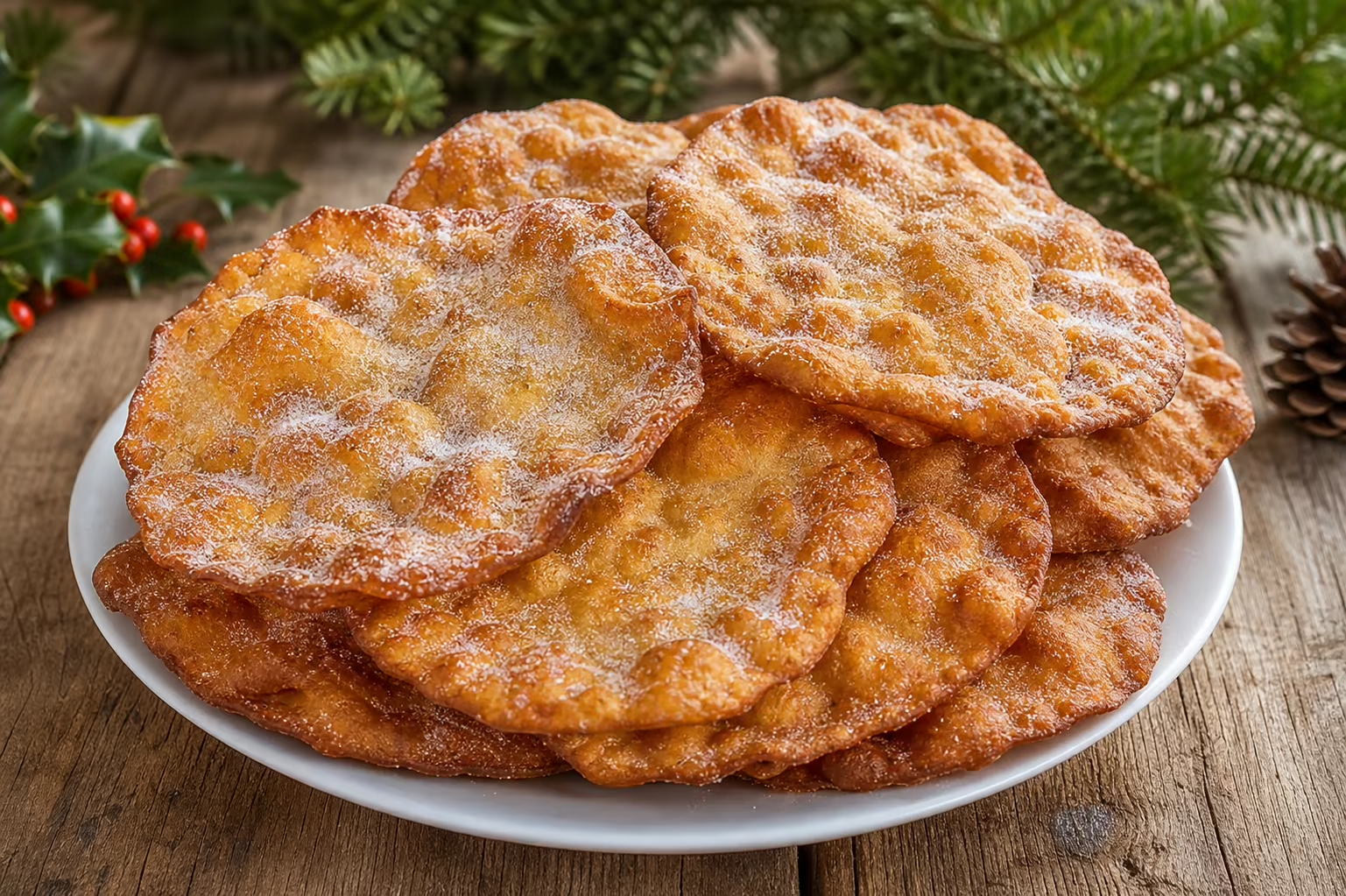
Filhós are the sound of a Portuguese Christmas: the sizzle of dough in hot olive oil or oil and the scent of cinnamon taking over the kitchen. They are discs or strips of dough, stretched by hand until thin and uneven, fried until golden and dusted while still warm with sugar and cinnamon.
There is no single correct filhó. From north to south the dough, the shape and the topping change, but the gesture is the same and almost always a family one: made at home, in quantity, around a bowl of dough, usually on Christmas Eve.
Thin and crisp at the edges, soft in the middle, they are eaten by hand and vanish fast.
- Wheat flour
- Eggs
- Cooked pumpkin (in many versions)
- Yeast or aguardente spirit
- Orange or lemon zest
- Oil or olive oil for frying
- Sugar
- Ground cinnamon
Warm, crisp at the edges and tender within, with the gentle heat of cinnamon balancing the sweetness. Pumpkin versions are moister and softer; the stretched-dough ones thinner and crunchier. Well-drained, never greasy: that is the mark of a good one.
It may be Portugal's most variable sweet. In the north, pumpkin filhós are common; further south, carrot versions appear. In the Algarve they are fried and dipped in honey or dark sugar syrup. Loriga's local recipe uses eggs, orange juice and zest, aguardente and yeast, optionally with pumpkin; an older, plainer form fries ordinary wheat bread dough bought from the bakery. Thin, stretched discs contrast with round balls (sometimes called velhoses or malassadas). Coscorões, thinner and crunchier, are close cousins.
Traditionally home-made around Christmas, which is when they taste best. You will also find them at Christmas markets, fairs and festival food stalls across the country, and in the most traditional bakeries through winter. In the Algarve, seek out the honey-dipped versions.
A strong espresso or, at Christmas, a glass of Port or Moscatel. Traditionalists pair them with tea or alongside the rest of the Christmas Eve sweets.
Filhós are among the oldest fried sweets of the Iberian Peninsula, with relatives across the whole Mediterranean basin. The word comes from the Latin foliola, "little leaves", a diminutive of folium, "leaf", a nod to dough stretched until almost translucent. Similar fried sweets appear in medieval and Renaissance recipes, and the custom of frying dough on feast days is shared with the Jewish and Arab cultures that lived on the Peninsula; some trace a root to the fried treats of Hanukkah.
It settled above all as a Christmas and Carnival sweet, seasons when eggs, fat and sugar were plentiful and cooking was done in quantity for the extended family. In the Alentejo it was customary to make them on quinta-feira das comadres, the Thursday before Carnival, to give to family and friends. It was this domestic, festive logic, more than the convent kitchen, that spread them from north to south.
Well documented
Identity supported by institutional, specialist or corroborating sources.
- infopedia.pt/dicionarios/lingua-portuguesa/filhoses (opens in a new tab)
- pt.wiktionary.org/wiki/filh%C3%B3 (opens in a new tab)
- cnnportugal.iol.pt/sociedade/22-12-2007/a-verdadeira-historia-das-filhos-de-natal (opens in a new tab)
- tradicional.dgadr.gov.pt/pt/cat/doces-e-produtos-de-pastelaria/179-filhos-de-forma (opens in a new tab)
- diariodistrito.sapo.pt/filhos-coscoroes-velhoses-ou-malassadas-sao-presenca-na-consoada/ (opens in a new tab)
- cozinhatradicional.com/filhs-nordeste-algarvio/ (opens in a new tab)
- loriga.de/originalidades.htm (opens in a new tab)
- loriga.de/Arquivo01.htm (opens in a new tab)
Pastries from here — Nationwide
 Catalogue image
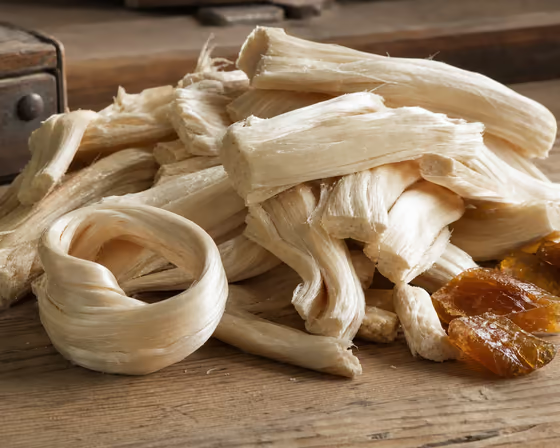
 Alféloa
Sugar or molasses cooked to a hard stage and worked until pale.
Nationwide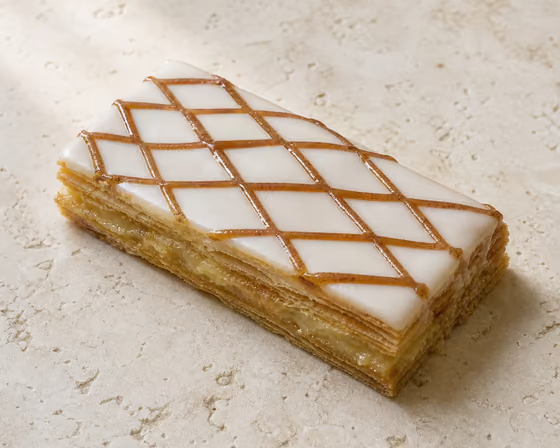 Catalogue image
 Portuguese Gila Allumette
A rectangular puff pastry with cream, gila and cinnamon beneath diamond-patterned royal icing.
Nationwide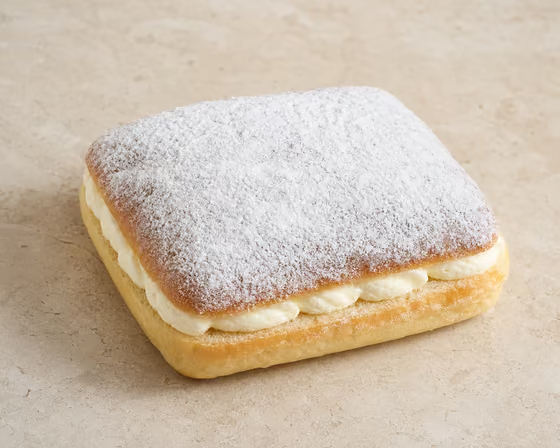 Catalogue image
 Portuguese Brioche Almofada
Light brioche dough, fresh buttercream and icing sugar.
Nationwide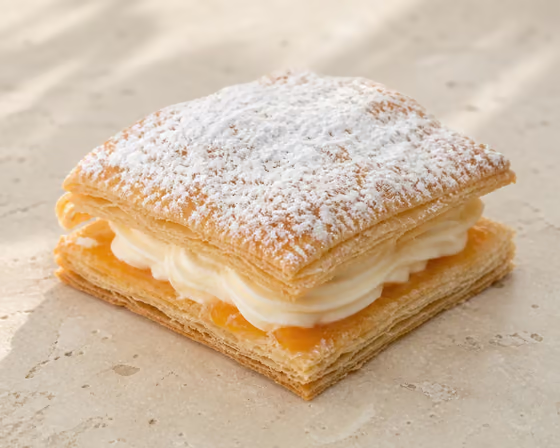 Catalogue image
 Portuguese Puff-Pastry Almofada
Puff pastry with white cream, egg sweet and icing sugar—the laminated Almofada variant.
Nationwide