Tabosa do Carregal Fálgaros
Also known as: Tabosa Fálgaros · Sernancelhe Fresh-cheese Bake
A large unsweetened festive bake of flour, eggs and fresh cheese, made in the village's communal oven.
- Origin
- Tabosa do Carregal · Sernancelhe · Viseu district
- Place
- Tabosa do Carregal · Sernancelhe
- Region
- The North
- Category
- Cakes & Sweet Breads
- Season
- Especially Saint Blaise's feast and Easter
- Evidence
- Well documented
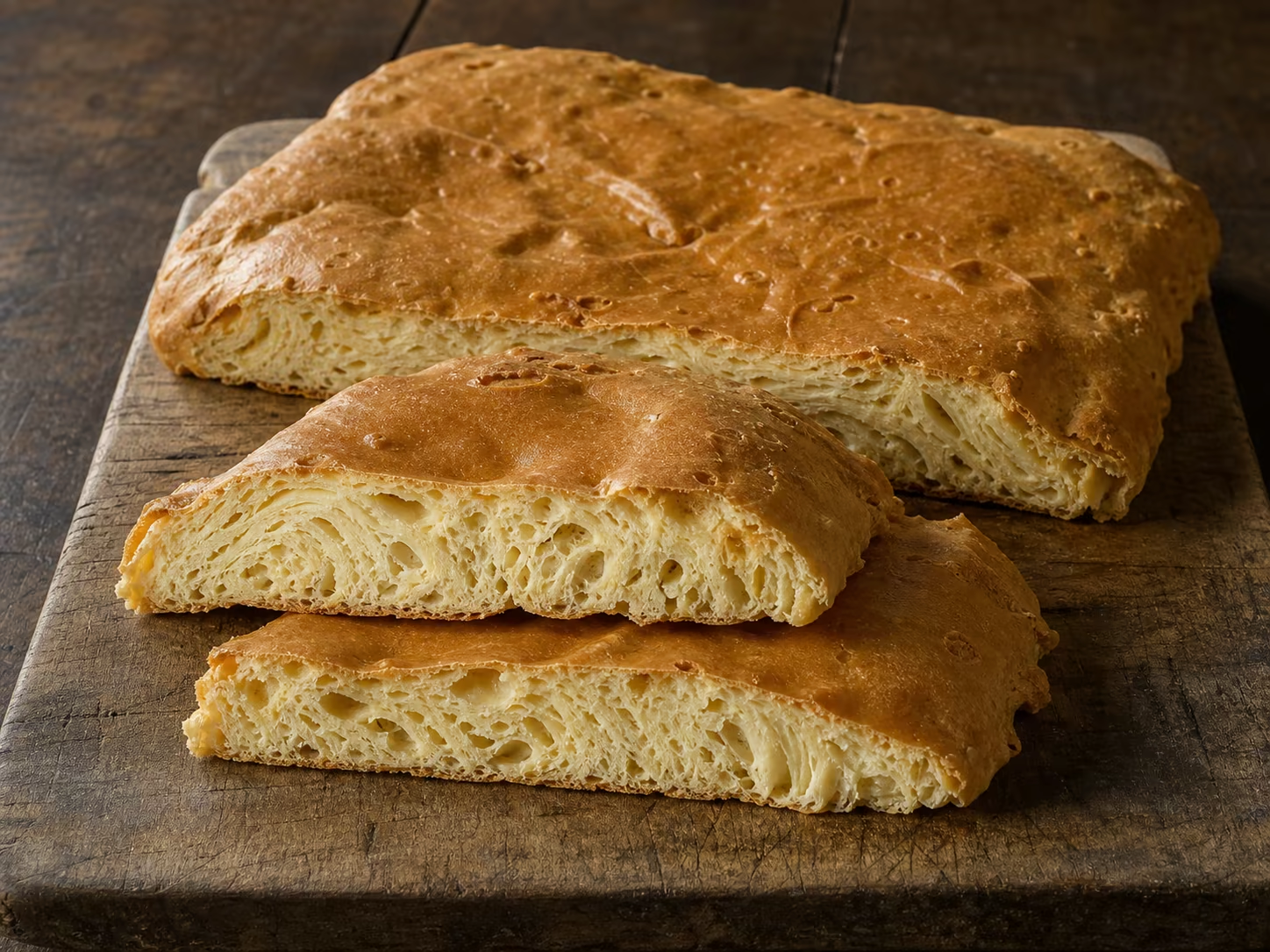
Fálgaros da Tabosa do Carregal are large, low, irregular pieces, often roughly rectangular, with a smooth brown crust and a very open yellow interior. When cut, the crumb reveals elongated holes and almost fibrous layers, created by working a dough enriched with eggs and fresh cheese.
Although catalogued with convent confectionery and served on festive days, traditional fálgaros contain neither sugar nor honey. Flour, farmhouse eggs, fresh cheese and salt make an oven-baked delicacy closer to a savoury cake or enriched bread—an important exception within Portuguese pastry.
- wheat flour
- farmhouse eggs
- fresh cheese
- salt
Mild, milky and lightly salty, with egg richness, toasted crust and a light elastic crumb.
Dimensions and shape depend on handmade division and space in the communal oven. The constant is the unsweetened flour, egg and fresh-cheese base.
In Tabosa do Carregal, particularly around Saint Blaise's feast and Easter, when families use the communal oven.
Lapa cheese, Douro white wine or espresso.
Tradition attributes their creation to the women of the Convent of Nossa Senhora da Assunção, founded at Tabosa do Carregal in the late seventeenth century. The convent helped the settlement grow and the recipe passed to local families. Today the community continues to mix and bake fálgaros in its communal oven, especially for Saint Blaise's feast and Easter. In 2024 historian Alberto Correia devoted the book ‘Fálgaro, um Manjar Conventual’ to them.
Well documented
Identity supported by institutional, specialist or corroborating sources.
- tripaforra.pt/programa/ (opens in a new tab)
- jornaldocentro.pt/livro-conta-a-historia-dos-falgaros-de-sernancelhe/ (opens in a new tab)
- ruadireita.pt/editorial/contra-o-colegio-armavam-as-doceiras-bolos-falgaros-rebucados-em-tabuleiros-de-que-choviam-rendas-e-badalhocas-35454.html (opens in a new tab)
- discoverdouro.pt/es/municipio/sernancelhe (opens in a new tab)
- cm-terrasdebouro.pt/images/noticias/2023/3/12/fdsg23.pdf (opens in a new tab)
Pastries from here — The North
 Catalogue image
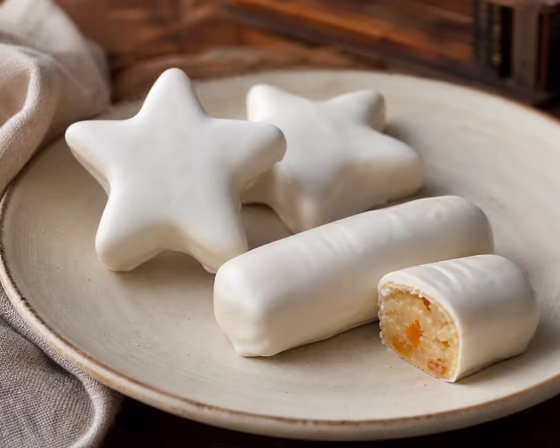
 A Bella Queijadinha de Barcelos
A white star of almond, preserved fruit and family memory.
The North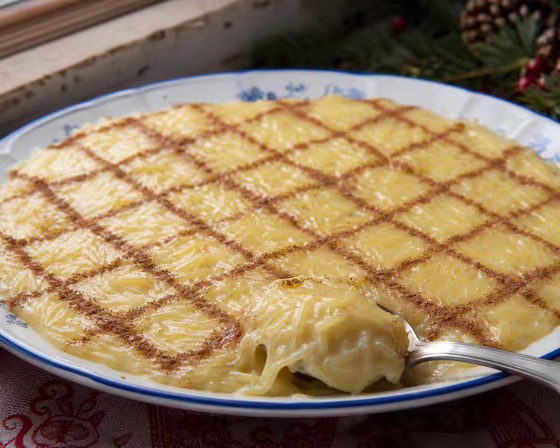 Catalogue image
 Sweet Vermicelli
Fine wheat threads simmered in milk and yolk, scored with cinnamon.
The North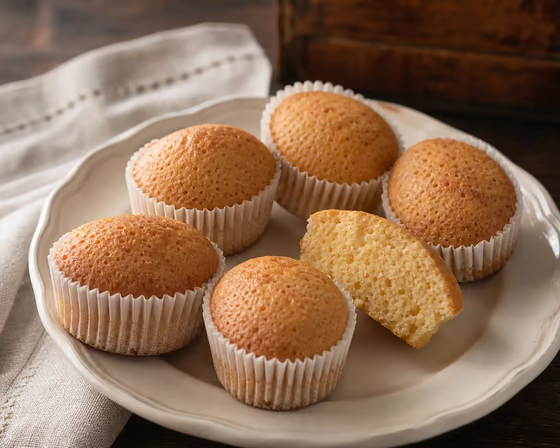 Catalogue image
 Amarantinos
Small egg, lemon and cinnamon cakes whose historical identity is not told consistently by the sources.
The North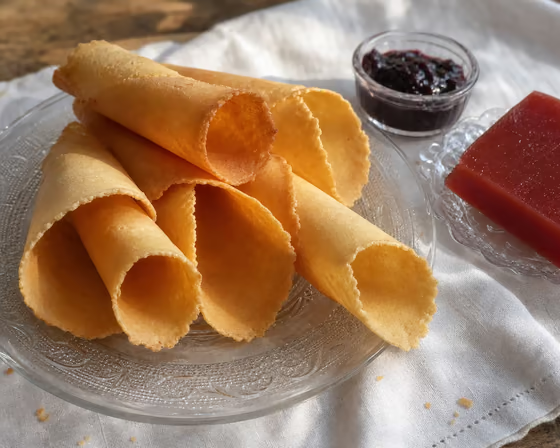 Catalogue image
 Vieira do Minho Cone Wafers
Paper-thin crisp wafers, iron-baked and rolled by hand while still hot.
The North