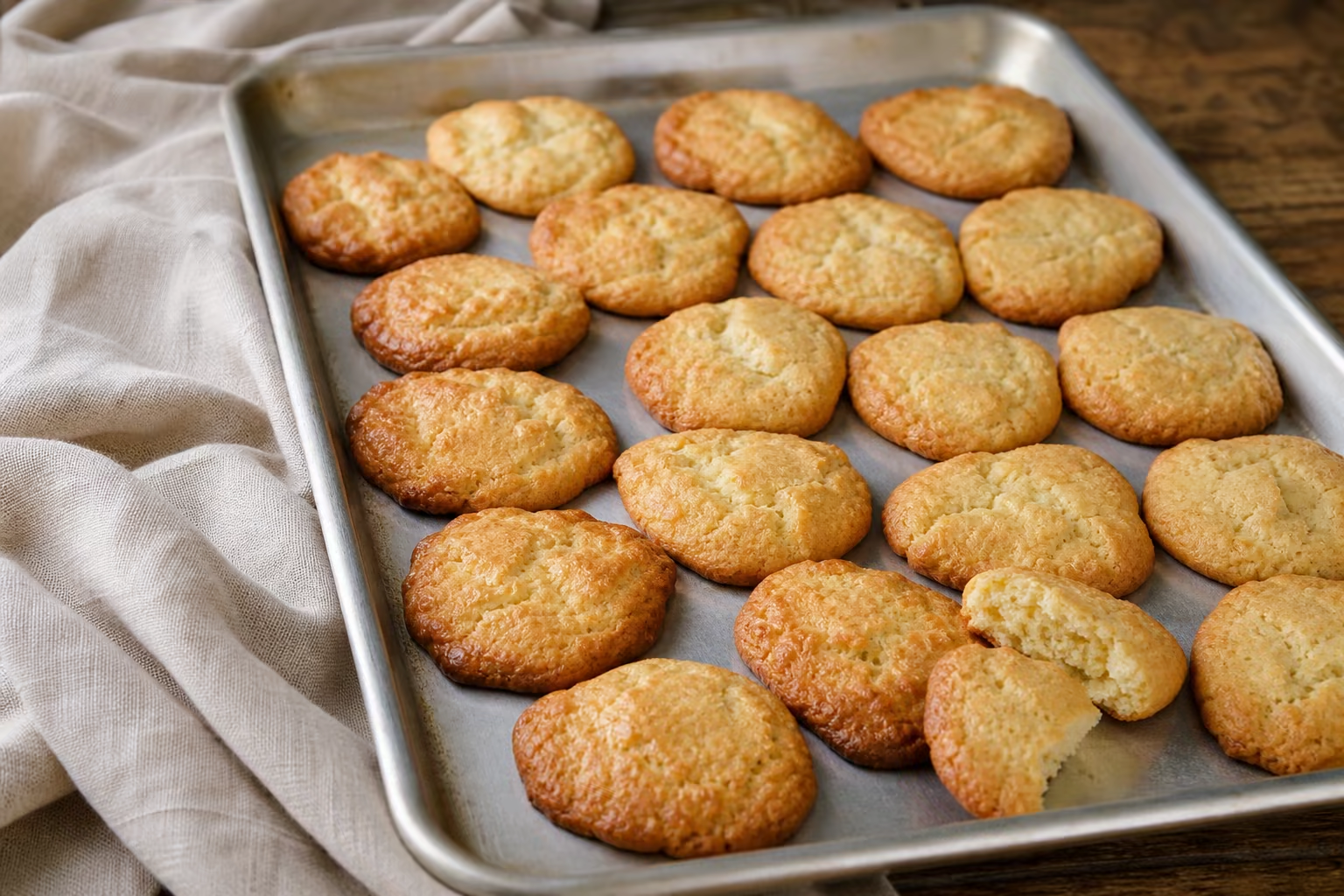
Guarda Esquecidos
Guarda's small yeast-raised cake, with a friable crust and porous crumb.
- Origin
- Guarda, Central Portugal · chronological origin unknown
- Place
- Guarda · Beiras
- Region
- The Centre
- Category
- Cakes & Sweet Breads
- Season
- Year-round when made; no specific season documented
- Evidence
- Limited documentation
The Esquecidos da Guarda documented by DGADR are small cakes made from wheat flour, eggs, sugar, salt and baker's yeast. They measure about 7-9 cm across, weigh 30-40 g and are round, convex and fairly flat.
Their method distinguishes them from spoon-dropped biscuits also called esquecidos in other sources: after eggs and sugar are beaten, flour, salt, yeast and enough water to knead are added. The dough is proved, shaped into balls and traditionally baked in a wood-fired oven. The crust is relatively crisp and crumbles readily when cut; the crumb is pale yellow, porous and coarse.
- Wheat flour
- Eggs
- Sugar
- Salt
- Baker's yeast
- Water for kneading
The source chiefly describes structure: a friable, relatively crisp crust and a pale-yellow, porous, coarse crumb. It publishes no fuller tasting note.
Do not automatically conflate them with broinhas or egg-sugar-flour biscuits also called esquecidos, or with the yolk-based esquecidos recorded on São Jorge. A shared name does not establish a shared recipe.
The DGADR record locates the product in Guarda but identifies neither current makers nor a regular retail counter. Check with local tourism or traditional bakeries before travelling specifically to taste it.
Coffee, tea or milk; a simple editorial suggestion for a dry cake, not a documented historical pairing.
Portugal's Traditional Products record classifies them as a Guarda regional product but states that their origin cannot be established precisely: the oldest people consulted already remembered always having eaten them. That source identifies no inventor, convent, starting date or etymology for the name.
The name esquecidos also occurs in unyeasted household recipes from the Beiras and in Azorean festive documentation. Those occurrences help map the name but do not prove that they are the same formula as Guarda's raised cakes.
Limited documentation
The identity is documented, but its origin, composition or availability has limited sourcing.
- tradicional.dgadr.gov.pt/pt/cat/doces-e-produtos-de-pastelaria/762-esquecidos-da-guarda (opens in a new tab)
- turismodocentro.pt/artigo/docaria-regional-do-centro-de-portugal/ (opens in a new tab)
- cmvelas.pt/wp-content/uploads/2019/11/Volume-V-Setor-Urbano.pdf (opens in a new tab)
- books.openedition.org/etnograficapress/9791 (opens in a new tab)
Pastries from here — The Centre
 Catalogue image
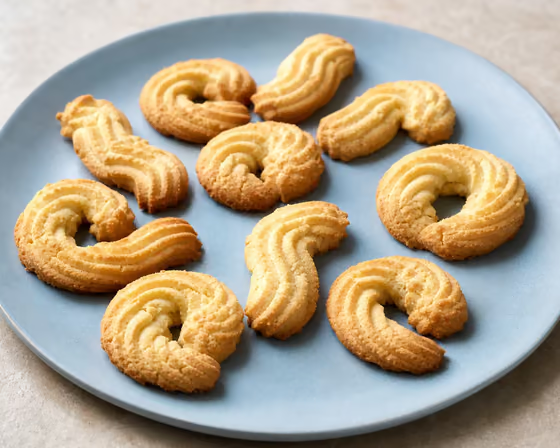
 Ílhavo Piped Butter Biscuits
Regional buttery biscuits piped into deeply ridged rings and curves.
The Centre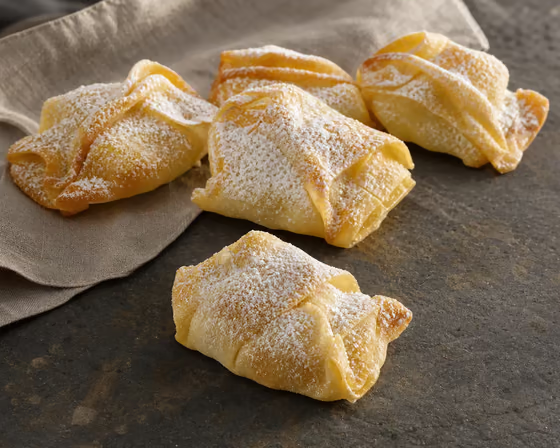 Catalogue image
 Saint Friar Gil’s Saddlebags
The small saddlebag-shaped pastry created at Vouzela’s vocational school and recognised as an innovative sweet.
The Centre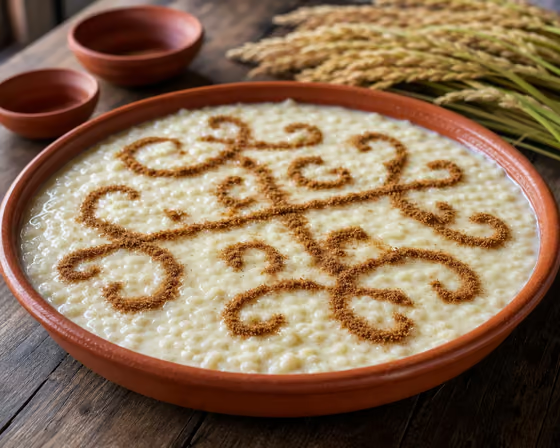 Catalogue image
 Baixo Mondego Rice Pudding
Mondego Carolino rice and Gândara milk, traced with cinnamon.
The Centre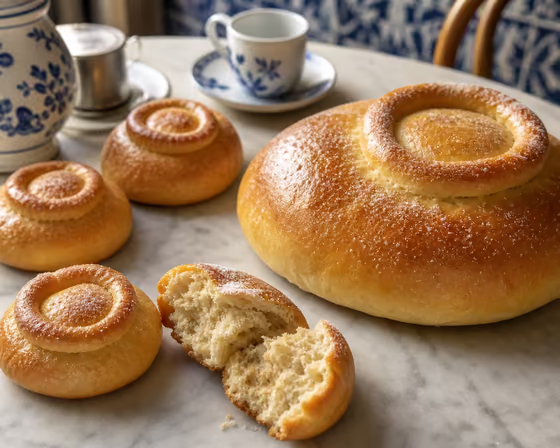 Catalogue image
 Arrufada de Coimbra
Coimbra's light, fragrant sweet bread, given by godparents at Easter.
The Centre